Yes, tap water in Orange County, CA is purified and legally safe to drink. Local agencies blend imported river water, natural groundwater, and water recycled through one of the largest potable reuse plants on earth before any of it reaches a faucet. Meeting every legal standard isn't the same as being contaminant-free, and that distinction is where this guide actually gets useful.
Is Orange County Tap Water Safe to Drink?
Every public water system in Orange County has to meet federal and California drinking water standards, and local agencies publish their results in annual water quality reports. A share of the county's supply runs through the Groundwater Replenishment System (GWRS), a joint project of the Orange County Water District (OCWD) and the Orange County Sanitation District (OC San) .
GWRS water undergoes three processes to make it drinkable: microfiltration, reverse osmosis, and ultraviolet disinfection before it's sent to recharge basins. Operational since January 2008, the system can produce up to 130 million gallons of high-quality water every day , enough to meet the needs of nearly one million residents in north and central Orange County .
That capacity didn't appear overnight. Here's how it grew:
- Before 2008,
the facility, known as Water Factory 21, was able to produce about 15 million gallons of clean water per day .
The original GWRS facility was constructed in 2008 and supplied up to 70 million gallons per day of purified water .
In 2015, the plant was expanded to produce 100 million gallons per day .
- By 2023, the final expansion brought capacity to 130 million gallons daily, serving close to a million residents.
None of that changes a basic fact: legally compliant water can still carry trace substances worth knowing about. That's where the rest of this guide picks up.
Where Does Orange County's Tap Water Come From?
Orange County tap water is never a single source. It's a blend that shifts depending on where you live. The main sources that recharge the Orange County Groundwater Basin are flows from the Santa Ana River, local rainfall, imported water, and water from the GWRS .
- Imported water from the Colorado River and Northern California, delivered through the Metropolitan Water District.
- Local groundwater pumped from the Orange County Groundwater Basin.
- GWRS-purified recycled water, injected back into that same basin.
GWRS water doesn't travel straight from the plant to a faucet. Most of the water travels through a 14-mile pipeline to Anaheim, where it replenishes the groundwater aquifer and undergoes natural filtration . After six months or so underground, the clean water is ready to flow through faucets . Agencies describe that as purification followed by natural filtration, not a direct pipeline.
What's Actually in Orange County Tap Water?
Even water that passes every test can carry trace amounts of regulated byproducts. Chlorine-based disinfectants react with organic matter to form total trihalomethanes (TTHMs) and haloacetic acids (HAA5). Some groundwater wells also carry naturally occurring arsenic or hexavalent chromium at low concentrations.
PFAS, the so-called forever chemicals, are the bigger story right now. A federal treatment project is designing, permitting, and constructing PFAS removal systems at 45 impacted wells operated by 10 cities and retail water districts within the Orange County Water District . That's a direct response to confirmed detections, not a hypothetical. If your provider pulls from an affected well, a home reverse osmosis system is one of the few consumer-level tools that reliably reduces PFAS at the tap.
Why Does Orange County Tap Water Feel Hard?
Hardness comes from dissolved calcium and magnesium, and both Orange County's groundwater and imported supplies carry plenty of it. This is a mineral and plumbing issue, not a safety violation.
General guidelines for classification of waters are: 0 to 60 mg/L as calcium carbonate is classified as soft, 61 to 120 mg/L as moderately hard, 121 to 180 mg/L as hard, and more than 180 mg/L as very hard .
| USGS Classification | mg/L (ppm) | Grains per Gallon |
|---|---|---|
| Soft | 0 to 60 | 0 to 3.5 |
| Moderately Hard | 61 to 120 | 3.5 to 7.0 |
| Hard | 121 to 180 | 7.0 to 10.5 |
| Very Hard | Over 180 | Over 10.5 |
Many Orange County neighborhoods land in the hard to very hard range, especially where groundwater makes up a bigger share of the local supply. Exact numbers vary block to block depending on which well or import blend feeds a given address, which is why a hardness test matters more than a county average.
Why Does Tap Water Taste Like Chlorine or Chloramine?
That chlorine or pool-water taste comes from disinfectants added on purpose, not a treatment failure. Utilities use chlorine and chloramine, a mix of chlorine and ammonia, because chloramine holds up longer across miles of pipeline before it reaches a faucet.
Water can taste strongly of chlorine and still meet every drinking water standard on the books. Taste and safety are separate questions. A carbon filter solves the first one without needing to fix the second.
Do Orange County Homes Need a Water Filtration System?
Legally compliant water can still be worth filtering, mostly for taste, hardness, and the trace substances covered above. Filtration doesn't fix a safety problem. It closes the gap between water that passes inspection and water that feels the way you want it to.
At Pure Water Filtration, our technicians test and treat homes across the county every week, and hard-to-very-hard readings are routine on in-home tests, not the exception.
- Reverse osmosis targets dissolved solids, trace metals, and PFAS most directly.
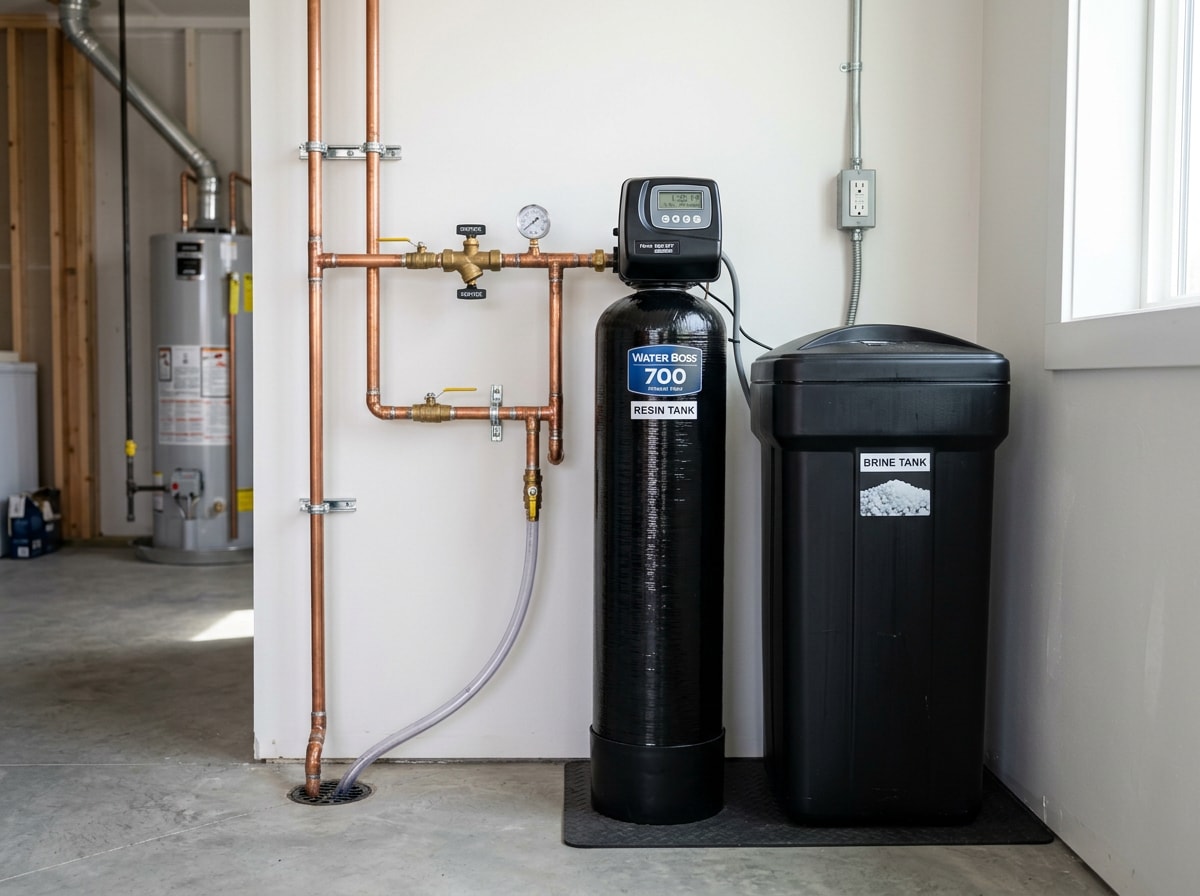
- Whole-house filtration or softening handles chlorine taste and hardness at every tap.
- A water test pinpoints what's actually in your specific supply before you buy equipment.
A straightforward way to start is a water quality test and an honest walkthrough of your options. Get a free estimate and find out whether your home even needs treatment before spending on it.
Tap Water vs. Bottled or Spring Water in Orange County
Some residents skip filtration and switch to bottled spring water instead, mainly for taste and to avoid disinfection byproducts entirely. Both are reasonable motivations given everything covered above.
Bottled water isn't free of tradeoffs. It costs more over time than a one-time filtration investment, and it adds plastic waste that an in-home system avoids. For many households, a whole-house reverse osmosis installation delivers similar taste and byproduct reduction at the tap without the ongoing cost.
What the Safe Drinking Water Act Doesn't Cover
EPA sets legal limits on over 90 contaminants in drinking water , but that list doesn't cover everything that might end up in your glass. Some emerging contaminants fall outside current federal limits entirely, and so does lead picked up after water leaves the treatment plant, inside a home's own pipes or fixtures.
California keeps its own watchlist. Other examples of unregulated contaminants include PFAS, microplastics, NDMA and other nitrosamines, cyanotoxins from harmful algal blooms, and 1,4-dioxane . That gap is exactly why "purified" and "legally safe" aren't interchangeable terms. Water can leave a treatment facility meeting every required standard and still pick up something the rules don't fully address once it's past the main.
Know What's In It, Then Decide How to Fix It
Orange County's water story is genuinely mixed. There are real engineering wins, like GWRS's purification capacity, alongside legitimate reasons for caution around hardness, taste, and substances like PFAS that sit outside strict regulation. Neither half cancels out the other.
The most useful next step is testing your own tap instead of assuming your water matches a county average. From there, picking a filtration approach gets a lot less like guesswork. Check what we offer on our Orange County, CA service page, or read our Best Water Purifiers in Orange County, CA: 2026 Buyer's Guide for a deeper breakdown of specific systems and pricing. When you're ready, get a free estimate and have someone look at your actual water instead of an average.
FAQ
Does "legally safe" mean Orange County tap water is completely risk-free?
No. Legally safe water meets required state and federal limits, which isn't the same as risk-free. Some substances, including emerging contaminants, sit outside current regulation entirely, so compliance doesn't guarantee zero exposure.
Does Orange County tap water contain PFAS?
Some of it has. Treatment projects are currently installing PFAS removal systems at dozens of wells across the county's groundwater supply, and not every city or well is affected the same way. Checking your provider's annual water quality report, or testing your own tap, is the only way to know your specific exposure.
Is Orange County tap water hard?
Much of it falls in the hard to very hard range on the USGS hardness scale, since both local groundwater and imported supplies carry high mineral content. Exact hardness varies by neighborhood and which well or import blend feeds your address.
What type of water filtration system is best for Orange County homes?
A whole-house filter or softener makes sense if hardness and chlorine taste are the main concerns, since it treats water at every tap. An under-sink reverse osmosis system is better suited for households focused specifically on drinking and cooking water quality.
Is bottled or spring water better than Orange County tap water?
Not necessarily better, just different tradeoffs. Bottled water skips the chlorine taste and disinfection byproducts, but it costs more over time and adds plastic waste that a home filtration system avoids.
Which part of Orange County has the hardest water?
Hardness tends to run higher in areas that rely more heavily on local groundwater versus imported supply, but it varies block to block. A home water test is the only reliable way to know your exact number.