The best micron filter for most Santa Barbara County wells is a 20-micron pre-filter paired with a 5-micron main stage, though the right number ultimately depends on your water test. We've pulled wet, failed cartridges from wells all over the county, from sandy Santa Maria properties to clay-heavy Santa Ynez Valley lots, and the sediment never looks the same twice. This guide breaks down what each micron rating actually does and what's typical for groundwater across the county.
Quick Answer: What Micron Filter Is Best for Well Water?
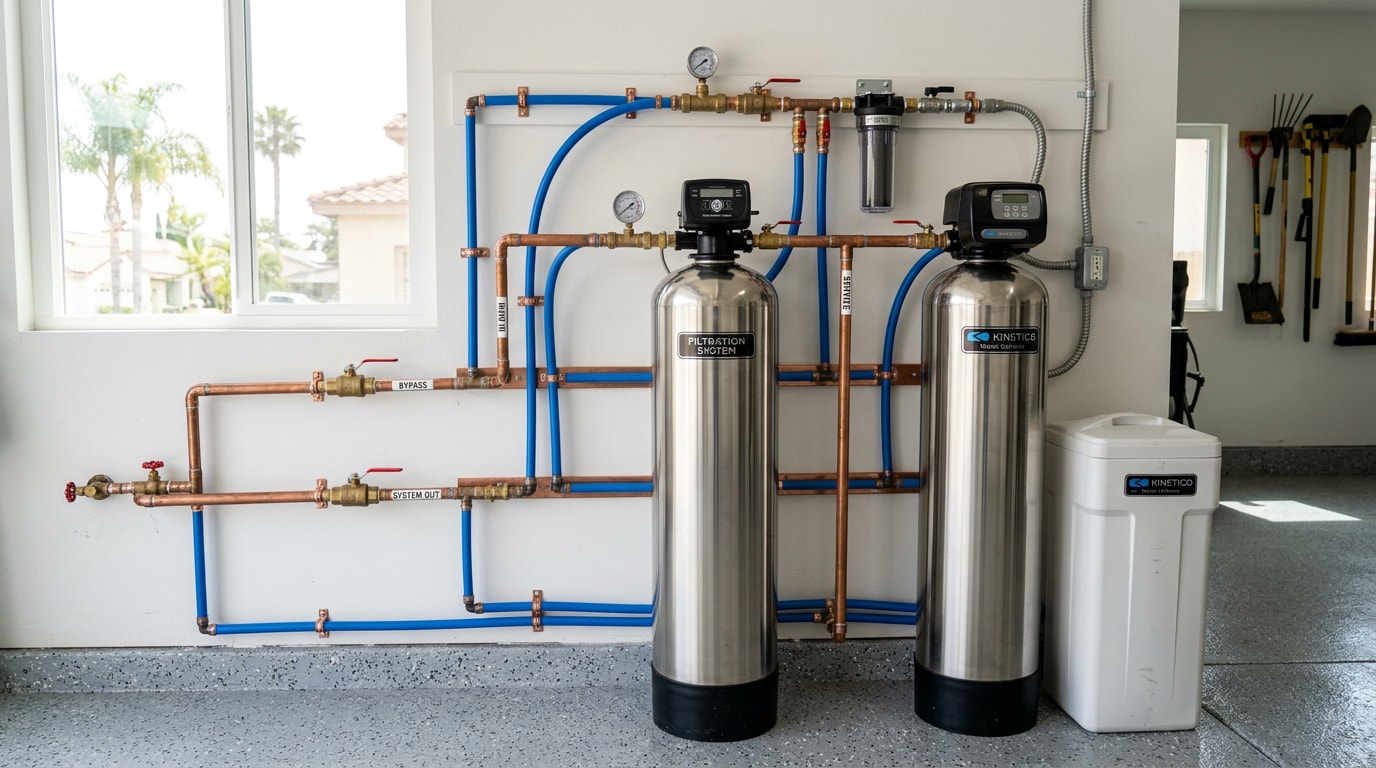
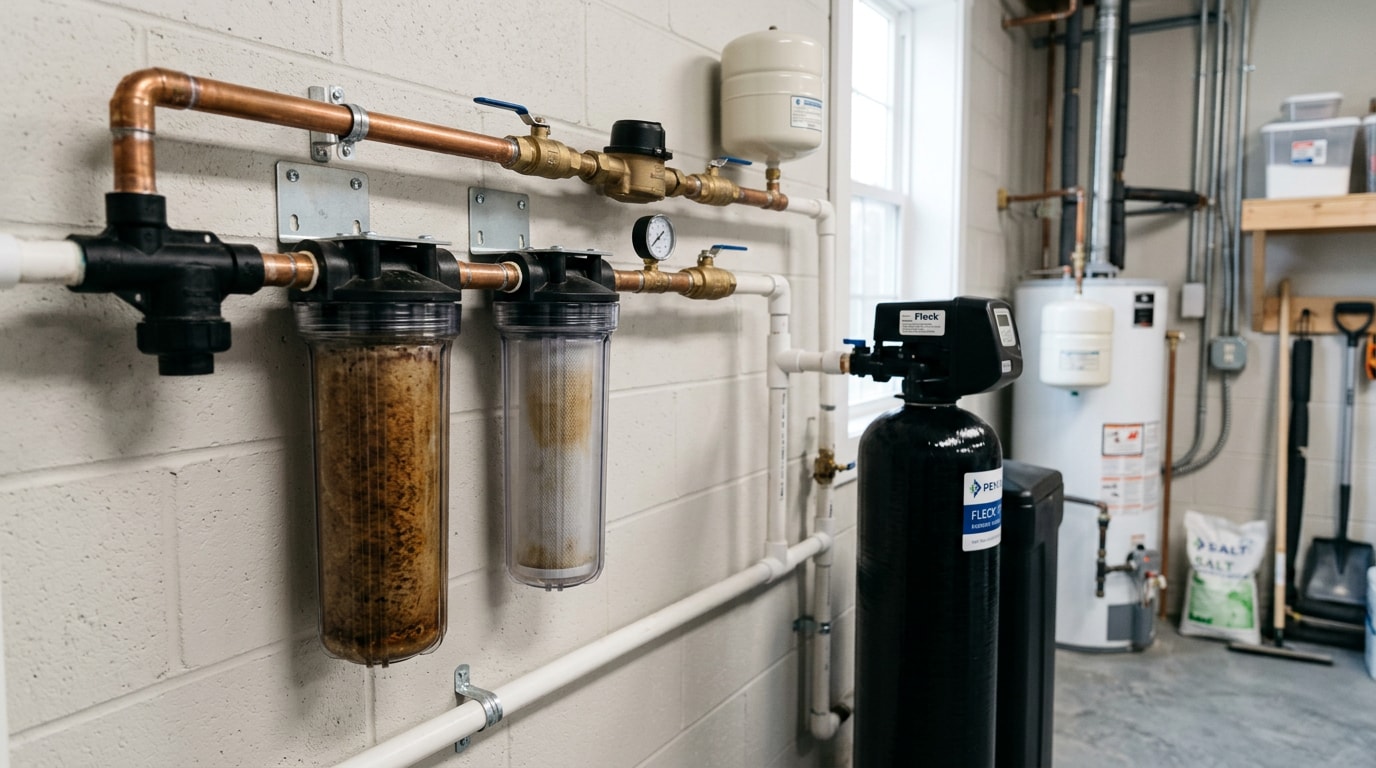
For the majority of county wells, a two-stage setup works better than a single cartridge:
- Stage 1 (20 micron): Catches visible sand, grit, and large rust flakes before they reach anything downstream.
- Stage 2 (5 micron): Traps fine silt, clay, and smaller rust particles the first stage lets through.
If your water tests positive for bacteria or cysts, a 0.5-micron absolute-rated filter or UV stage needs to go after the sediment filters, not instead of them. This matches the standard recommendation from most well water filtration specialists, and it's the starting point our technicians use before adjusting for a specific property's test results.
Need help sorting out which stages your well actually needs? Get a free estimate and we'll walk through your water test with you before recommending hardware.
What Does a Micron Rating Mean in a Water Filter?
A micron rating measures the smallest particle size a filter can reliably capture, expressed in micrometers, where one micron equals one-millionth of a meter.
Most people can't see anything smaller than about 40 microns with the naked eye, so sediment filters are working at a scale no homeowner could spot just by looking at a glass of water.
Here's the trade-off that catches a lot of well owners off guard: the lower the micron number, the finer the filtration, and the more resistance it creates against flow.
A filter rated too fine for your well's actual sediment load will clog fast and choke your household water pressure. That's why sequencing matters as much as the rating itself.
The Micron Rating Chart: What Each Size Catches
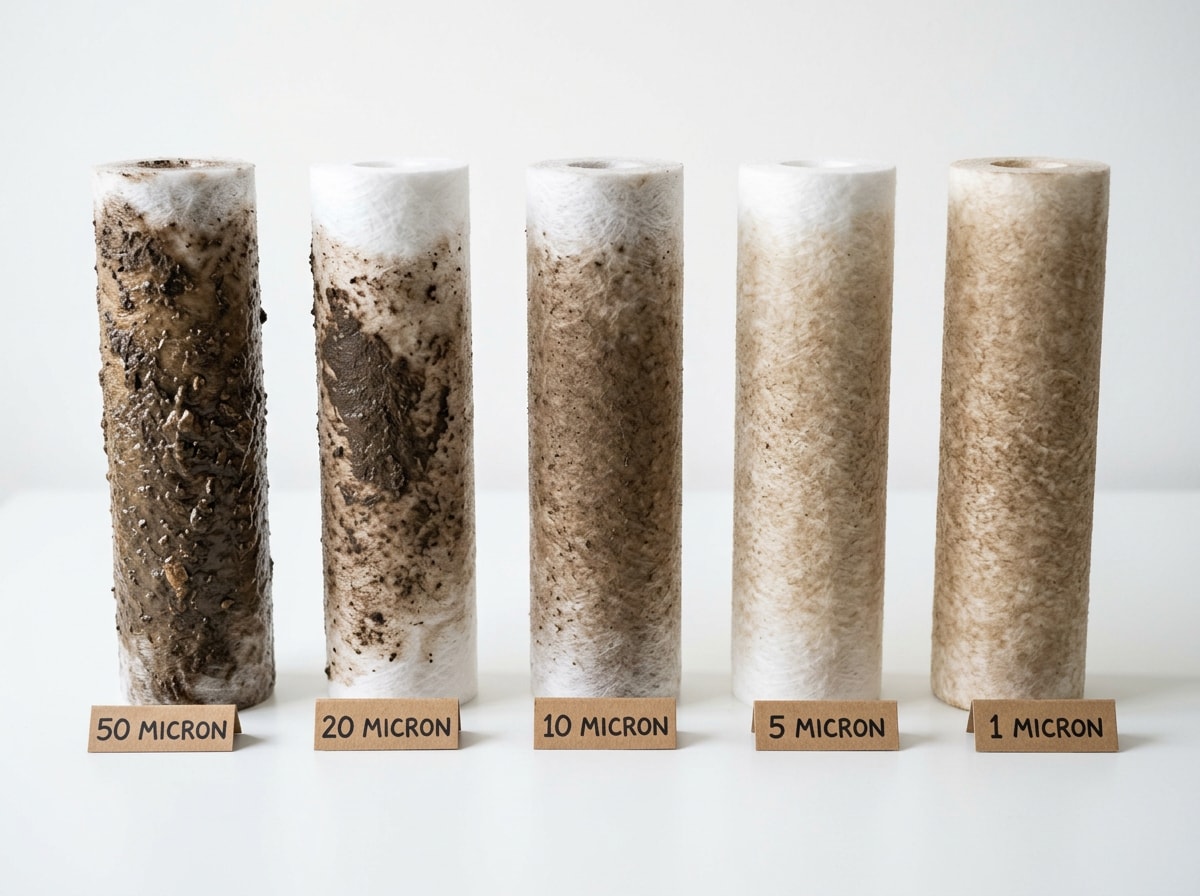
Before choosing a setup, it helps to see what each common micron rating actually removes.
| Micron Rating | What It Removes | Typical Role |
|---|---|---|
| 50 micron | Coarse sand, large grit, visible debris | Heavy-sediment pre-filter |
| 20 micron | Fine sand, silt, visible cloudiness | Standard pre-filter stage |
| 10 micron | Fine silt, small rust flakes | Secondary or main stage |
| 5 micron | Fine silt, small rust particles, suspended fines | Main sediment stage |
| 1 micron | Colloidal particles, very fine sediment | Polishing or drinking-water stage |
A micron number on a cartridge isn't just a marketing claim. Reliable filters are tested against recognized standards, including NSF/ANSI 42, which establishes minimum requirements for point-of-use and point-of-entry systems designed to reduce non-health-related contaminants such as particulate, iron, manganese, and total dissolved solids , confirming the printed rating matches actual lab-tested performance.
5 Micron vs 20 Micron: Which Is Better for Well Water?
Neither wins outright. They do different jobs in the same system.
A 20-micron filter works as a pre-filter, catching visible sand and coarser sediment before it reaches anything else. A 5-micron filter serves as the main sediment stage, trapping the fine silt and rust particles the 20-micron stage lets through.
If you can only install one filter right now, pick based on symptoms:
- Water runs visibly gritty or cloudy → start with 20 micron.
- Water looks mostly clear but leaves fine residue in sinks or appliances → go with 5 micron.
| Factor | 20 Micron | 5 Micron |
|---|---|---|
| Flow rate impact | Minimal | Moderate |
| Typical cartridge lifespan | 2–3 months | 1–2 months |
| Cost per change | Lower | Moderate |
Sandy coastal-plain wells near Santa Maria and Lompoc tend to produce coarser sediment, which favors a 20-micron pre-filter as the workhorse stage. Clay-heavy inland wells, common around parts of the Santa Ynez Valley, often need the 5-micron stage to carry more of the load since clay particles run finer than sand.
Is a 1-Micron Filter Better for Well Water?
A 1-micron filter is a polishing filter, not a first-line defense. Ask it to handle raw well water sediment on its own and it will clog within days.
It's meant to sit downstream of a coarser pre-filter, catching whatever fine sediment makes it past the 20- and 5-micron stages.
Adding one makes sense if:
- You're running a dedicated drinking water line.
- Your well water shows persistent colloidal cloudiness that 5-micron filtration doesn't clear.
- You've already confirmed the coarser stages aren't being overwhelmed.
For most whole-house setups, it's an optional final stage, not a starting point. Our Well Water Treatment page outlines how these stages typically get layered for county properties.
How to Choose the Right Micron Filter for Your Specific Well
The right micron size comes from a water test and your water's visible symptoms, not a guess. Matching the filter sequence to your actual sediment type keeps the system efficient instead of clogging within weeks.
As a general starting point:
- Light, clear water with occasional grit: a single 20-micron filter often does the job.
- Moderate cloudiness: a 20-micron pre-filter plus a 5-micron main stage.
- Heavy sand loads: a spin-down sediment separator ahead of a cartridge system.
- Fine silt-heavy water: a staged setup moving from 50 to 20 to 5 micron.
Staged filtration, layering coarser to finer filters, protects the finer and more expensive cartridges from premature clogging.
Before committing to a multi-stage build, confirm sediment type and volume with an actual test. Test your private well annually for total coliform bacteria, nitrates, total dissolved solids, and pH levels , according to EPA guidance for private well owners. If you haven't had your well tested recently, our Well Water Analysis service covers sediment, hardness, and contaminant levels in one visit.
Understanding Santa Barbara County Well Water Quality
Private wells across the county draw from several distinct groundwater basins, and sediment load varies noticeably depending on which one feeds your property.
The county's groundwater basins include the Cuyama Valley, San Antonio Creek Valley, Santa Maria River Valley, Santa Ynez River Valley, and South Coast basins. Coastal wells near the Santa Maria area often carry sandier sediment, while wells in the Cuyama Valley and other inland basins can pull finer silt and clay along with naturally higher mineral content.
The numbers back this up. In the Santa Barbara Groundwater Basin, reported TDS content ranged from 520 to 960 mg/L , and recent samples from coastal wells have confirmed the presence of seawater intrusion, with chloride concentrations greater than 1,000 mg/L . That's a factor sediment filtration alone won't fix. High-TDS or saltwater-intrusion-affected wells typically need a reverse osmosis stage behind the sediment filters, which our Reverse Osmosis Systems page covers in more detail.
Inland, the picture is different. The Lompoc Uplands Groundwater Basin has shown historically low water levels and past studies indicate the basin is in a state of overdraft , which can mean more fine sediment pulled into wells as water tables drop during dry years.
Seasonal shifts matter too. Wells across the county commonly see turbidity spikes after winter storms as surface runoff and disturbed sediment work into the aquifer, while dry summer months can bring steadier but finer sediment as water tables drop. These patterns are specific to private wells in unincorporated areas, distinct from the municipal water conditions city residents deal with.
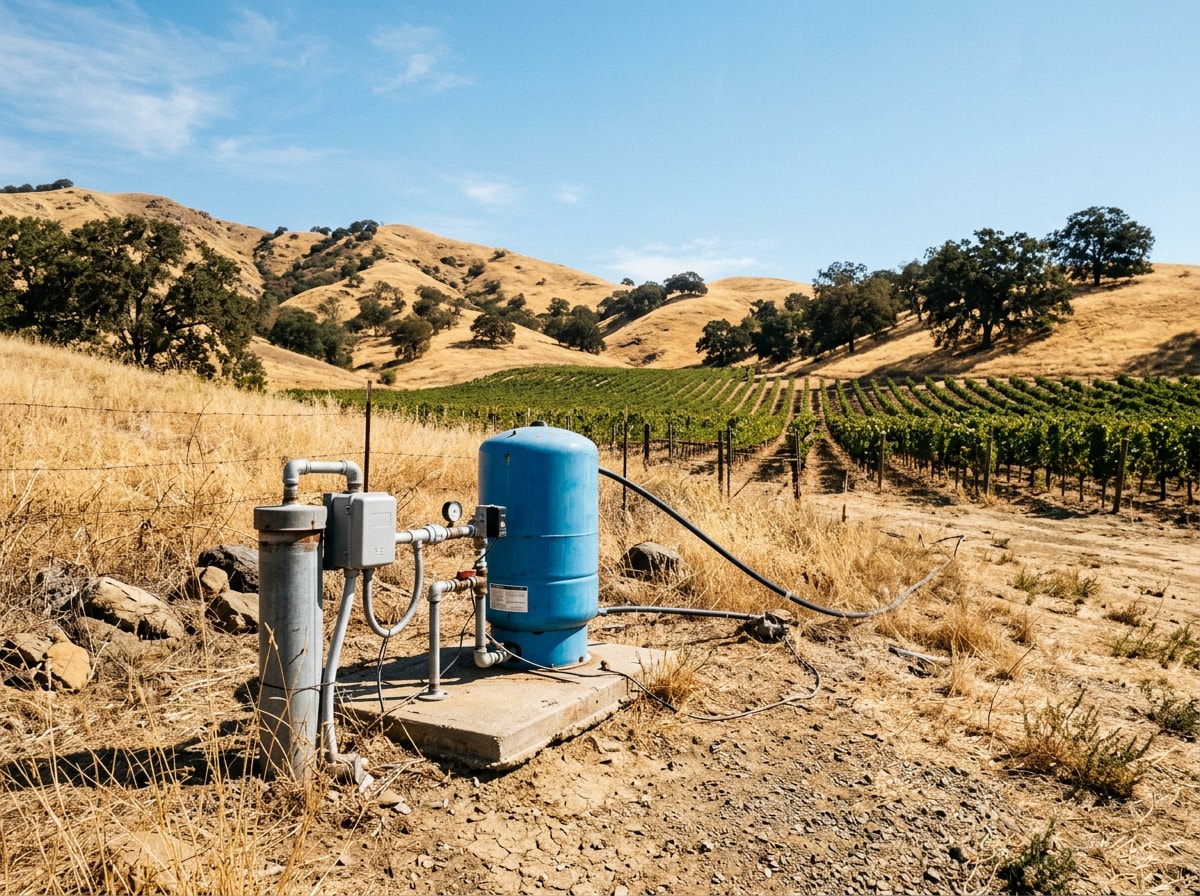
For broader context on local groundwater conditions, the County of Santa Barbara's groundwater resource page covers the basins serving the area . If you're in one of the county's unincorporated areas, our Santa Barbara County service area page has more on what our crews typically see well by well. We also work with properties in Ventura County and Kern County where similar coastal-to-inland sediment shifts show up.
What Is the Best Micron Rating for Well Water?
For most Santa Barbara County homes, a 20-micron pre-filter paired with a 5-micron main stage is the practical default. It handles the sand, silt, and rust particulate common across the county's groundwater without over-restricting flow.
Homes with heavier sediment or fine clay may need a coarser 50-micron first stage or an added 1-micron polishing filter. Homes dealing with TDS or saltwater intrusion on the coast usually need more than sediment filtration altogether.
That said, this is a starting point, not a guarantee. The only way to know your actual best micron rating is a water test that shows sediment type and volume. Our Whole-House Filtration Systems page covers how these configurations get built around your test results, and our Water Quality Testing service is the fastest way to get real numbers instead of guesses.
Once a system is in, don't skip the maintenance side. Cartridges on heavier-sediment wells can need changing monthly, and our Water Treatment System Maintenance team tracks that schedule so pressure doesn't creep down between visits. You can see examples of recent installs on our projects page, and if you're weighing membrane-based treatment for a larger or commercial property, our write-up on MBR water treatment in Orange County covers how that technology compares to standard filtration.
Ready to find out what your well actually needs? Get a free estimate and we'll start with a water test, not a sales pitch. You can also learn more about our full approach to water treatment on our homepage.
FAQ
What Micron Filter Is Best for Well Water?
Most well water systems do best with a two-stage setup: a 20-micron pre-filter for visible sand and sediment, paired with a 5-micron filter as the main stage for finer silt and rust. A water test confirms what's right for your specific well.
What Does a 5 Micron Filter Remove?
A 5-micron filter removes fine sediment, small rust particles, fine silt, and other suspended particles that slip past coarser pre-filters. It's commonly used as the main sediment stage in whole-house well water filtration.
What Is a 50 Micron Filter Best Used For?
A 50-micron filter works best as a heavy-duty pre-filter, protecting downstream equipment and finer cartridges from coarse sand, grit, and large sediment. It extends the life of more expensive fine-filtration stages by catching the biggest particles first.
Which Is Better: 5 Micron or 20 Micron for Well Water?
Neither is better alone. Most wells need both: a 20-micron pre-filter to catch coarse sand and grit, and a 5-micron filter behind it to catch the fine silt the pre-filter misses. Running them together protects your pressure and your appliances better than either filter running solo.
Can I Use More Than One Micron Filter at the Same Time?
Yes, and for most wells you should. Layering filters from coarser to finer, such as 20 micron then 5 micron, is standard practice. It keeps the finer, pricier cartridge from clogging prematurely on sediment the coarser stage should have caught.
Does Santa Barbara County Have Hard Water or Well Water Contaminants?
Groundwater hardness and sediment content vary significantly across Santa Barbara County, depending on whether a well draws from a coastal, valley, or inland basin. Coastal basins can also show elevated TDS and, in some areas, saltwater intrusion. Testing your specific well is the only reliable way to know what you're actually dealing with.