If your Inland Empire facility runs a primary clarifier, one missed pumping cycle can turn into a discharge violation fast. This guide breaks down how these tanks work, how often they need service, and what a professional pumping or repair visit actually involves.
What Is a Primary Clarifier?
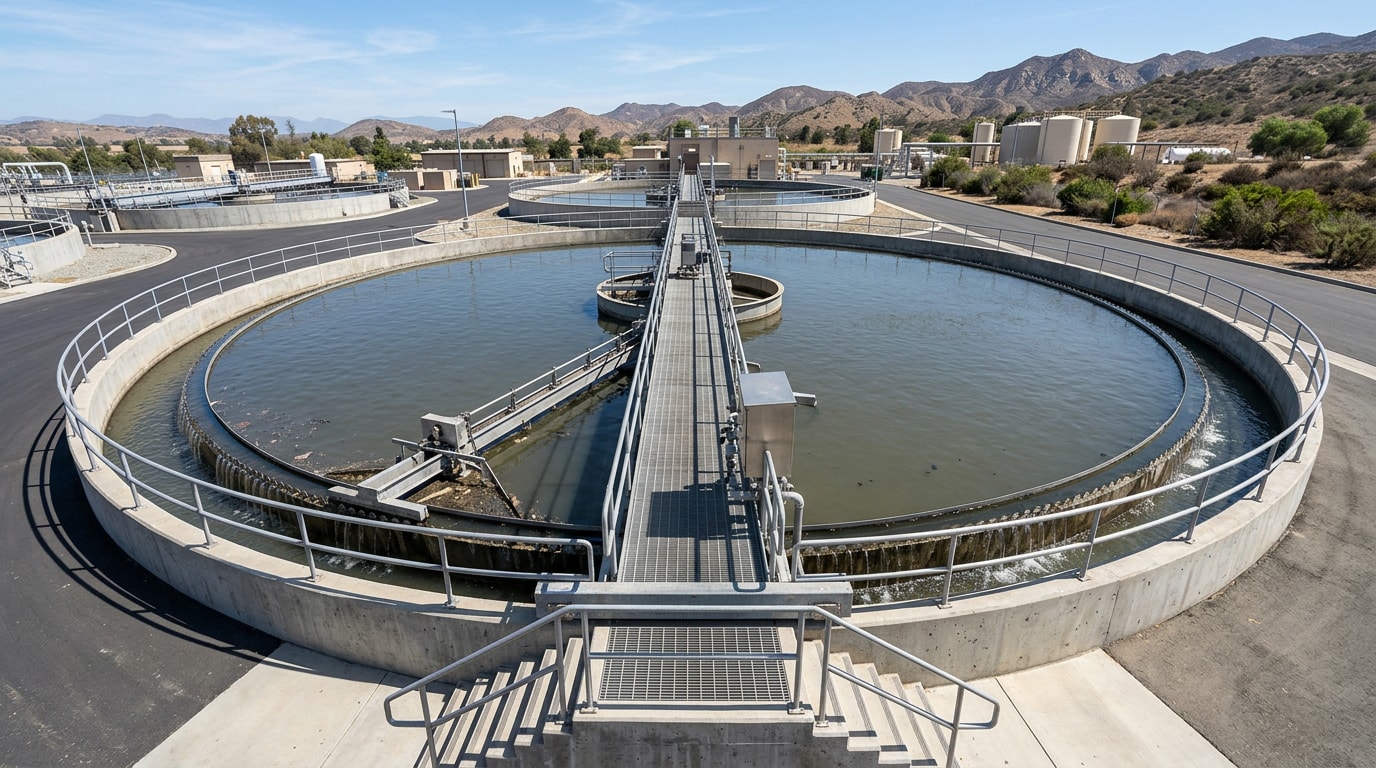
A primary clarifier is a sedimentation tank that uses gravity to separate solids and grease from wastewater before it moves on to biological treatment. Inside the primary clarifier, heavy materials settle and oil and grease (lighter materials) float by gravity separation. The clearer water in the middle layer then exits for further processing.
A well-run tank does real work before that water ever leaves the site. About 50 to 65% of the suspended solids will be removed in a properly operating primary clarifier, which takes significant load off everything downstream. A secondary clarifier, by contrast, handles biological solids later in the process, once that treatment stage is complete.
Clarifier Services We Offer in the Inland Empire
We handle the full range of clarifier needs for Inland Empire businesses:
- Clarifier installation for new construction or system upgrades
- Clarifier pumping service on a routine or as-needed schedule
- Clarifier repair for worn baffles, pumps, or sample boxes
- Clarifier replacement when a tank has reached the end of its service life
Our crews service car washes, restaurants, and light-industrial sites across Riverside and San Bernardino counties, and the pattern is consistent: baffles and sample boxes wear out fastest where heat and hard water push grease and mineral scale into the mix. If your facility also needs treatment beyond the clarifier itself, our industrial water treatment systems and commercial water treatment systems teams can take it from there. Get a free estimate before a small repair turns into a compliance problem.
How Does a Primary Clarifier Work?
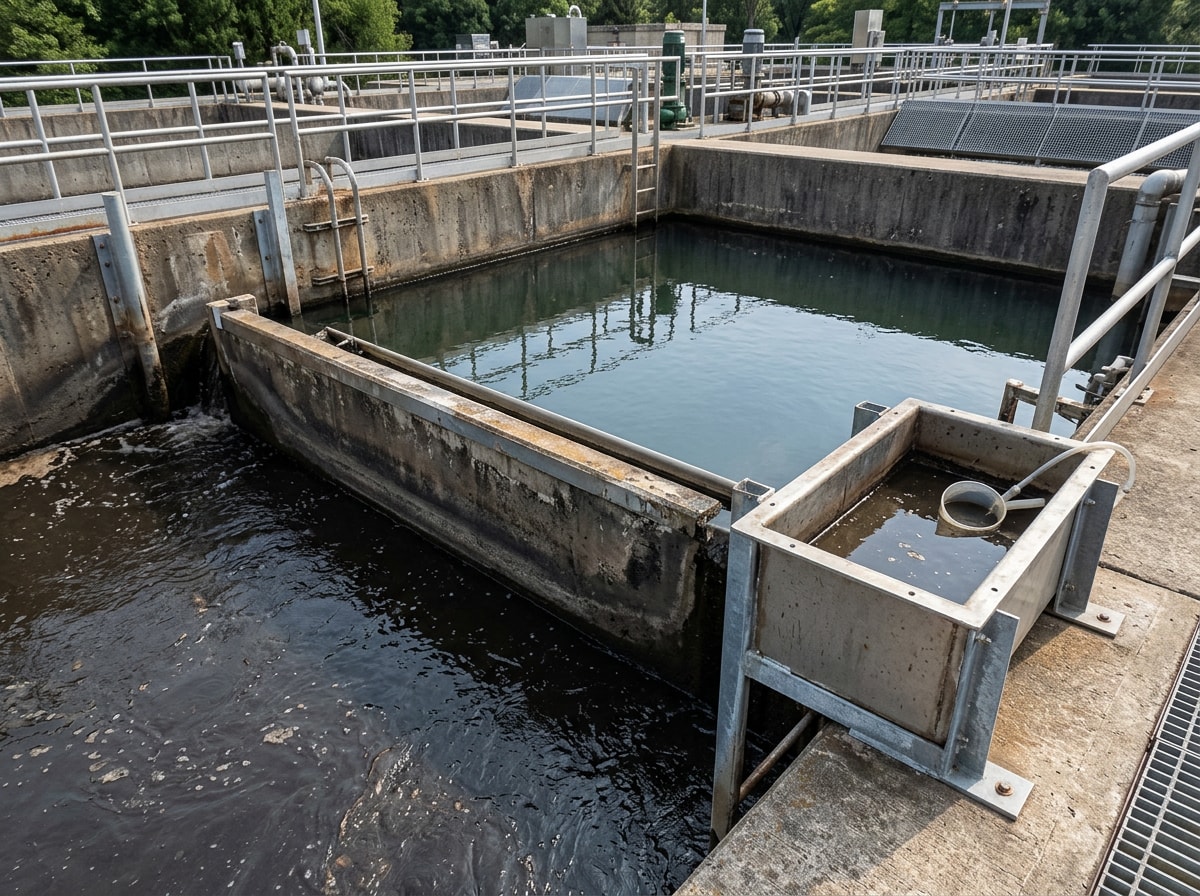
Wastewater enters the tank and slows down, allowing gravity settling to do its job. Grease and oils rise to the top, heavier solids settle to the bottom, and the relatively clean water in between flows out through a sample box. That sample box also gives city or county inspectors a standardized point to check compliance with local discharge rules.
How Often Should a Clarifier Be Pumped?
Most clarifiers need pumping one to two times per year, but actual pumping frequency depends on wastewater flow volume and business type.
| Business Type | Typical Pumping Frequency |
|---|---|
| Car wash clarifier | Every 1-3 months |
| Restaurant/food service | Every 3-6 months |
| Light-industrial facility | Every 6-12 months |
Inland Empire jurisdictions set their own pretreatment requirements, and missing them can mean fines. Our water treatment system maintenance team can set up a pumping schedule that matches your actual flow instead of a generic calendar.
Clarifier Maintenance & Pretreatment Compliance
Skipping clarifier maintenance lets sludge buildup eat into basin capacity, forcing the tank to work harder and shortening equipment lifespan. Solids that aren't removed can carry downstream, triggering violations.
This isn't a local quirk. Pretreatment is the practice of removing pollutants from industrial wastewaters before they are discharged into municipal sewage treatment systems , and U.S. EPA delegated the responsibility to oversee these pretreatment programs to the State Water Board and Regional Water Boards in 1989 . Car washes, restaurants, and light-industrial facilities across the Inland Empire depend on properly maintained clarifiers to satisfy that chain of oversight and keep inspectors off their backs.
What Happens During a Clarifier Pumping & Cleaning Visit
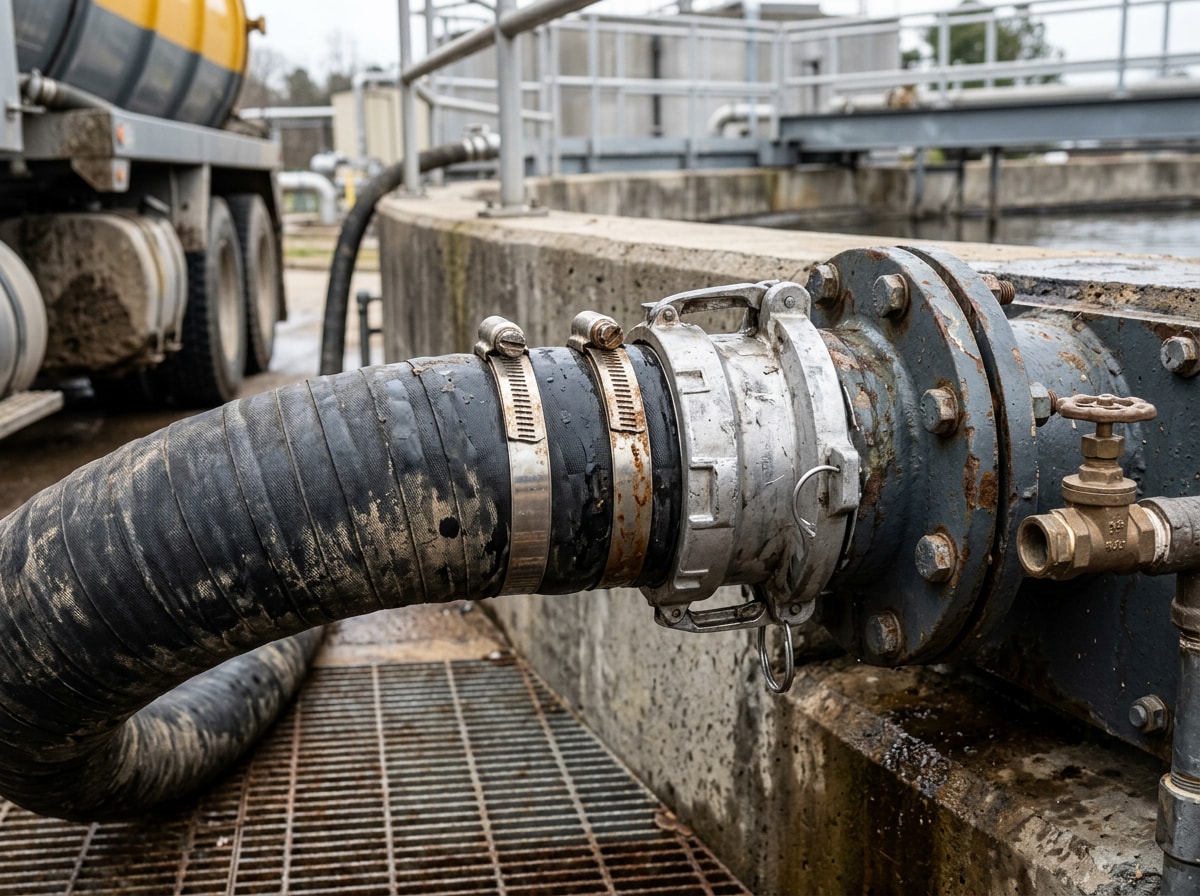
A typical clarifier pumping visit follows the same basic steps regardless of business type:
- Pump out accumulated solids and grease from the tank
- Visually inspect for cracks, worn baffles, or pump issues
- Transport removed sludge for certified disposal
- Confirm the tank is ready for the next service cycle
A Local Example: Why Clarifier Upkeep Matters Here
This isn't just a small-business issue. Even regional treatment agencies have to stay on top of it. The Inland Empire Utilities Agency proposes to rehabilitate ten rectangular primary clarifiers at the IEUA Regional Water Recycling Plant No. 1 , through improvements to the primary clarifiers sludge collection systems, scum collection systems, internal concrete surfaces, covers, fall protection, and scum pumping system . If clarifiers at that scale need scheduled rehabilitation to keep working, a car wash or restaurant tank that never gets pumped is on borrowed time.
If you're planning upgrades beyond the clarifier itself, our water treatment accessories guide for the Inland Empire covers sample box risers, baffles, and related hardware worth budgeting for. Confirm we cover your location on our Inland Empire service area page, or browse our homepage for our full lineup of water treatment services.
FAQ About Primary Clarifier Services in the Inland Empire
Is It Necessary to Have My Clarifier Pumped Regularly?
Yes. Regular clarifier pumping isn't optional for most businesses. It's typically required to stay compliant with local discharge and pretreatment rules.
How Often Should a Clarifier Be Pumped?
It depends on the business. Car washes usually need pumping every 1-3 months, restaurants every 3-6 months, and light-industrial facilities every 6-12 months, depending on flow volume.
What Happens to the Waste That Is Pumped Out of a Clarifier?
Pumped sludge and grease are transported to an approved water reclamation or disposal facility, where they're treated under state and federal pretreatment standards.
What Is the Difference Between a Primary Clarifier and a Secondary Clarifier?
A primary clarifier removes settleable solids from raw wastewater before biological treatment begins. A secondary clarifier settles biological solids afterward, once that treatment process is complete.
Do You Service Municipal and Industrial Clarifiers?
Yes. We provide pumping, repair, and maintenance for commercial, light-industrial, and municipal clarifiers throughout the Inland Empire. Contact us with your tank size and business type for a free estimate.