Custom filtration systems in Orange County, CA are built around a home's actual water test, not a model pulled off a shelf. Two houses on the same block can have different hardness readings, different disinfectant levels, and different plumbing, so the right setup for one can be the wrong size for the other. Here's how these systems are designed, what they cost, and how to tell if your home actually needs one.
What Is a Custom Whole-House Filtration System?
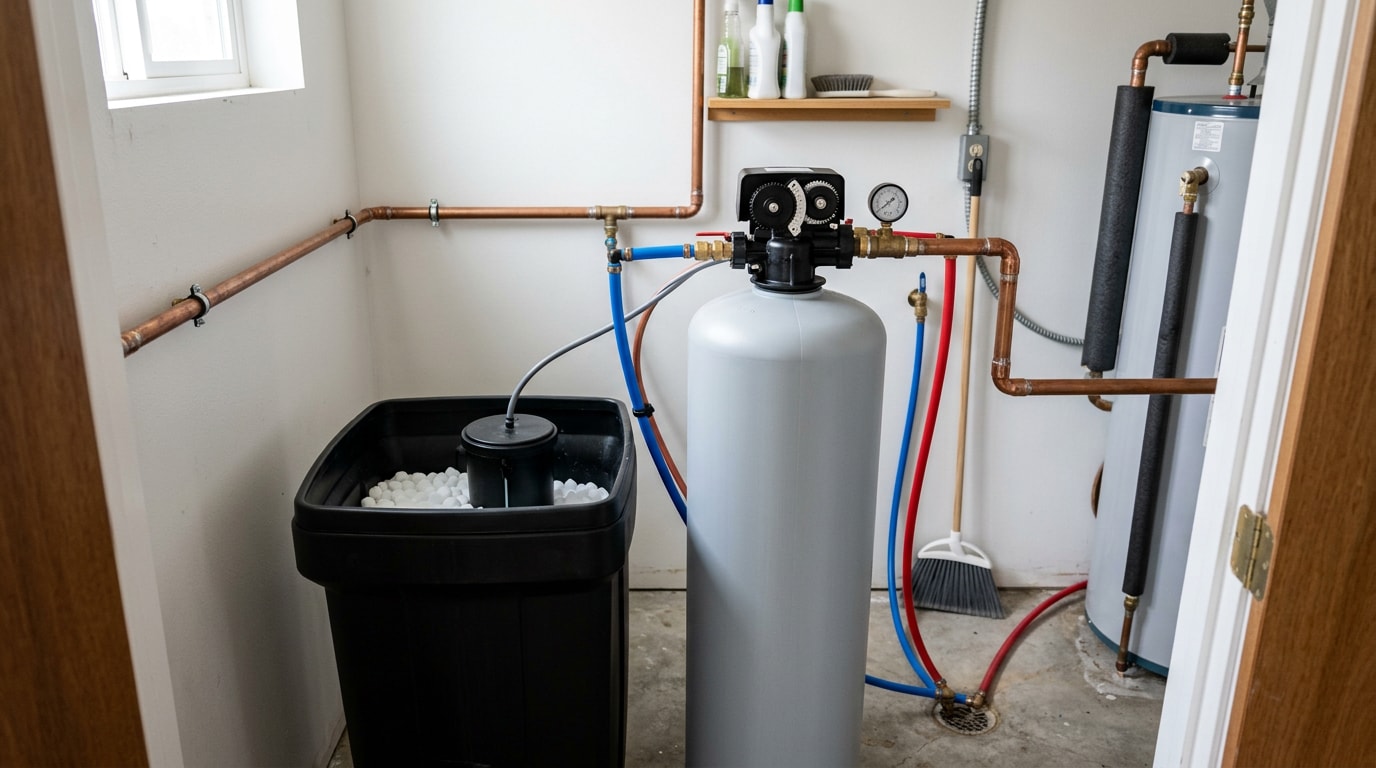
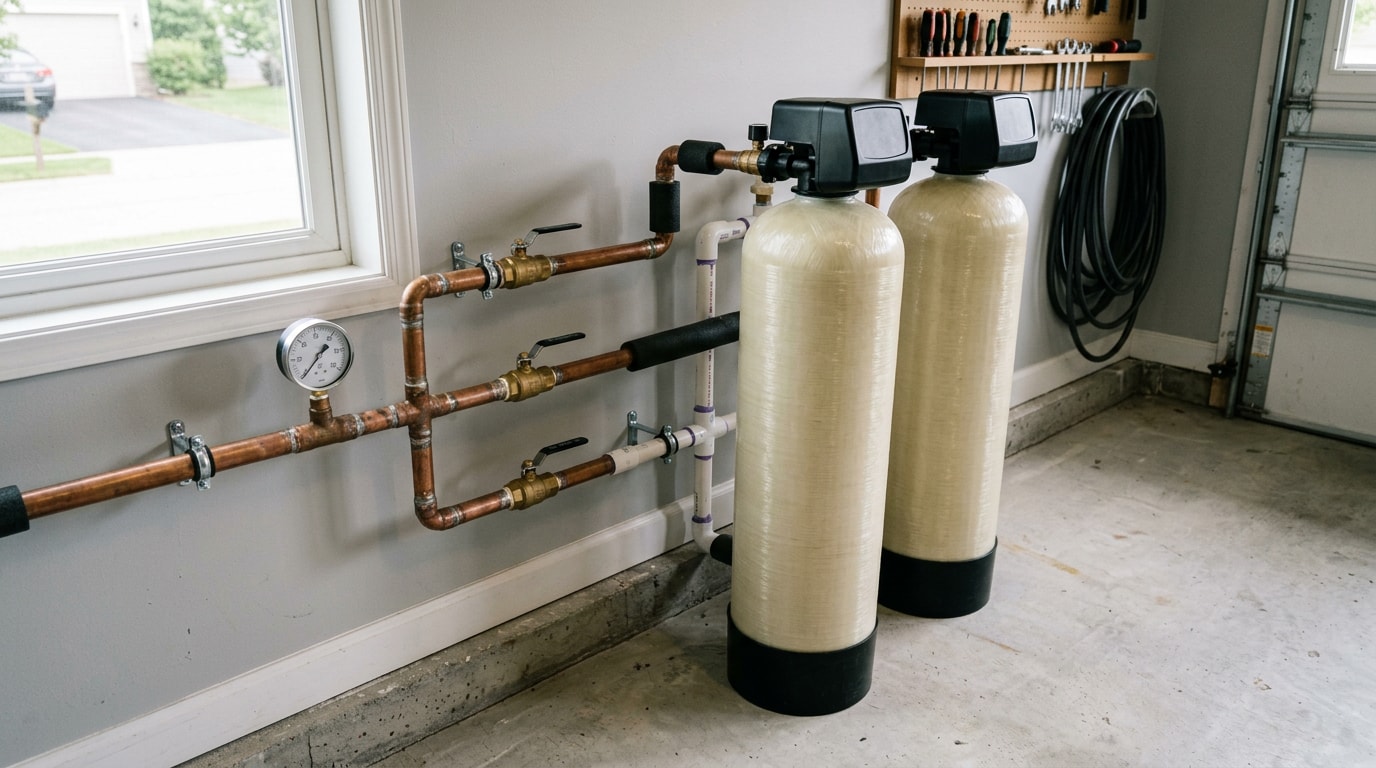
A whole-house water filtration system is a point-of-entry (POE) setup installed where the main line enters the home, so every fixture gets treated water instead of just one tap. A custom version of that system is sized to a specific water test, flow rate, and household layout rather than a generic cartridge rating.
That's the key difference from point-of-use filters, like an under-sink cartridge or a pitcher filter, which only treat water at a single faucet. A whole-house setup protects showers, laundry, and appliances at the same time, which matters in a region where hard water and chloramine both show up on the same test.
If you're deciding between a point-of-entry system and smaller fixes, our whole-house water filtration services page breaks down what's included from testing through installation.
Why Orange County Water Needs Custom Filtration
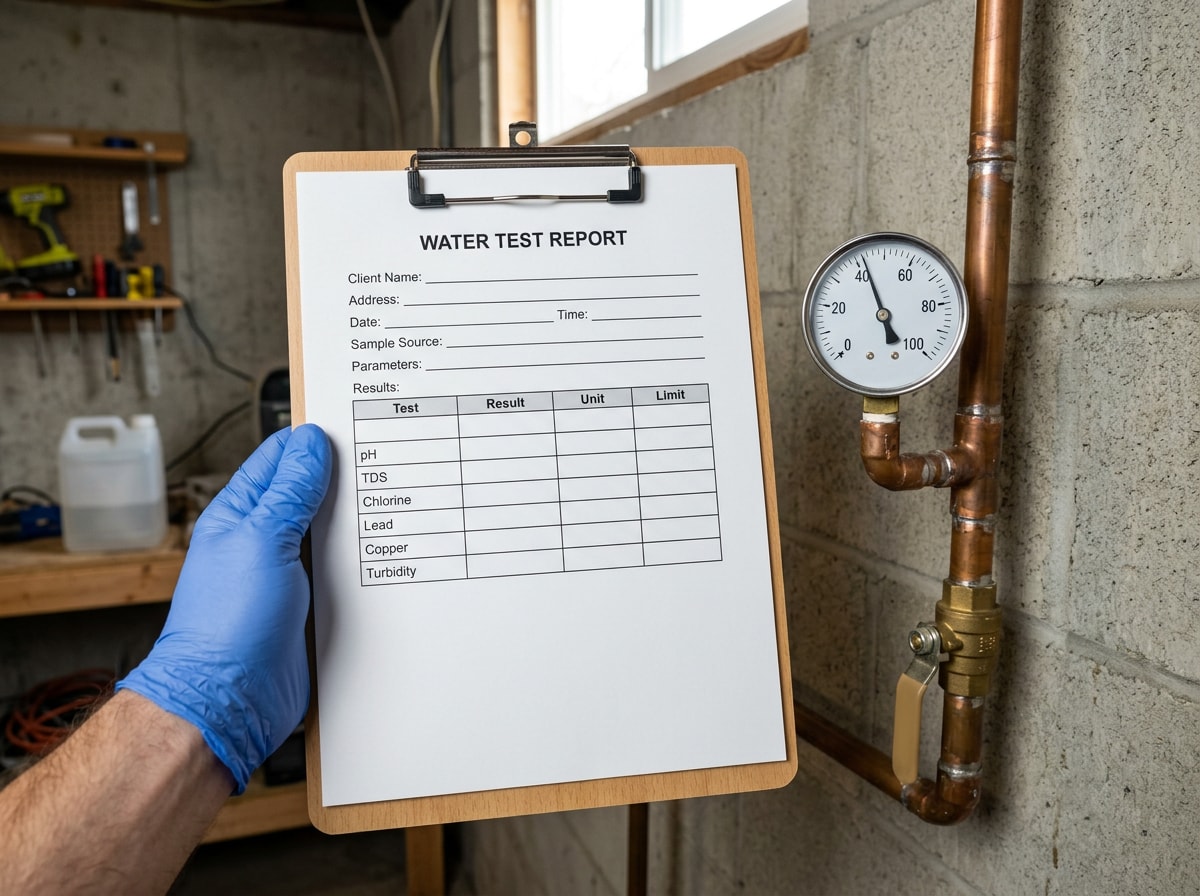
Orange County blends local groundwater with imported supply, and that mix shifts by city and water district. That variation is exactly why custom filtration systems in Orange County, CA start with a water test instead of a guess.
The three recurring issues local water tests tend to flag:
- Hardness. Many Orange County water agencies publish readings in the hard to very hard range, and some report well above the 180 ppm threshold the U.S. Geological Survey uses to classify water as very hard. Areas leaning more on imported supply tend to test harder than areas drawing mostly from local groundwater basins.
- Chlorine and chloramine. Several Orange County providers use chloramine, a mix of chlorine and ammonia, because it holds up longer across the distribution system than chlorine alone, as the EPA explains in its overview of chloramine disinfection. Standard carbon filters alone often struggle to fully remove it.
- Sediment. Aging infrastructure in some neighborhoods adds cloudiness and accelerates fixture wear on top of the hardness and disinfectant issues.
Every public water system in California is required to publish an annual water quality report, and you can look up your specific agency through the California State Water Resources Control Board's public water system search before deciding what kind of filtration your home needs.
Types of Whole-House Filtration Systems
Most custom systems don't rely on a single filter media. They combine two or more technologies to match the specific mix of chlorine, chloramine, sediment, and hardness a test turns up, rather than leaning on one generic cartridge.
Carbon Filtration
Standard activated carbon removes chlorine, many volatile organic compounds, and the taste and odor issues tied to disinfectants. It's a common first stage in a whole-house setup, and media typically needs replacing every few years depending on usage.
Catalytic carbon is the step up for chloramine. Standard carbon adsorbs chlorine reasonably well, but chloramine is more chemically stable and passes through plain carbon with far less reduction. Catalytic carbon has a modified surface that speeds up the reaction needed to break down chloramine, which is why it's the more reliable choice in a county where chloramine is common. Basic carbon filters are generally tested to NSF/ANSI 42, the standard covering aesthetic chlorine, taste, and odor reduction, and media sizing matters as much as media type for consistent performance.
Reverse Osmosis (Whole House)
Whole-house reverse osmosis pushes water through a semi-permeable membrane that removes dissolved solids and contaminants carbon alone can't catch. An under-sink RO unit treats one faucet; a whole-house RO system treats everything entering the home, which is a bigger commitment in space and plumbing.
Whole-house RO makes sense when a test shows high total dissolved solids or a household wants near-total contaminant removal at every tap. It's less common than a carbon-plus-softener setup because it needs more space, produces some wastewater, and requires more frequent maintenance. Our reverse osmosis systems page covers both whole-house and under-sink options in more detail.
For most Orange County homes, a well-sized carbon and sediment combination handles the main concerns. Whole-house RO becomes worth the tradeoff when dissolved solids removal is a specific priority, not just a general preference.
How We Design Your Custom System
Designing a system comes down to one equation: water quality, plus household demand, plus flow requirements, equals the right configuration. Skip any one input and the system either underperforms or creates a pressure problem.
The design process in order:
- Water testing identifies which contaminants need addressing and at what concentration. Our water quality testing service is where this starts.
- Household demand accounts for the number of bathrooms and fixtures, plus how many can run at once.
- Flow rate sizing matches the tank and media bed to that peak demand so pressure doesn't drop when two showers and a washing machine run together.
Here's how that plays out. In systems we've sized for three-bathroom Orange County homes with moderate chloramine and hardness around 250 ppm, a catalytic carbon setup rated for roughly 10 to 12 gallons per minute, paired with a properly sized tank, is usually enough to keep two showers running without a noticeable pressure drop. A smaller single-bathroom home with similar water quality can run a smaller tank at a lower flow rate for a comparable result at a lower cost.
This is the core logic behind custom filtration systems in Orange County, CA: sizing to the water a home actually has and the way that household actually uses water, not a model off a shelf.
Whole-House Filtration vs. Water Softener
Filtration and softening solve different problems, and one doesn't replace the other. A filtration system targets chlorine, chloramine, and sediment. A water softener targets hardness minerals like calcium and magnesium through ion exchange, swapping them for sodium or potassium.
Hardness is measured on a standard scale defined by the USGS, which classifies water above 180 mg/L as very hard. A home can test well below that threshold and still need filtration for disinfectant taste or sediment, or the reverse can be true. Many Orange County homes end up needing a water softener for scale protection in addition to filtration, not instead of it.
Should You Combine Filtration and Softening?
Combining both makes sense when a test shows a home needs to address municipal disinfectants and hard water minerals at the same time, which describes a large share of Orange County households given the imported-and-groundwater blend.
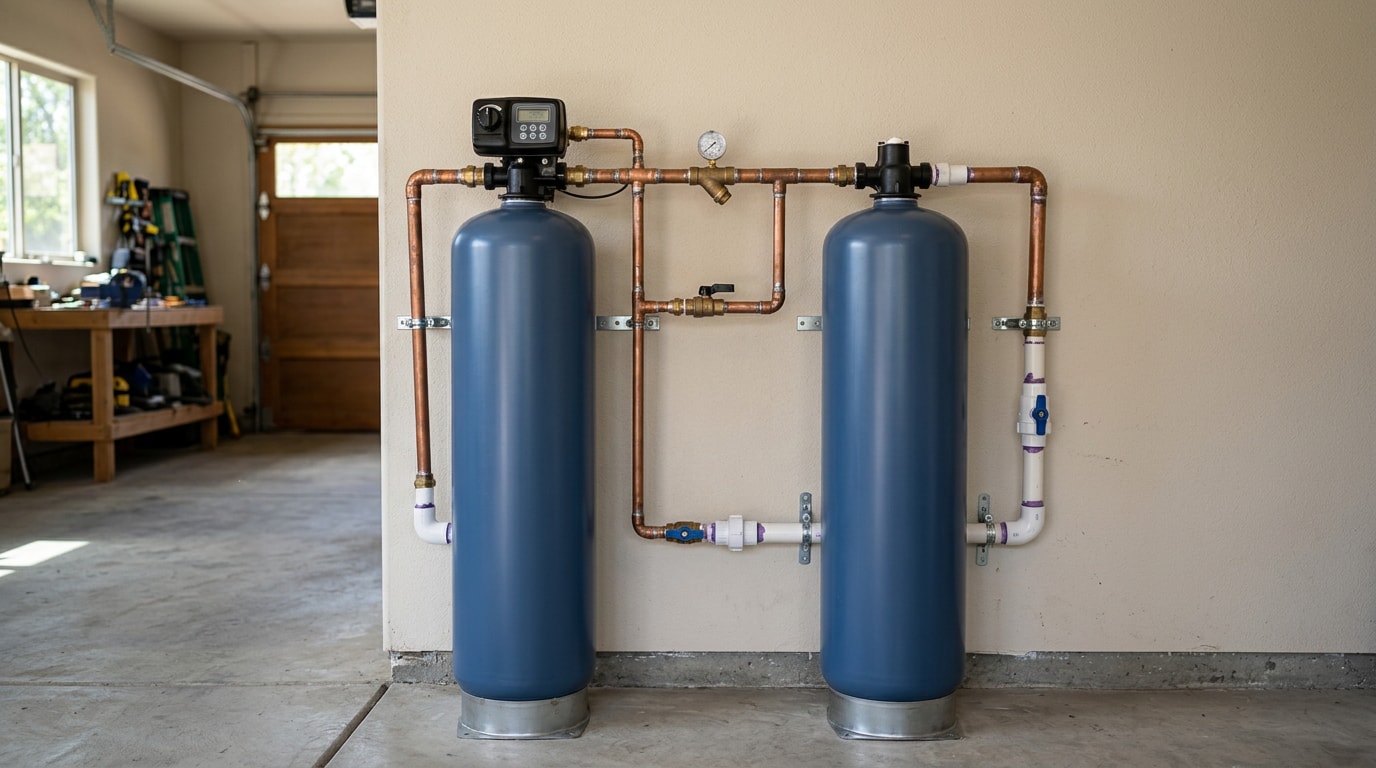
A combined setup is engineered as a single whole-home system, not two appliances bolted together. That matters for sizing, since both processes happen in sequence without creating a pressure bottleneck. Homes that only need one or the other can install filtration or softening alone, but a property fighting both chloramine taste and scale buildup usually does better with one combined system than two separate units.
Installation: What to Expect
Installation starts with placement planning, usually in a garage, utility room, or exterior enclosure near the main line. The goal is a layout that works correctly from day one and that a technician can service later without shutting off water to the whole house.
That typically means:
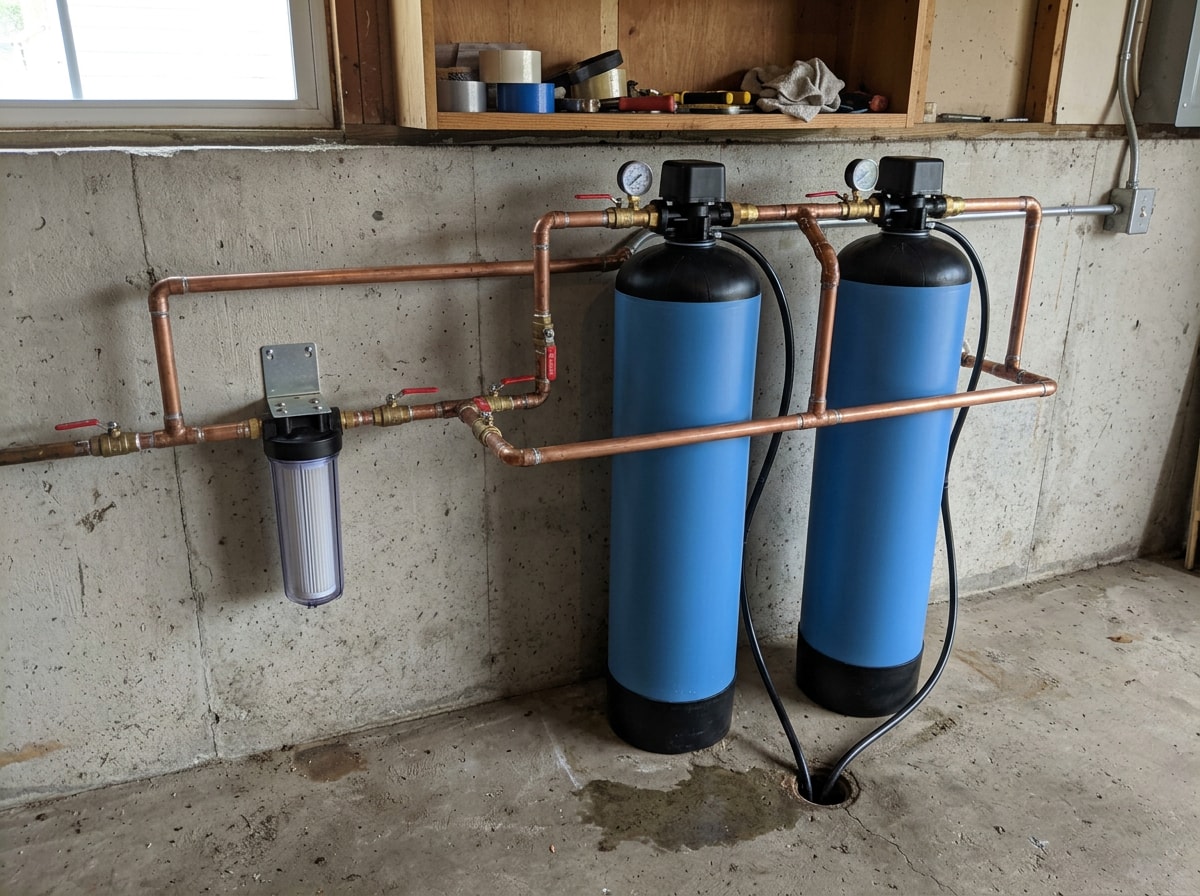
- Bypass valves so the system can be isolated for filter changes without cutting water to the home.
- Plumbing sized to match flow rate so there's no bottleneck at peak usage.
- Commissioning, running water through the system, checking for leaks, confirming steady pressure, and testing treated water to verify it performs as designed.
Ongoing maintenance after installation usually includes periodic media replacement, filter changes, and system checks on a schedule based on actual household water usage. Our water treatment system maintenance service covers that upkeep once the system is in.
The Real Cost of a Custom Filtration System
Installed pricing varies based on system type and local water conditions. A carbon-and-sediment combination typically costs less than a setup that adds a softener, and systems that include whole-house reverse osmosis sit at the higher end because of the added equipment and plumbing work.
What drives the price up or down:
- Home size and peak water demand
- Number of contaminants the water test identifies
- Whether the household wants protection at every fixture or just the main concerns
- Plumbing complexity: tight access to the main line, older piping, or added electrical work
Annual maintenance is the piece people sometimes forget to budget for: filter and media replacement, periodic checks, and occasional part replacement over the system's lifespan. Getting a clear breakdown of equipment, installation, and expected annual maintenance before committing avoids most budget surprises.
For a homeowner's deeper look at what's actually coming out of the tap before you commit to a system, our guide on whether Orange County tap water is purified is worth reading first. When you're ready to see where your home falls, schedule a free inspection and we'll test your water on-site.
FAQ
What does a whole-house water filtration system do?
It treats all water entering a home at the point of entry, reducing chlorine, chloramine, sediment, and other contaminants before water reaches any fixture. That protects drinking water, showers, laundry, and appliances from the same issues at once.
Will a whole-house filter reduce water pressure?
A properly sized system, matched to the home's flow rate in gallons per minute, shouldn't cause a noticeable pressure drop. An undersized system, or one sized without accounting for peak simultaneous usage, is the usual cause of pressure complaints after installation.
What is the average cost of a custom whole-house filtration system in Orange County?
Costs vary by system type and home size. Simple carbon-and-sediment systems sit on the lower end, while combined softener or whole-house RO setups cost more. The cost section above breaks down what actually moves that number.
Can whole-house filtration reduce chloramine?
Yes. Catalytic carbon is specifically effective at breaking down chloramine, more so than standard activated carbon. How well it performs depends on contact time and media volume, not just the presence of catalytic carbon alone.
Is Orange County tap water safe to drink?
Orange County tap water generally meets federal and state safety standards, but "safe" and "contaminant-free" aren't the same thing. Hardness, chlorine taste, and chloramine are common complaints even in water that passes every required test.
How long does installation take?
Most whole-house systems install in a single day once placement and plumbing are planned. Combined systems with a softener or RO add-on can take longer depending on electrical and plumbing access.
Can I finance my system?
Financing is commonly available for whole-house filtration systems, letting homeowners spread equipment and installation costs into payments instead of paying everything upfront. Terms vary, so ask about current options when requesting a quote. Visit our homepage to get started or head straight to contact us to schedule your free water test.