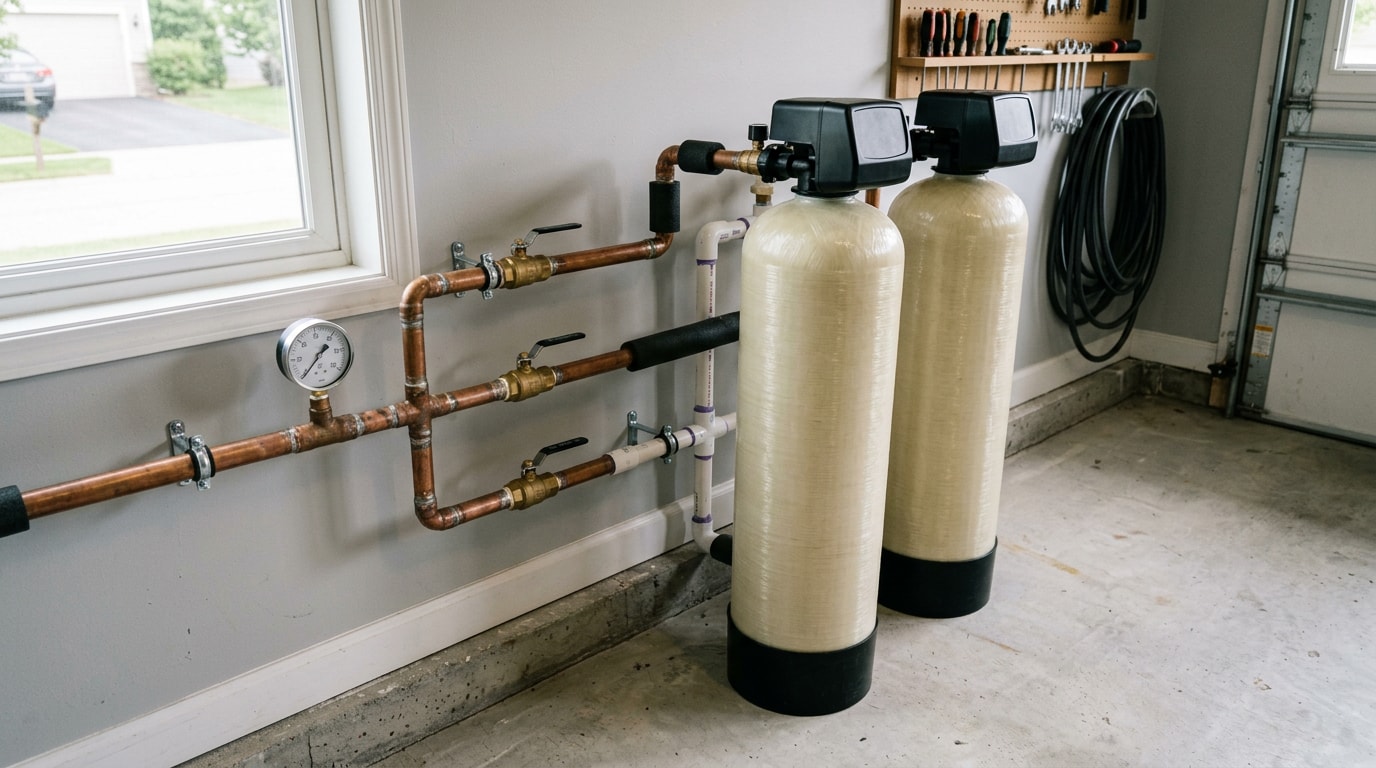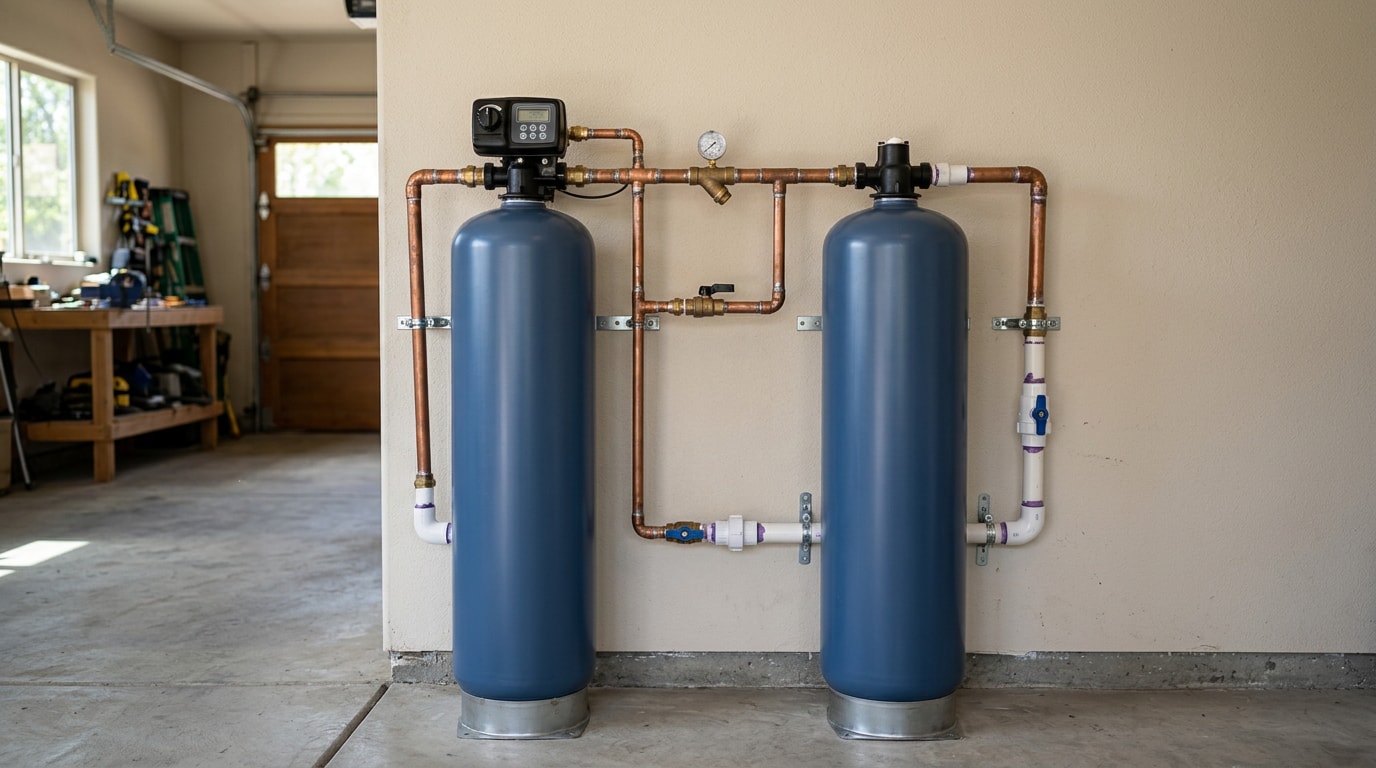
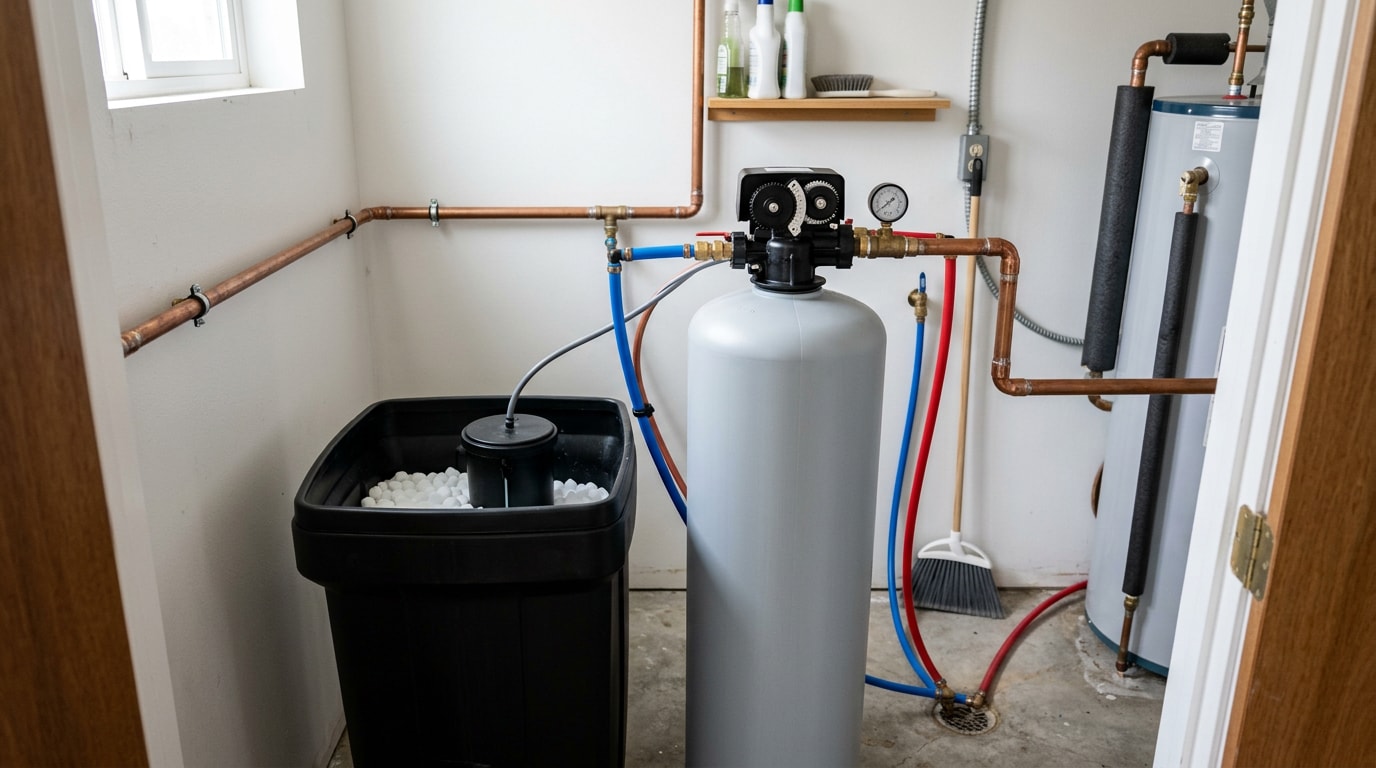
Water softener maintenance in Kern County, CA is the difference between a system that quietly strips calcium and magnesium year after year and one that's just cycling salt and water through tanks that no longer do much. Local groundwater varies block to block here, and systems left unchecked fall behind fast. The checklist below covers what to do, how often, and when it's time to hand the job to a technician.
Skip the upkeep and the symptoms show up in predictable order: scaled fixtures, spotted glassware, stiff towels, and a water heater working harder than it should. In our service calls across Kern County, the single most common cause of a "broken" softener is simply an empty or bridged salt tank, not a failed component.
Water Softener Maintenance Checklist
A reliable water softener maintenance checklist covers four tasks on a repeating schedule: check salt every 4–6 weeks, inspect and clean the brine tank every 6–12 months, clean or treat the resin bed annually, and scan for leaks monthly. Household water use and local hardness levels push these intervals in either direction.
Guides on this topic don't always agree on exact timing. Some recommend wiping down the brine tank every 6 months; others stretch it to 12 months with a deeper cleanout every few years. The honest answer: larger households and harder incoming water push maintenance toward the shorter end of every range.
| Frequency | Task |
|---|---|
| Monthly | Check salt level, scan for leaks around valves and hoses |
| Every 6–12 months | Clean brine tank, inspect for salt bridges |
| Annually | Clean or treat resin bed, schedule a professional check |
| Every few years | Full brine tank cleanout |
If your softener is certified to the residential standard, it was already tested for softening capacity and brine-system accuracy before it left the factory. NSF/ANSI 44 establishes the minimum requirements for certifying residential water softeners that use a cation exchange resin regenerated with sodium or potassium chloride, which reduces hardness in public or private water supplies. That same benchmark is useful context when a technician checks whether your unit is still performing the way it was built to.
For homes relying on a water softening system in this part of the Central Valley, leaning toward the shorter end of every interval above is the safer default, especially on private wells.
How to Maintain Your Water Softener
Routine upkeep breaks down into four hands-on tasks, done roughly in the order below.
Check and Refill Salt Levels
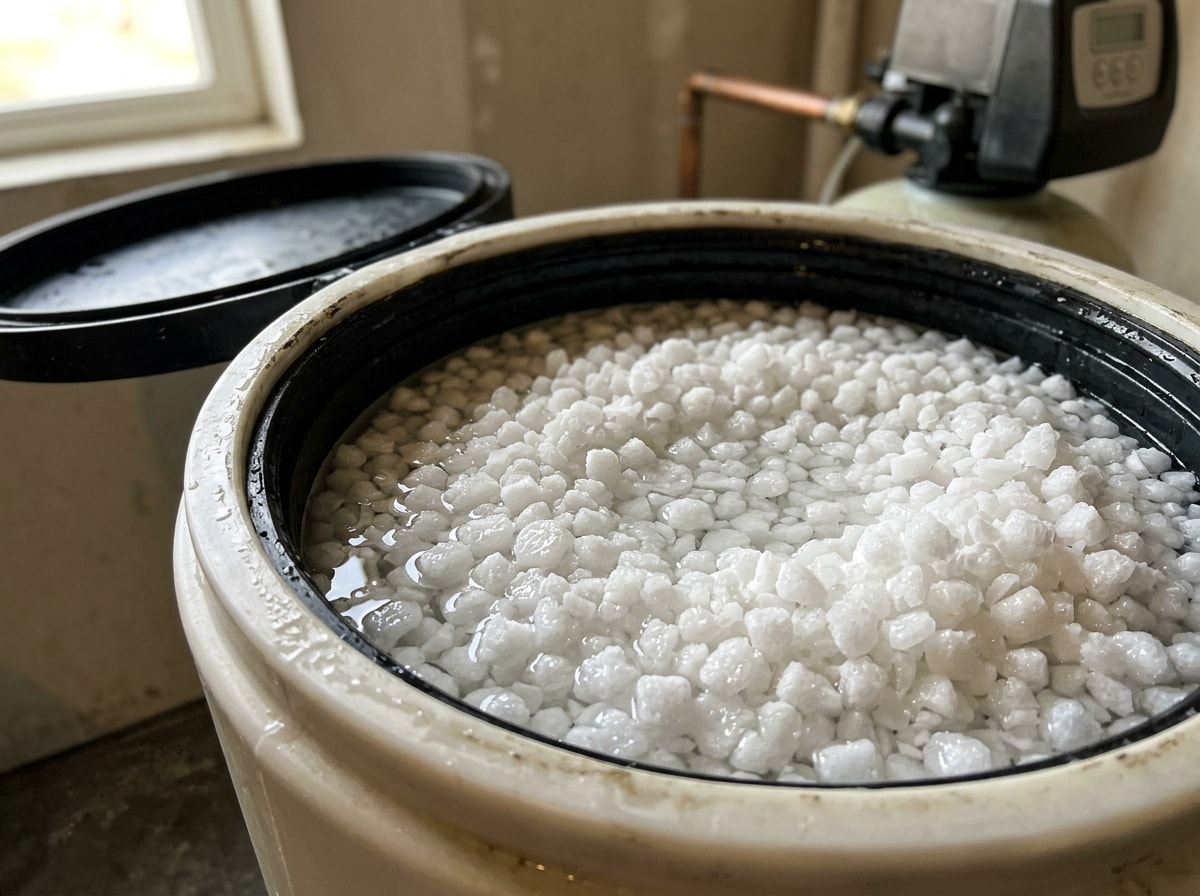
Keeping the brine tank stocked is the single most important maintenance task, since the system can't regenerate properly without enough softener salt. Open the tank lid and confirm salt sits a few inches above any visible water, topping off before it runs low.
Salt purity affects both performance and how often you'll be back at the tank. Higher-purity pellets dissolve more evenly and need less frequent attention; if iron is present in the water supply, an iron-removal salt blend can reduce fouling.
Households on softened water sometimes ask about sodium intake. For individuals on a very low sodium diet (500 mg/day), EPA recommends that drinking-water sodium not exceed 20 mg/L.
That advisory recommends reducing sodium concentrations in drinking water to between 30 and 60 mg/L based on esthetic effects like taste for everyone else, which is worth knowing before assuming softened water is off-limits for cooking or drinking.
Clean the Brine Tank
Shut off the incoming water valve and unplug the softener before starting. Disconnect the brine tank, scrub the interior with a soapy bristle brush or sponge, and rinse thoroughly until no residue remains.
Replace the brine grid, then refill with fresh water and salt. This full cleaning step clears out sediment that builds up even with regular salt checks.
Break Up Salt Bridges and Salt Mushing
A hard crust can form across the brine tank, known as a salt bridge, leaving an empty pocket underneath that stops salt from dissolving into the brine solution. Salt mushing is a related issue where dissolved salt resolidifies into a dense sludge at the tank bottom.
Break up a bridge carefully using a broom handle or similar non-metal tool, pressing gently around the edges. Pouring warm water along the inside walls of the tank can also loosen the crust without risking damage from metal tools.
Clean or Replace the Resin Bed
The resin bed is where the actual ion-exchange softening happens, and it's generally built to last 10 to 15 years under normal conditions. Iron fouling or heavy mineral loads can shorten that window if left unaddressed.
A resin cleaner applied once a year, or whenever hard-water symptoms return between regenerations, helps extend resin lifespan. If cleaning doesn't bring performance back, water treatment system maintenance from a technician can confirm whether the resin itself needs replacing.
Why Kern County Water Pushes Maintenance Harder
Hardness here isn't one number, it's a range, and that range is wider than most homeowners expect. Water is considered soft if its hardness is less than 75 parts per million (ppm), moderately hard at 75 to 150 ppm, hard between 150 and 300 ppm, and very hard at 300 ppm or higher.
The state's water quality reporting shows just how much that range matters locally. Groundwater hardness in the Bakersfield system has run anywhere from 52 to 380 ppm over recent years, averaging around 109 ppm, while purchased surface water has averaged closer to 46 ppm. A home drawing from a harder well or a different pressure zone can sit at a completely different maintenance pace than a neighbor two streets over on a softer supply.
That's one reason a hardness test is worth repeating periodically, not just at install. Hardness shifts, and so should your salt and resin schedule. Homes on private wells should pay even closer attention. Well water treatment often means managing iron and sediment alongside hardness, both of which accelerate resin fouling.
Signs Your Water Softener Needs Maintenance
The clearest signs a water softener needs maintenance are:
- Hard water symptoms returning (spots, scale, stiff laundry)
- Noticeably higher salt or water consumption
- A drop in household water pressure or flow
- Salt sitting untouched in the tank for weeks
Any of these point to a task on the checklist above, or in some cases, a system nearing the end of its service life.
Water Softener Troubleshooting Guide
Some problems need more than routine upkeep to resolve on the first attempt.
Why Is My Water Softener Turning the Water Brown?
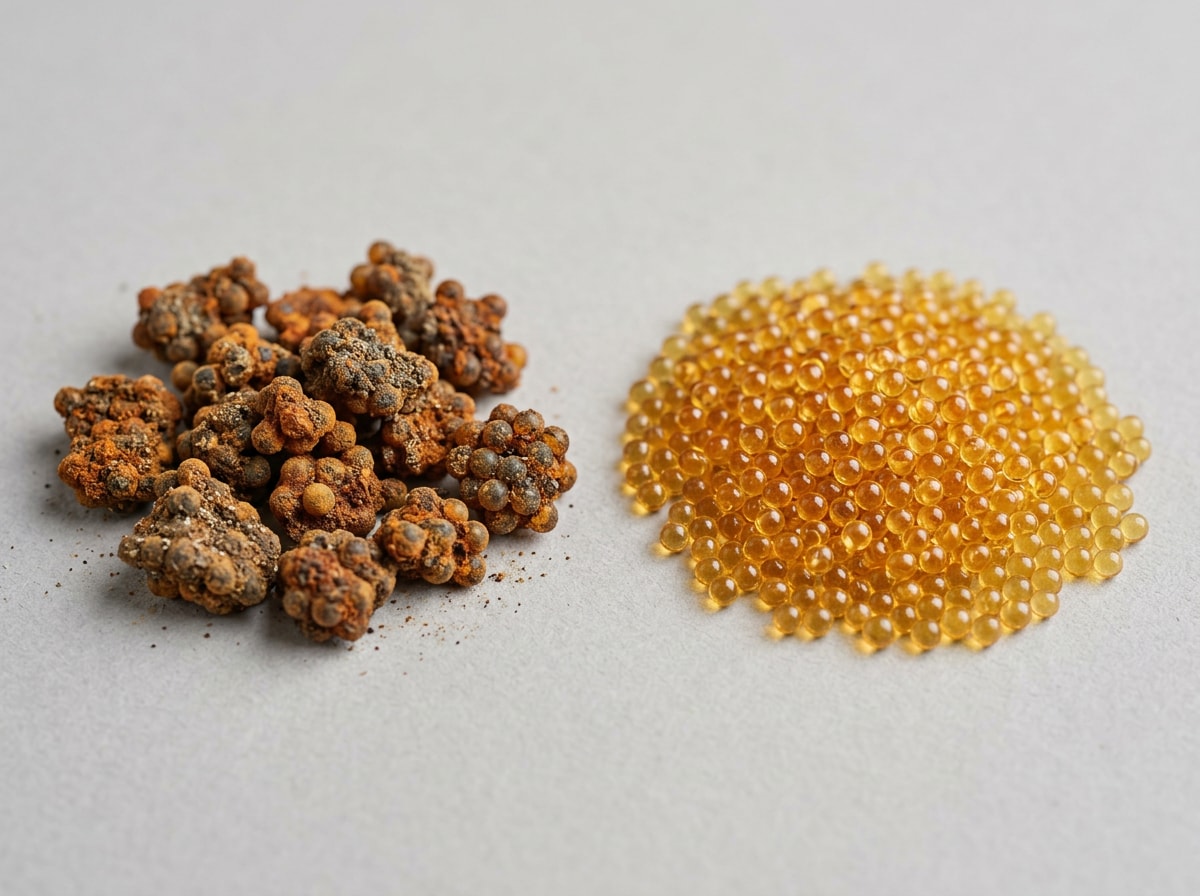
Brown or discolored water usually signals iron buildup on the resin. Running an iron-specific resin cleaner through a manual regeneration cycle typically clears it, and repeating the treatment on a regular basis prevents it from recurring.
Why Is My Water Softener Not Using Any Salt?
If the brine tank salt level hasn't moved in weeks, the usual culprit is a salt bridge hiding under an intact-looking crust, or a control valve stuck mid-cycle. Break up any bridge first, then watch the next regeneration to confirm salt is actually being drawn down.
Why Is My Water Softener Not Drawing Brine?
A softener that won't pull brine from the tank is often dealing with a clogged injector, a kinked brine line, or a bridge blocking the salt from reaching the water. Clearing the line and checking the injector screen resolves most cases; a persistent issue points to a valve problem worth having a technician look at.
If troubleshooting doesn't resolve a recurring issue, schedule a free inspection rather than guessing at parts.
Do You Need Water Softener Repair or Replacement?
Not every symptom means a new system. Some point to a quick fix, others to equipment that's simply worn out.
When to Repair
A persistent salt bridge, a stuck valve, or a minor leak are typically repair-level issues, especially if the unit is still within its expected lifespan. If basic troubleshooting doesn't resolve the problem, bringing in a professional is the next step before assuming the whole unit is at fault.
When to Replace
Many households schedule an annual service visit, during which a technician cleans components, inspects for wear, and replaces failing parts, a good moment to judge repair versus replacement. Excessive salt or water usage and a significant, unexplained drop in flow are both reasonable grounds to consider system replacement rather than repeatedly repairing an aging unit.
For a closer look at matching a system to Kern County's hardness swings, see our guide on finding a water softener near you in Kern County.
Whether you're troubleshooting an existing system or weighing repair against replacement, schedule a free inspection and get a straight answer before spending money on parts that won't fix the real problem. You can also browse the full range of water treatment services we offer across the region.
FAQ
How Often Should I Check the Salt Level in My Water Softener?
Check every 4–6 weeks. Keep salt a few inches above the water line, and avoid overfilling the tank, which can contribute to bridging.
Can I Clean My Water Softener With Bleach?
A small, diluted amount of bleach can sanitize a brine tank occasionally, but it shouldn't replace regular cleaning or resin care.
How Often Do I Need to Replace My Water Softener's Resin?
Resin is designed to last 10 to 15 years under normal conditions. Iron fouling or heavy use can shorten that, requiring cleaning sooner.
Can a Water Softener Cause Low Water Pressure?
Yes. Clogged resin or a blocked drain line are common causes. If flow drops noticeably, revisit the troubleshooting steps above before assuming replacement is necessary.
Why Is My Water Softener Not Using Salt?
Usually a hidden salt bridge or a valve stuck mid-cycle. Break up the bridge, confirm the next regeneration draws down salt, and call a technician if it still isn't consuming any.
How Often Should a Water Softener Be Professionally Serviced?
Once a year is the common baseline for most households. Homes on well water or very hard groundwater often benefit from checking in sooner.