Hard water filtration in the Inland Empire, CA starts with one number: your home's grains-per-gallon (GPG) reading, not a guess based on crusty faucets. Those white rings on your showerhead and the glassware that never comes out of the dishwasher clear are symptoms, not the diagnosis. Below is what actually drives hardness here, which fix solves which problem, and a local softener rule that catches a surprising number of Inland Empire homeowners off guard before they ever call anyone.
Why Is Inland Empire Water So Hard?
Hard water simply means water carrying dissolved calcium and magnesium, picked up as it moves through rock and soil. The Inland Empire sits atop groundwater basins rich in these minerals, and much of the region's supply also blends with imported water that collects additional hardness along its route. That combination is why so many homes between Riverside and San Bernardino deal with heavy scale no matter how new the plumbing is.
The GPG Hardness Scale
Water hardness is officially tracked by the U.S. Geological Survey using calcium carbonate concentration, then converted into the grains-per-gallon units most softener manufacturers use. General guidelines for classification of waters are 0 to 60 mg/L as calcium carbonate classified as soft, 61 to 120 mg/L as moderately hard, 121 to 180 mg/L as hard, and more than 180 mg/L as very hard. At roughly 17.1 mg/L per grain, that scale translates to the ranges below.
| Classification | GPG Range |
|---|---|
| Soft | 0–1 |
| Moderately hard | 1–3.5 |
| Hard | 3.5–10.5 |
| Very hard | Above 10.5 |
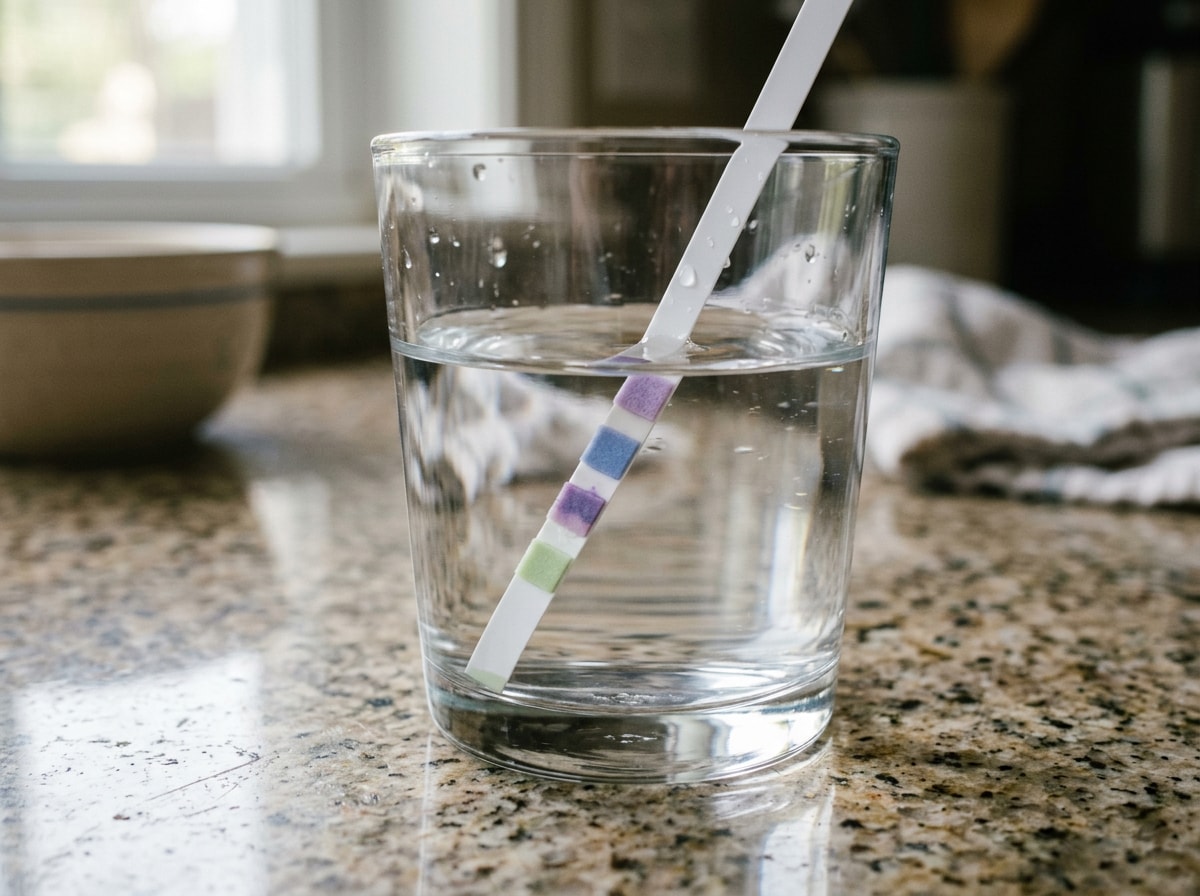
Local water agencies publish annual quality reports with hardness figures, and most published readings and independent test data for the Inland Empire fall somewhere between roughly 10 and 25+ GPG, with some groundwater-heavy pressure zones testing even higher. That spread exists because hardness depends on which groundwater basin or imported-water blend feeds a specific neighborhood, so two houses a few blocks apart can get different numbers. An at-home test kit or a professional hardness testing service confirms what's actually coming out of your tap instead of relying on a county-wide average.
Water Softener vs. Whole-House Filtration vs. Salt-Free Conditioning: Which Do You Need?
Once you know your water is hard, the next question is which system solves it. Softening, filtration, and salt-free conditioning each handle a different part of the problem, and most Inland Empire households end up needing more than one.
Salt-Based (Ion-Exchange) Water Softeners
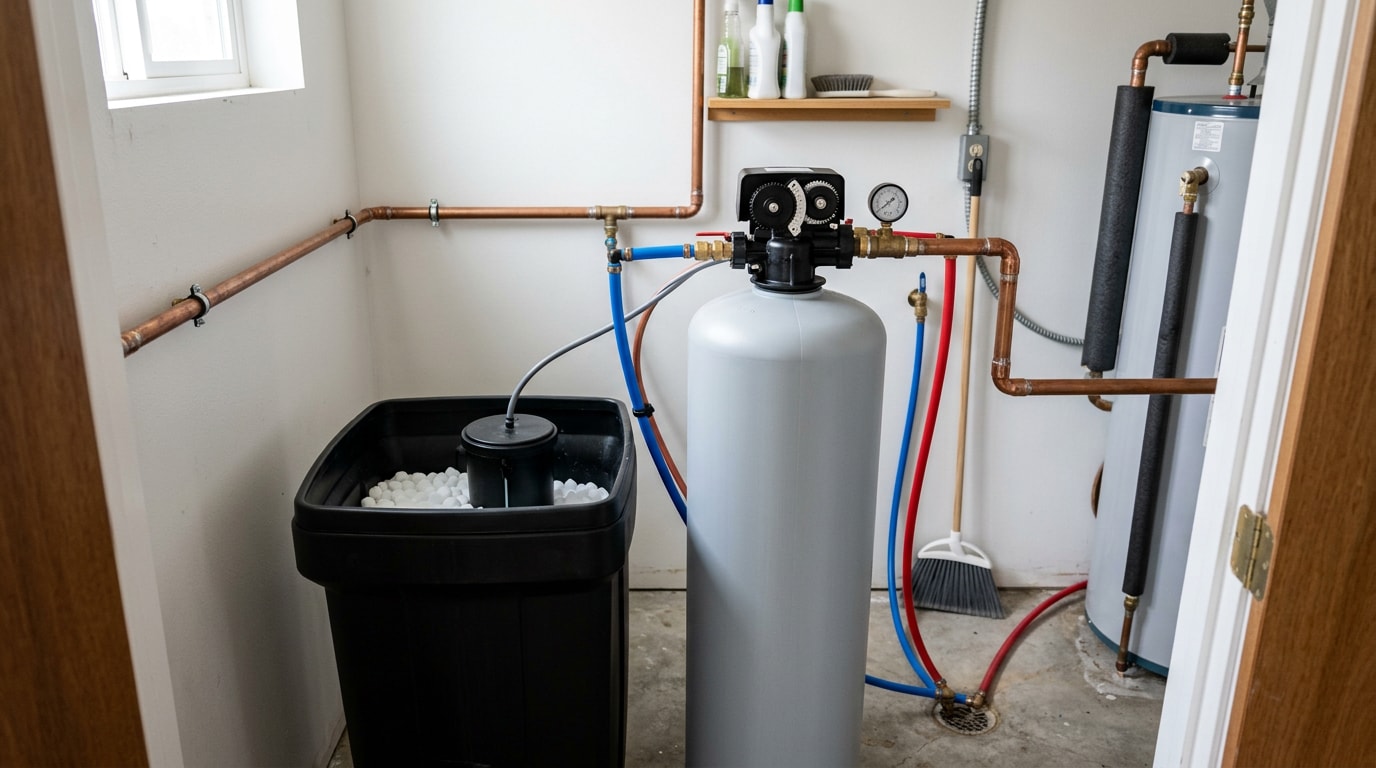
Salt-based softeners work through ion exchange. Ion exchange involves removing the hardness ions calcium and magnesium and replacing them with non-hardness ions, typically sodium supplied by dissolved sodium chloride salt, or brine. This remains the most thorough calcium and magnesium removal method available, which is why it's still the benchmark for eliminating scale throughout a home's plumbing.
The tradeoff is regeneration. Frequency of the regeneration or recharge cycle depends on the hardness of the water, the amount of water used, size of the softener, and capacity of the resins. Every regeneration flushes a batch of concentrated brine out as wastewater, which is exactly what triggers the local restriction covered below.
Salt-Free Water Conditioners
A salt-free conditioner doesn't remove hardness minerals at all. Instead, it alters their crystal structure so they're less likely to cling to pipes or fixtures, delivering scale control without adding sodium to household water. Because there's no brine discharge, salt-free conditioning stays usable in areas where self-regenerating softeners face restrictions.
Whole-House Filtration & Reverse Osmosis
Filtration solves a different problem entirely. A whole-house filter handles sediment and chlorine taste or odor across every tap in the home, and a reverse osmosis unit under the kitchen sink removes additional contaminants for drinking and cooking water. Neither one softens water on its own.
| System | Removes Hardness | Adds Sodium | Reduces Chlorine/Sediment | Compliant in Softener-Restricted Areas |
|---|---|---|---|---|
| Salt-based softener | Yes | Small amount | No | Not for new installs in restricted zones |
| Salt-free conditioner | No (prevents scale buildup) | No | No | Yes |
| Whole-house filtration | No | No | Yes | Yes |
| Reverse osmosis (point-of-use) | Yes, at that tap | No | Yes (drinking water) | Yes |
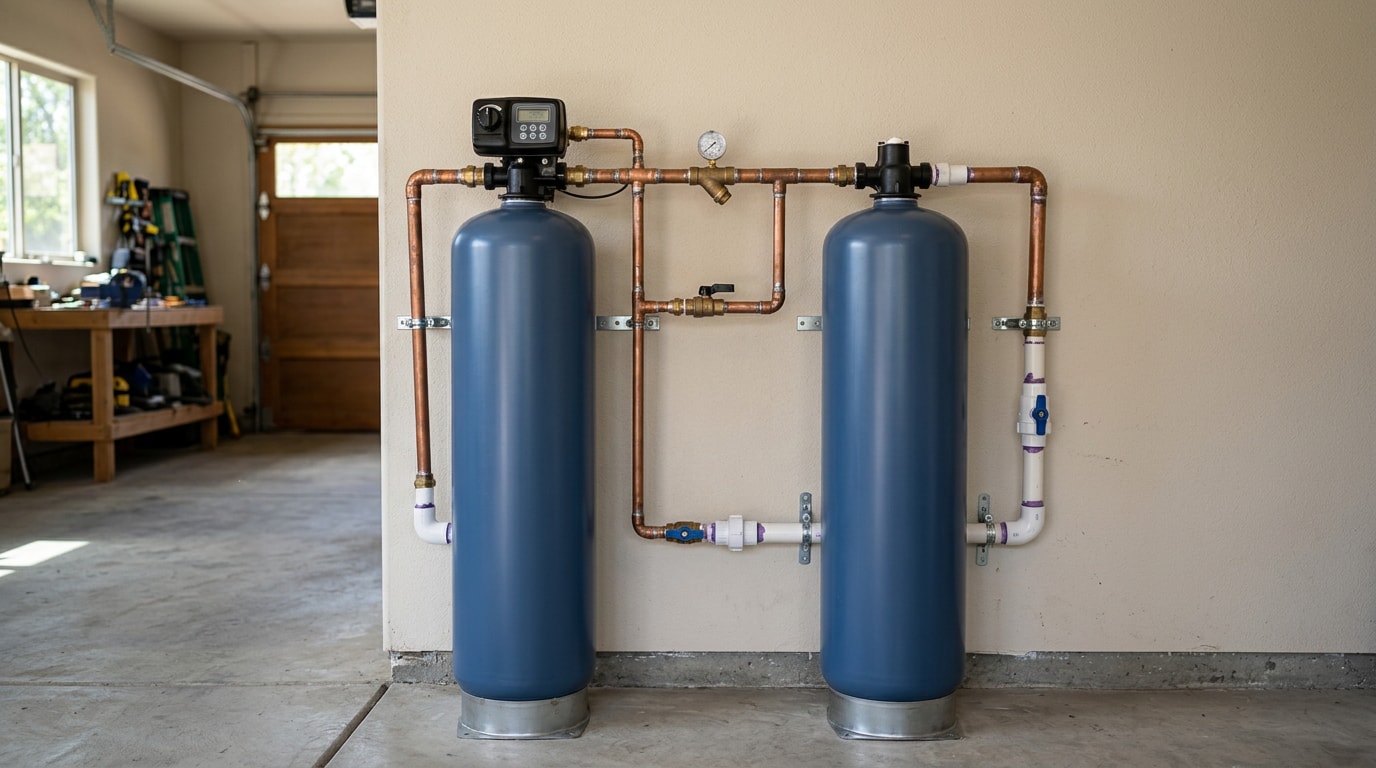
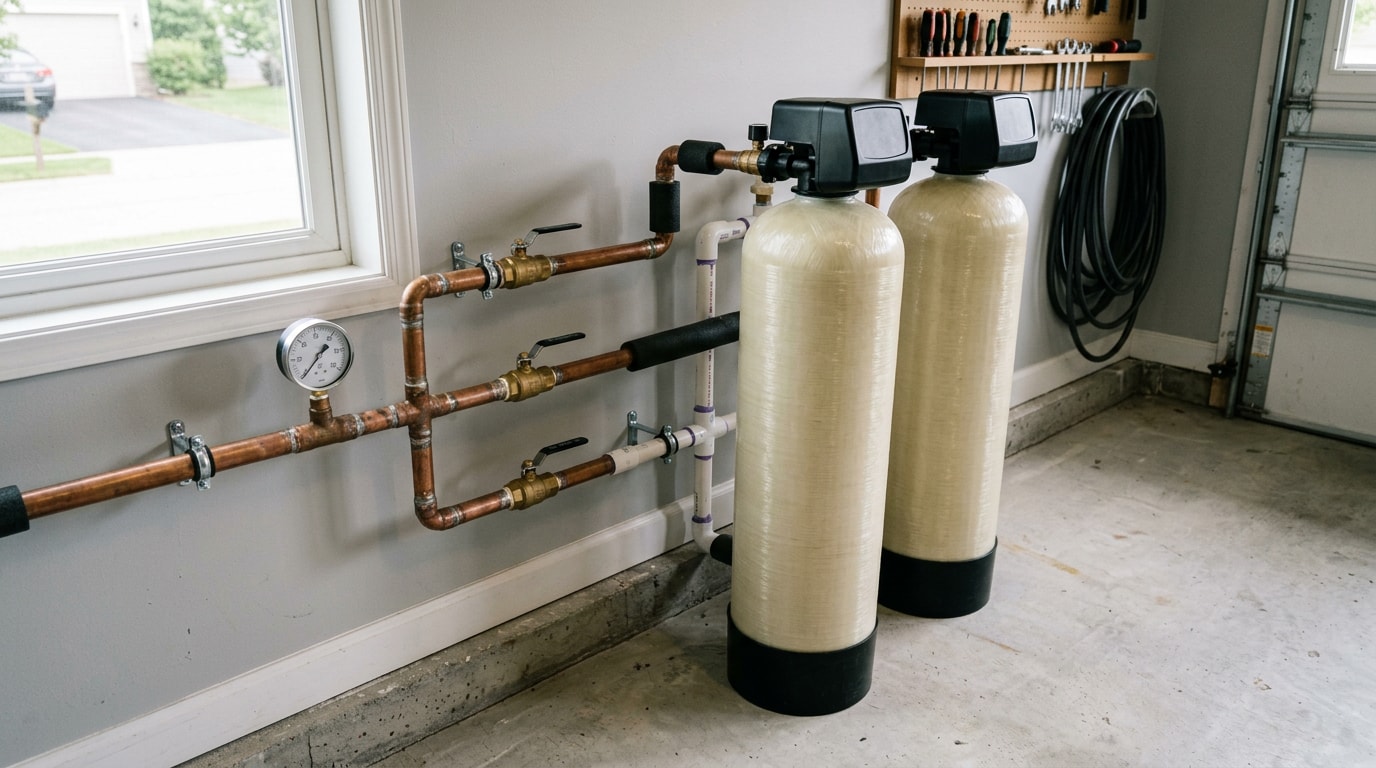
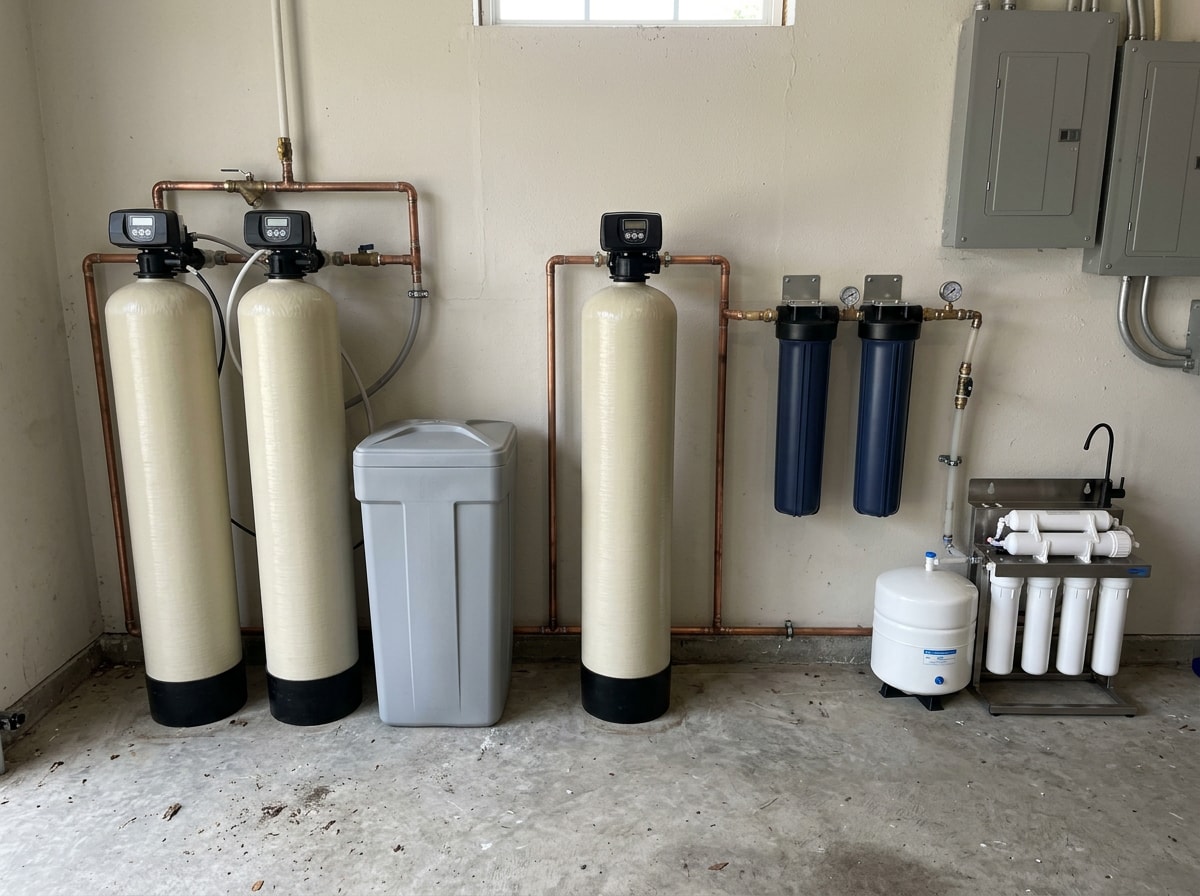
That's why many Inland Empire households pair a whole-house filtration system with a water softening system or conditioner, then add an under-sink reverse osmosis system for the kitchen tap. If your skin or shower feels filmy even after softening, our Water Softener Shower Filter Guide for Inland Empire, CA walks through the fixture-level fix for that specific complaint.
California Water Softener Rules in the Inland Empire
This is the part a lot of generic guides skip, and it matters more here than almost anywhere else in the state. California's Water Code lets local water and sewer agencies regulate self-regenerating softeners when brine discharge threatens water-quality goals. Under that authority, agencies can take several routes, from requiring high-efficiency units to enacting a voluntary buy-back or exchange program for residential self-regenerating water softeners, consistent with existing law, up to prohibiting the installation of residential self-regenerating water softeners outright.
The Inland Empire Utilities Agency, which serves a large swath of western San Bernardino County, used that authority. On July 20th, the Inland Empire Utilities Agency, with unanimous support from residents, businesses, environmentalists, local cities and other water and wastewater agencies, adopted a new regional ordinance prohibiting the new installation or replacement of certain residential self-regenerating water softeners, the type to which you add salt and directly discharges brine to the wastewater system. At the time the rule was debated, IEUA estimated approximately 18,000 ion exchange water softeners were in use in its service area, releasing about 3,000 tons of salt into the sewer system each year. That's the scale of brine the ordinance was written to address, and it's why a homeowner in Ontario or Chino can't simply swap in a new self-regenerating softener the way someone in a non-restricted city can.
Existing softeners generally aren't forced out, but new installs and replacements in affected service areas typically need to be a different type of system. A salt-free water treatment system, a demand-initiated regeneration softener, or portable exchange tank service all avoid the ongoing brine discharge that triggered the rule in the first place. Rules vary by city and water district even within the Inland Empire, so it's worth confirming your specific address before buying equipment. If you're not sure which category your home falls into, schedule a free inspection and we'll check local requirements before recommending a system.
Choosing and Protecting Your System
Matching equipment to your actual hardness level, your local softener rules, and your water-quality goals is what actually protects plumbing and appliances long-term, not just buying the biggest tank available. A few steps make that match easier:
- Test first. A water quality testing visit confirms your GPG reading instead of relying on a regional average.
- Check your water district. Confirm whether you're inside a service area that restricts new self-regenerating softeners before you buy one.
- Pair systems, don't pick one. Whole-house filtration plus softening or conditioning covers scale and taste; add reverse osmosis at the kitchen sink for drinking water.
- Plan for upkeep. Salt-based systems need periodic salt refills and eventual resin replacement; if an old unit is failing, system replacement is usually cheaper than nursing it along.
- Keep it serviced. Scheduled maintenance keeps grain capacity and regeneration settings accurate as your household's water use changes.
Browse the full system lineup on the Pure Water Filtration homepage, or see how we've approached similar hard-water setups across the region on our projects page. When you're ready for a hardness reading and a straight answer on what fits your address, schedule a free inspection.
FAQ
Do I need a water softener in the Inland Empire?
Most Inland Empire homes fall in the hard to very hard range, so a softener or conditioner typically pays off through less scale, longer appliance life, and easier cleaning. Whether you specifically need one depends on your home's GPG reading, which a water test confirms directly.
How hard is the water in the Inland Empire?
Published readings and industry test data across the region commonly range from about 10 GPG to more than 25 GPG depending on the neighborhood and water source. On the USGS scale, anything above 10.5 GPG is classified as very hard, which covers most of the area.
What's the difference between a water softener and a whole-house filter?
A softener removes calcium and magnesium through ion exchange to stop scale. A whole-house filter targets chlorine taste, odor, and sediment but doesn't soften water. Many homes run both because they solve different problems.
Are water softeners banned in the Inland Empire?
Not statewide, but the Inland Empire Utilities Agency prohibits new installation or replacement of self-regenerating, salt-based softeners within much of its western San Bernardino County service area. Existing units can usually stay; new installs in those cities typically need a salt-free conditioner, a demand-initiated regeneration softener, or exchange tank service instead.
How much salt does a water softener use?
Salt use depends on your hardness level, household size, and the softener's regeneration settings, so it varies household to household. In very hard water areas, a typical home works through roughly one 40-pound bag every few weeks, though an efficient, well-sized unit uses noticeably less.
How do I find out my home's exact hardness level?
A water district's annual quality report gives a neighborhood-wide average, but it won't reflect your specific plumbing or pressure zone. A direct hardness test at your tap is the only way to size equipment correctly.
Will a water filtration system reduce my plumbing repair costs?
Unmanaged hardness and sediment accelerate wear on pipes, fixtures, and water heaters over time. A system matched to your actual hardness and contaminant profile reduces that mineral buildup, which is typically where the long-term savings come from.