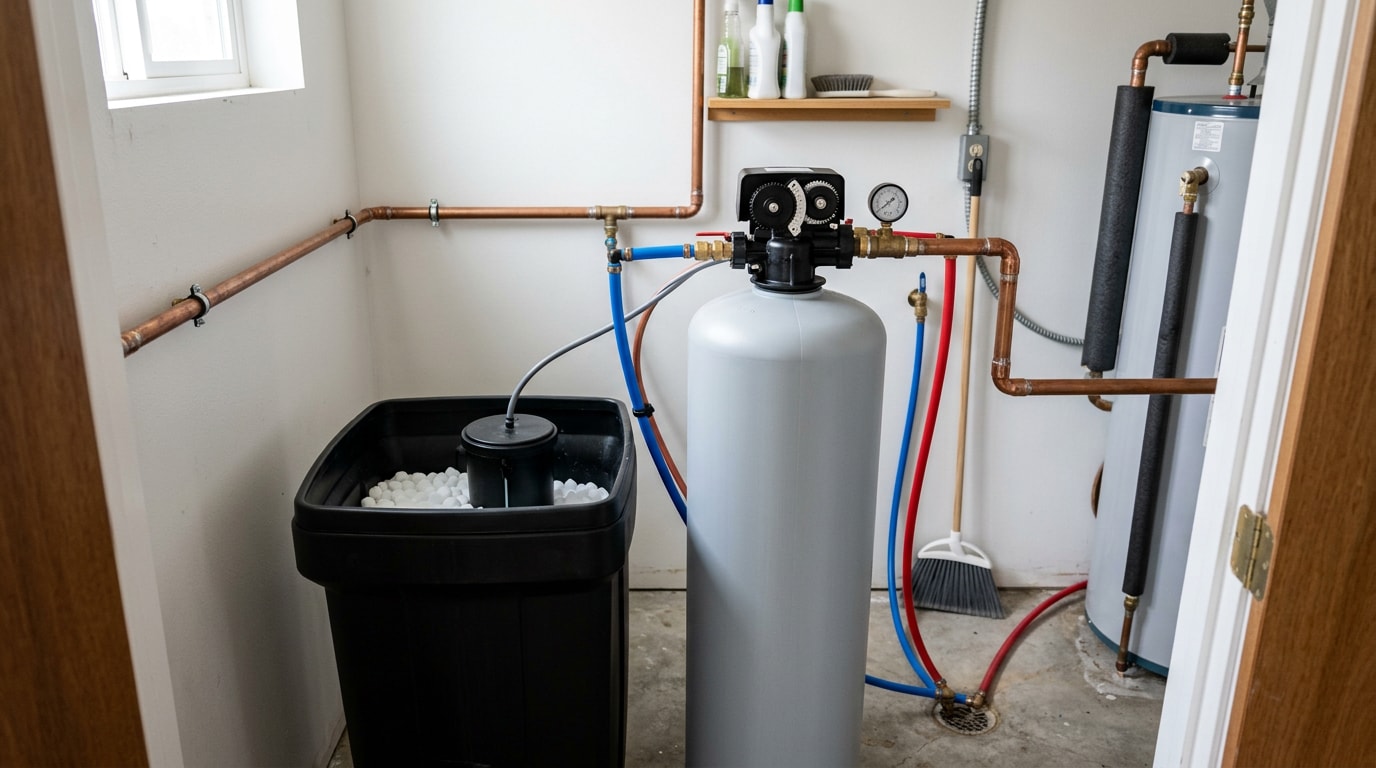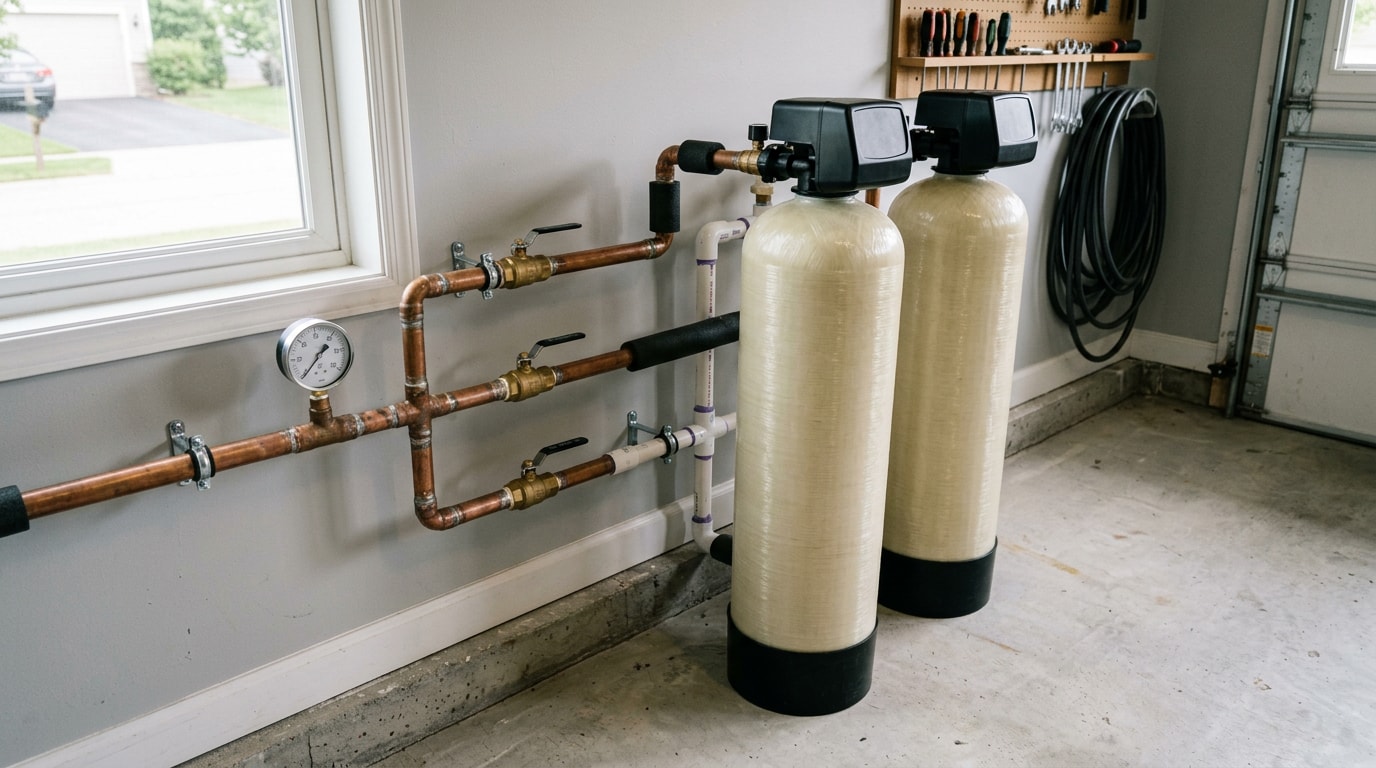

A water softener and a shower filter solve two different problems in an Inland Empire home, and confusing them is the single biggest reason homeowners here buy the wrong equipment. One strips out the calcium and magnesium causing scale; the other targets the chlorine making your skin and hair feel off. Most houses in Riverside and San Bernardino counties actually need both, and the rest of this guide walks through how to tell which one your house is missing.
Water Softener vs. Shower Filter: What's the Difference?
A water softener is installed at the main line and treats every drop of water entering the house. It uses ion exchange resin to pull hardness minerals out of the supply before they ever reach a pipe, fixture, or appliance.
A shower filter is a small cartridge mounted at a single showerhead. It's built to reduce chlorine and odor at that one fixture, not to touch hardness.
That difference matters because the two devices get marketed next to each other constantly, but they're not interchangeable:
- A softener fixes: scale on glass and fixtures, clogged showerheads, stiff laundry, water heater sediment buildup.
- A shower filter fixes: chlorine smell, chlorine-related skin dryness and hair dullness, at that one fixture only.
- Neither one, on its own, fixes both problems. Homes that want soft water and chlorine-free shower water generally need a whole-home softener plus either a whole-home carbon filter or a dedicated shower filter.
On service calls across Ontario, Fontana, and Rancho Cucamonga, our technicians regularly find scale coating water heater elements in units that are barely five years old — a direct result of hardness minerals that were never treated at the source. That's the kind of damage a shower filter alone can't prevent, because it was never designed to.
How Hard Is Inland Empire Tap Water?
Water hardness is measured in grains per gallon (GPG), and the U.S. Department of Interior and the Water Quality Association classify anything above 10.5 GPG as "very hard," with the "hard" range starting at 7.0 GPG . Inland Empire water utilities commonly report readings at or above that very-hard threshold, which is why softener and shower-filter questions come up together so often locally.
| Classification | Grains Per Gallon (GPG) | What It Means for Your Home |
|---|---|---|
| Moderately hard | 3.5–7.0 | Mild scale over years |
| Hard | 7.0–10.5 | Noticeable spotting, scale buildup |
| Very hard | Over 10.5 | Fast scale accumulation, common across the Inland Empire |
Hardness itself isn't a contaminant and it isn't regulated as a health risk. It's simply a mineral load that behaves differently once it moves through your plumbing, your water heater, and your showerhead.
What Hard Water Does to Pipes, Water Heaters, and Skin
Scale buildup doesn't show up all at once. It's a slow accumulation that quietly narrows pipe diameters, drops water pressure, and forces your water heater to work harder to heat the same volume of water.
A few of the most common symptoms we see on inspections:
- Reduced water pressure from scale narrowing pipe interiors
- Sediment collecting at the bottom of water heater tanks, shortening their lifespan
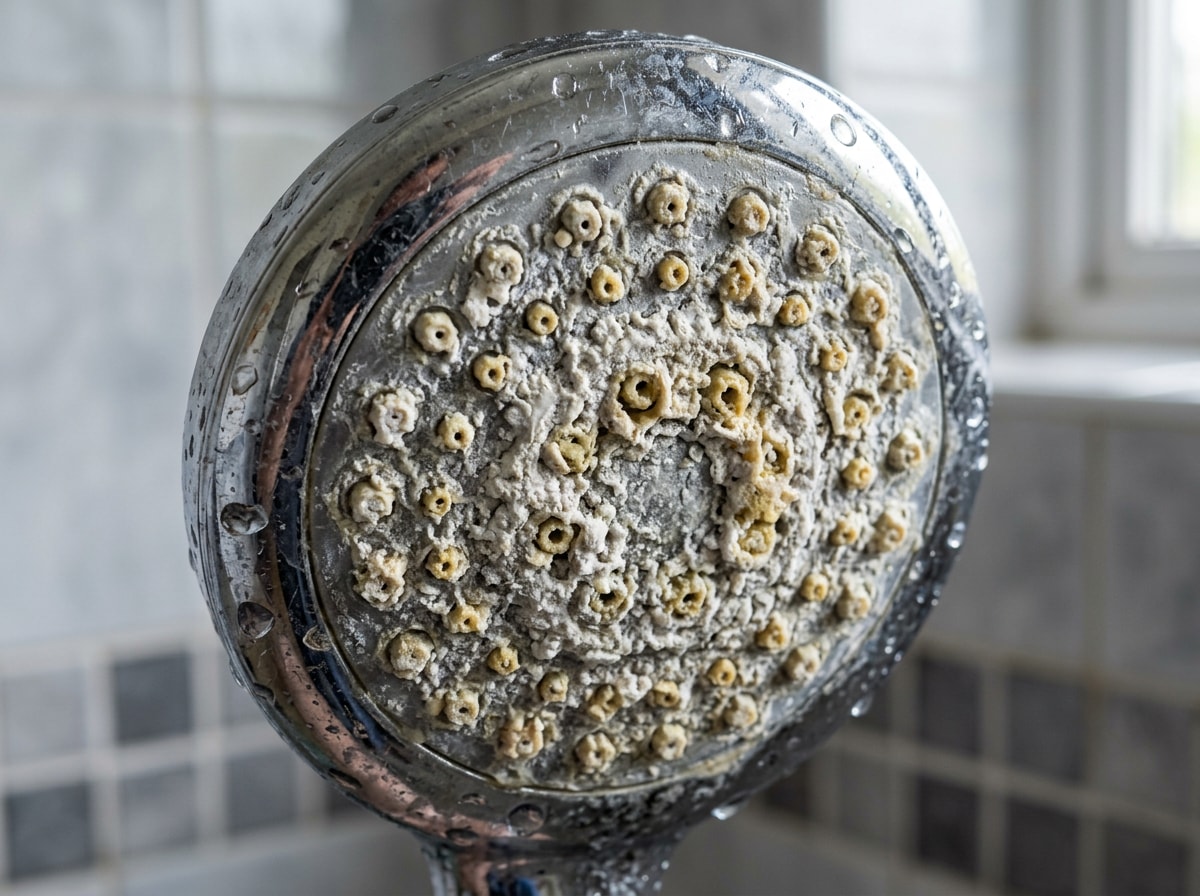
- Clogged faucet aerators and showerheads
- Spots on glassware and shower glass
- Stiff, dingy laundry
It's worth separating the hardness problem from the chlorine problem, because they're often confused. A clogged, mineral-crusted showerhead is a hardness issue caused by scale. The chlorine smell or post-shower skin irritation a filter is built to reduce is a chemical issue. They frequently show up in the same house, but a softener doesn't fix the second one and a shower filter doesn't fix the first.
Choosing the Right System for Your House
Whole-Home Filtration
Whole-home, or point-of-entry, filtration treats water at the main line before it reaches a single fixture in the house. Every faucet, every shower, and every appliance gets treated water, which is a meaningfully different outcome than mounting a filter on one showerhead. Homes dealing with chlorine odor across the entire house typically look at this option first — details on setup are on our whole-house filtration systems page.
Water Softener Installation & Maintenance
A professionally installed water softener swaps calcium and magnesium for sodium or potassium ions through ion exchange, which is what actually stops new scale from forming going forward. Scale deposits from hardness buildup affect fixtures and appliances throughout the entire home, which is why hardness is typically treated at the whole-house level rather than at a single faucet.
Ongoing maintenance, periodic salt refills, and occasional resin bed checks matter more than most buyers expect. A softener that's run out of salt quietly stops working while still looking fine from the outside. See our water softening systems page for install timelines, or our hardness testing service if you want a GPG reading for your specific address before you decide.
Shower Filters
A shower filter cartridge mounts between the shower arm and the showerhead and is rated to reduce chlorine, not hardness. Cartridges are a consumable part — most need replacement every two to six months depending on water quality and household use, so factor that into the ongoing cost before you buy.
Types of Water Treatment Systems
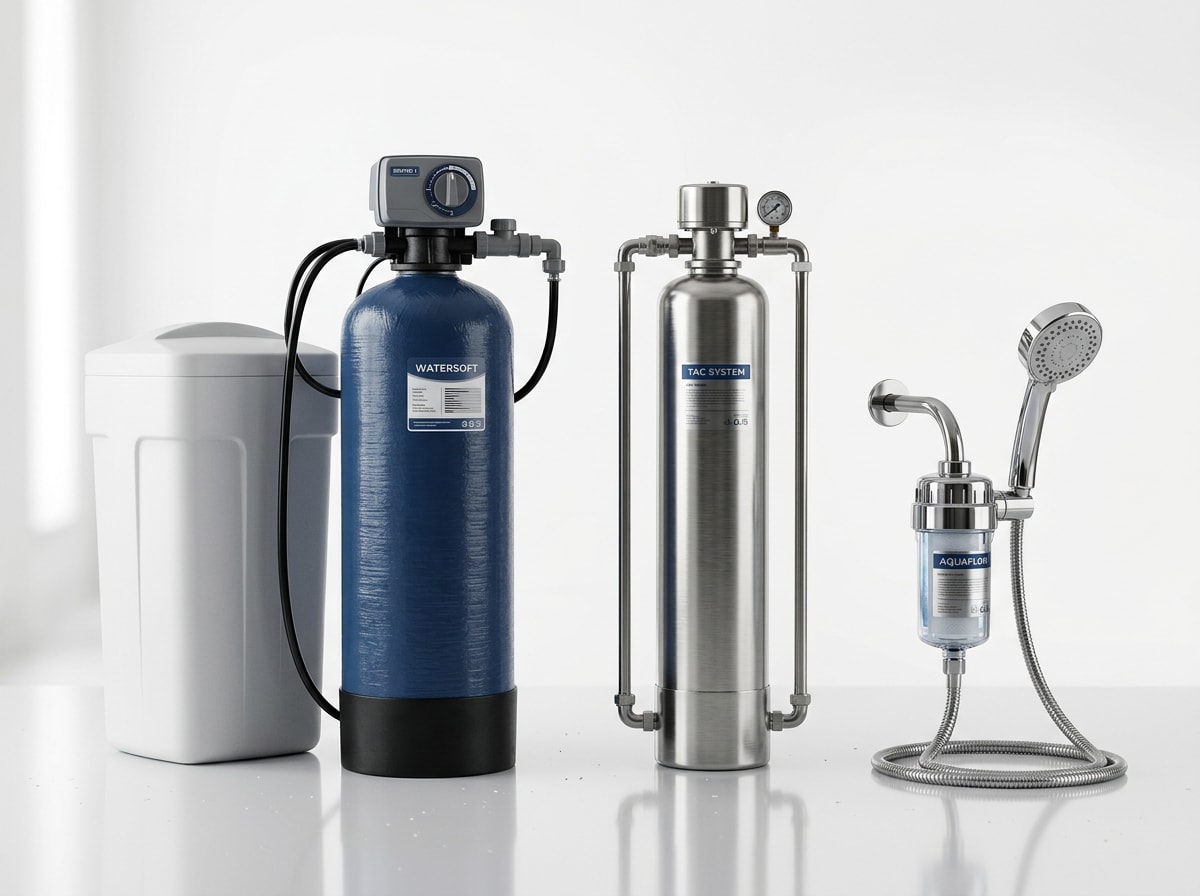
Homeowners deciding what to install usually land on one of three paths: a salt-based softener, a salt-free conditioner, or a standalone shower filter. Each solves a different piece of the puzzle.
3-Stage Carbon Filtration
A 3-stage carbon filter removes chlorine, sediment, and odor-causing compounds from water entering the home. It's a strong complement to a softener, not a substitute for one — carbon media isn't built to pull calcium and magnesium out of water, so scale formation continues untreated if carbon is the only system installed.
Salt-Free Conditioning
Salt-free conditioning uses template-assisted crystallization (TAC) to convert calcium and magnesium into microscopic crystals that stay suspended in the water instead of bonding to pipe walls. Minerals remain in the water, but they no longer stick around to form scale. That means no brine discharge and no added sodium. The tradeoff: these technologies may provide a measurable reduction in hardness depending on the measurement method applied, but they do not reduce the total calcium or magnesium content of the water, nor are they proven to achieve soft water below 1.0 grain per gallon . Our salt-free water treatment systems page has more on how that compares to ion exchange.
| Factor | Salt-Based Softener | Salt-Free Conditioner | Shower Filter |
|---|---|---|---|
| Scale prevention | Strong | Moderate | None |
| Adds sodium | Yes, small amount | No | No |
| Maintenance | Salt refills, resin checks | Low | Cartridge swaps every 2–6 months |
| Treats shower water | Yes, whole house | Yes, whole house | Single fixture only |
| Reduces chlorine | No | No | Yes |
NSF Certification: How to Know a System Actually Works
Marketing claims on water treatment equipment are loosely regulated, but two independent standards give you something concrete to check before you buy.
NSF/ANSI 44 sets the minimum requirements for certifying residential water softeners that use cation exchange resin regenerated with sodium or potassium chloride to reduce hardness . Certification under this standard covers hardness reduction, material safety, structural integrity, pressure drop, softening capacity, and accuracy of the brine system — so a certified softener has been independently tested, not just advertised.
Shower filters are covered by a separate standard. NSF/ANSI 177 is the recognized certification standard for shower filters that reduce chlorine, and certification supports consumer trust in that specific performance claim . If a shower filter you're considering doesn't list an NSF/ANSI 177 certification, treat the chlorine-reduction claim on the box as unverified rather than assuming it's accurate.
Not sure which rating applies to your water, or whether your current fixtures are even rated for your hardness level? A water quality assessment gives you an actual number to work from instead of a guess, and you can schedule a free inspection with our team to get one.
For homeowners who also want to compare point-of-use options for the kitchen tap, our guide on water treatment accessories for the Inland Empire covers add-ons that pair well with a softener setup.
FAQ
Do I need a shower filter if I already have a water softener?
A softener removes hardness minerals, but it typically doesn't remove chlorine or chloramine. A shower filter can still improve how your skin and hair feel even in a home with a softener already installed. It isn't required to fix hardness — the softener handles that — but some homeowners add one anyway for the chlorine reduction alone.
What kind of system do I need: a softener, a filter, or both?
Match the fix to the symptom. A softener addresses scale, pressure loss, and hardness-related wear. A filter targets chlorine taste and odor. Most Inland Empire homes end up with a combination, since local water commonly carries both hardness minerals and noticeable chlorine at the same time.
Do shower filters remove hard water minerals?
No. Standard shower filter cartridges are built and certified to reduce chlorine, not calcium or magnesium. If scale on your showerhead or glass is the main complaint, a shower filter won't fix it — you need a softener or conditioner treating the water before it reaches that fixture.
How often should a shower filter cartridge be replaced?
Most cartridges need replacement every two to six months. Harder water and heavier household use push you toward the shorter end of that range, since mineral buildup and chlorine exposure both shorten cartridge life faster than the manufacturer's default estimate assumes.
Do I need a water softener in the Inland Empire?
In most cases, yes. Local readings commonly fall in the "hard" to "very hard" classification, above the 10.5 GPG threshold used industry-wide. A whole-home softener removes the calcium and magnesium responsible for scale, protecting plumbing and appliances from the wear untreated hard water causes over time.
How do I know if a softener or shower filter I'm considering actually works as advertised?
Check for independent certification rather than taking the label at face value. NSF/ANSI 44 certifies residential softeners for hardness reduction , while NSF/ANSI 177 certifies shower filters specifically for chlorine reduction . A product without either certification hasn't been independently verified for that claim.
---
Written by the water treatment team at Pure Water Filtration, California water treatment technicians serving Riverside and San Bernardino counties. Have a question about your own water? Contact us or visit the homepage to see our full range of services across the Inland Empire.