Water treatment accessories in the Inland Empire, CA, range from a five-dollar O-ring to a full brine tank and bypass valve assembly, and picking the wrong ones is the fastest way to waste money on a system that never fixes your water. Riverside and San Bernardino County homes deal with a specific combination of mineral-heavy groundwater and imported supply that most generic filter kits aren't built for. This guide breaks down exactly which accessories matter here, what they cost in 2026, and how to avoid paying for capacity you don't need.
Visit Pure Water Filtration to see our services and request a free estimate.
What Water Treatment Accessories Do Inland Empire Homes Actually Need?
"Accessories" covers more than the tank itself. The parts around it are what determine whether a system actually performs, lasts, and stays serviceable.
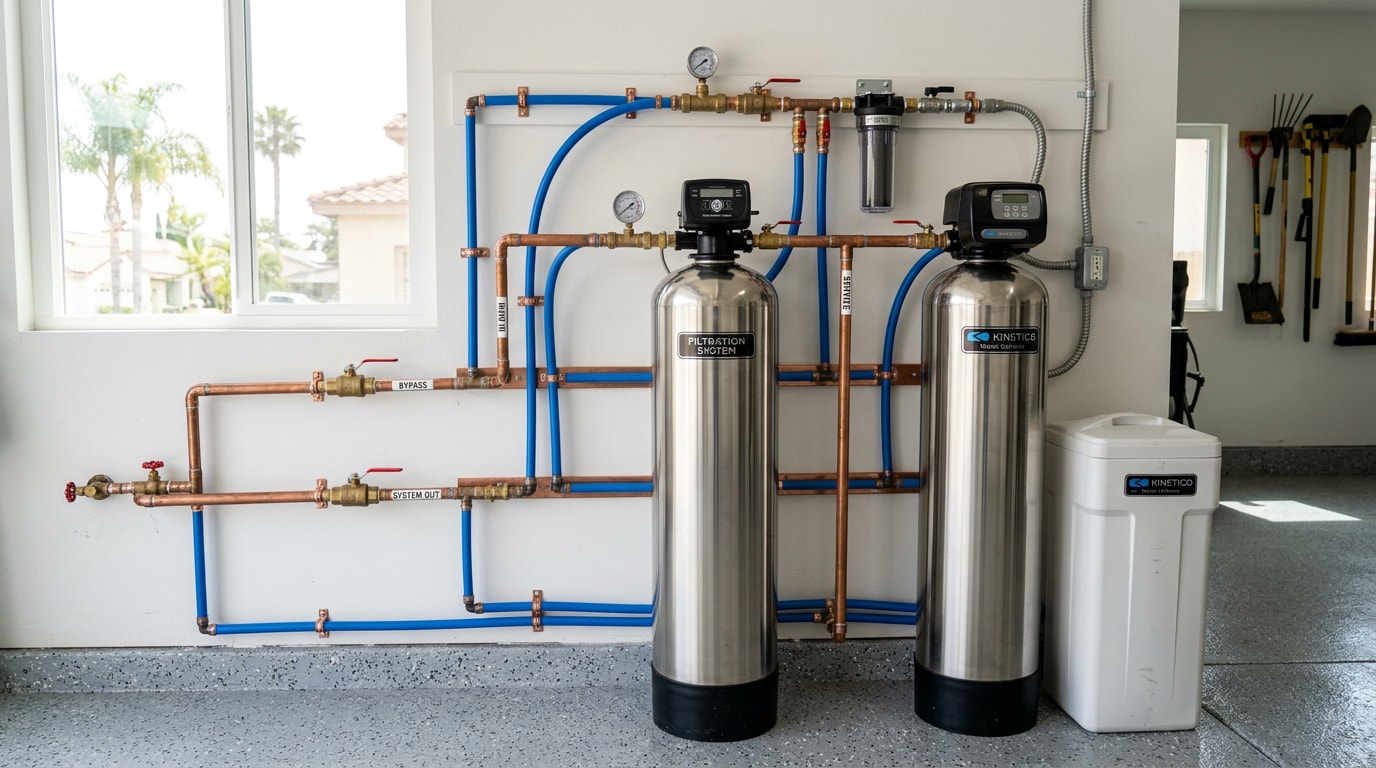
Most whole-home setups in this region include some combination of:
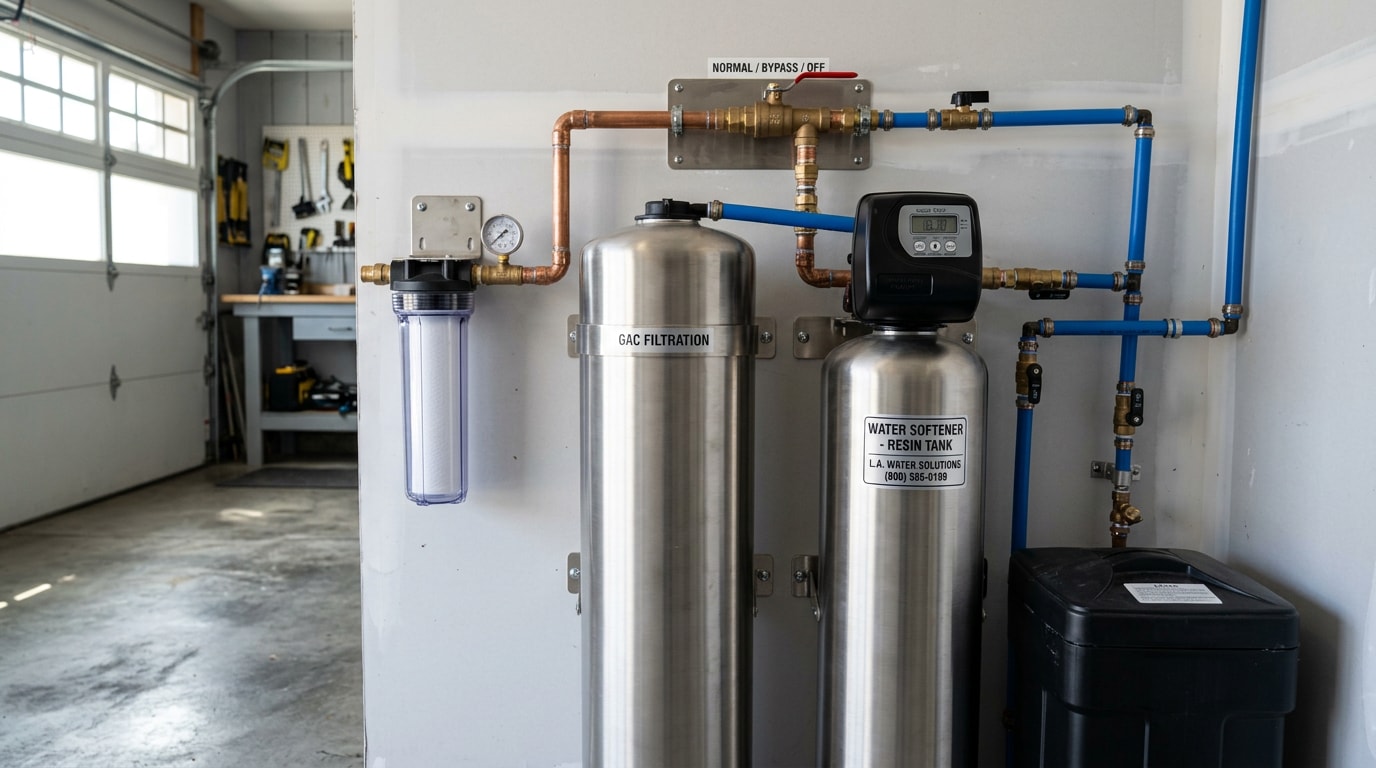
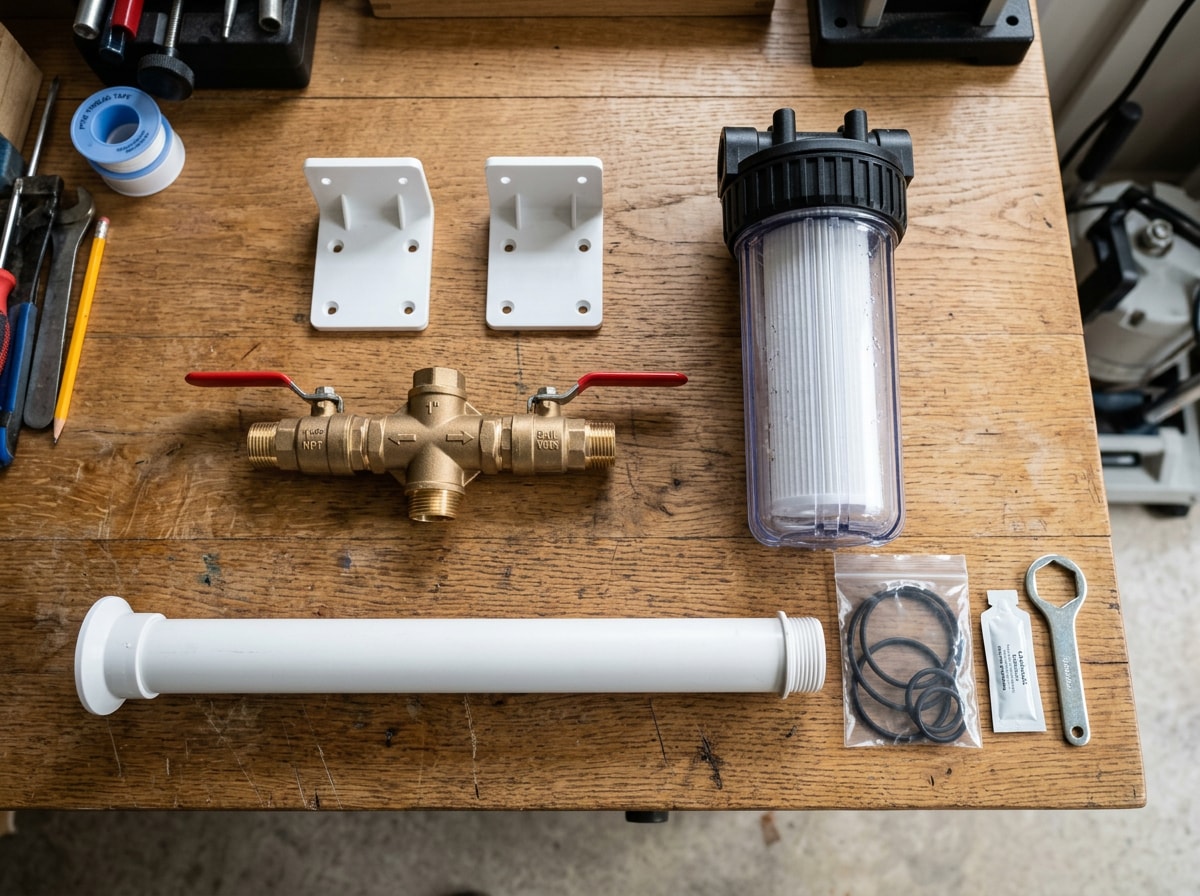
- Bypass valve – lets you isolate the system for service without shutting off house water
- Sediment pre-filter – protects downstream resin and membranes from grit common in older IE plumbing and well-fed systems
- Mounting brackets and riser tubes – required hardware for tank stability and proper flow
- Brine tank and float assembly – for salt-based softeners, sized to local hardness
- RO membrane and storage tank – for point-of-use drinking water systems
- Drain line and air gap fitting – code-required for both softeners and RO discharge
- Control head or smart monitor – manages regeneration cycles and flags leaks early
Skipping any of these isn't a shortcut. A softener without a correctly sized pre-filter clogs its resin bed faster; an RO system without a proper air gap can fail local plumbing inspection. Browse our full whole-house filtration systems lineup to see how these components get specified together rather than piecemeal.
Why Local Water Quality Drives Your Accessory List
The Inland Empire blends imported Colorado River water with local groundwater pumped from mineral-rich basins. That mix creates two separate problems, and your accessory list should address both, not just one.
Hard Water by the Numbers
Hardness is measured in grains per gallon (gpg) or milligrams per liter, and the federal reference point comes from the U.S. Geological Survey. General guidelines for classification of waters are 0 to 60 mg/L as calcium carbonate is classified as soft, 61 to 120 mg/L as moderately hard, 121 to 180 mg/L as hard, and more than 180 mg/L as very hard. That 180 mg/L threshold works out to roughly 10.5 grains per gallon.
Local water providers across Riverside and San Bernardino Counties commonly report readings well above that line, often in the 15 to 25 gpg range, which keeps most Inland Empire tap water solidly in the USGS "very hard" bracket. At that level, softener resin and a dedicated pre-filter aren't optional upgrades; they're the baseline accessories for any system that's expected to last. You can confirm your exact number with hardness testing before buying anything.
Chloramine, PFAS, and Other Chemical Contaminants
Hardness isn't the only driver. Several Southern California water agencies disinfect with chloramine rather than straight chlorine, which produces a different taste and odor profile that basic carbon pitchers often don't fully address.
PFAS, or "forever chemicals," are also a live regulatory issue right now. EPA set enforceable Maximum Contaminant Levels at 4.0 parts per trillion for PFOA and PFOS, individually, and for PFNA, PFHxS, and GenX Chemicals, EPA set MCLGs and MCLs at 10 parts per trillion. That compliance timeline has already shifted once. EPA's proposed rule upholds the NPDWR for PFOA and PFOS while providing an option for drinking water systems to request two additional years, to 2031, to comply with enforceable limits. That extension means some utilities may still be working toward full compliance for years, which is exactly why point-of-use accessories matter at the household level now rather than later.
An activated carbon stage handles taste and odor; a reverse osmosis membrane is the more reliable accessory for reducing PFAS and nitrates. Pairing both, instead of relying on one, is what most water test results in this region recommend. Our contaminant detection service can tell you exactly what's in your water before you buy a single accessory.
Matching Accessories to the Right System
Once you know what's in your water, match the hardware to the problem instead of buying a generic kit.
Whole-Home Systems
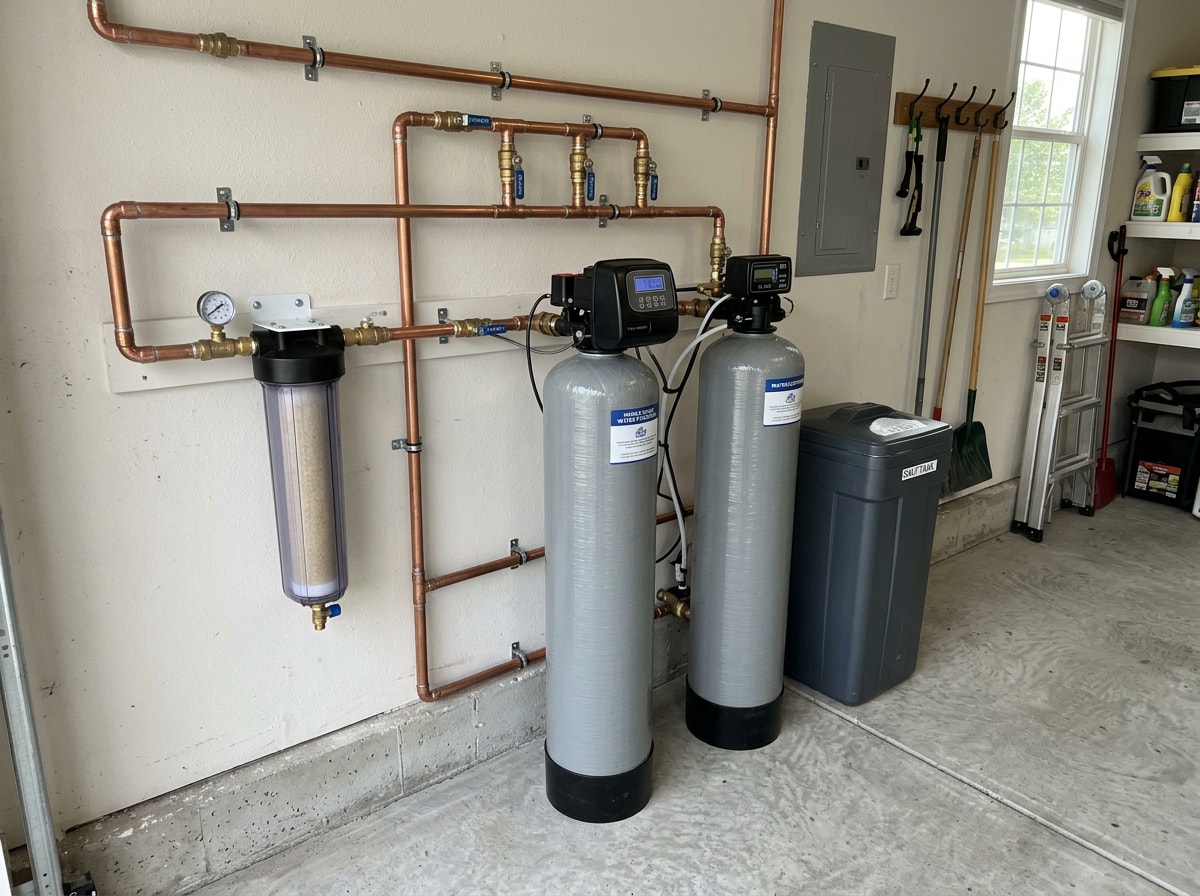
A whole-home, point-of-entry system treats every tap in the house. These setups typically bundle a bypass valve, sediment pre-filter, mounting brackets, and a control head that manages regeneration.
Look for components certified under NSF/ANSI standards. As the world leader in testing and certification of drinking water treatment technologies, NSF helps manufacturers prove that their products meet structural and safety requirements, as well as contaminant reduction claims. That certification is what separates a resin tank and valve that perform as advertised from one that doesn't. Compare configurations on our water softening systems page, or if you're on a private well, start with well water treatment.
Under-Sink and Combo Setups
Not every home needs full point-of-entry treatment right away. Under-sink filtration targets drinking and cooking water only, using a dedicated faucet, tubing, and quick-connect fittings that make cartridge swaps simple. It's a lower-cost entry point if whole-home isn't in the budget yet.
A combination system pairs a softener with a separate filtration stage, usually adding a brine tank and a second filter housing. If salt use is a concern, a salt-free water treatment system conditions hardness minerals without regeneration cycles. For drinking water specifically, see our reverse osmosis systems or whole-house reverse osmosis installation options.
2026 Pricing: What Accessories Add to the Base Cost
Pricing varies because accessories factor in differently at each tier. These are typical 2026 ranges for the Inland Empire market, not a quote for your specific home.
| Tier | Base System | Typical Accessory Add-Ons | Total Range |
|---|---|---|---|
| DIY / Big-Box | $300–$900 | Bypass valve, drain hose, mounting hardware ($50–$150) | $350–$1,050 |
| Professional Single-Function | $2,000–$4,000 | Pre-filter upgrade, new drain line, smart monitor | $2,500–$5,000 |
| Whole-Home Package | $2,500–$4,000 (softener + labor) | RO membranes, UV stage, extended warranty ($2,500–$6,000) | $5,000–$10,000+ |
Big-box units are usually sized for national average hardness, not the 15–25 gpg range common locally, which is why the "accessory add-on" line is rarely optional here. Request a water quality testing appointment to see exactly where your home lands before committing to a tier.
Financing Water Treatment Accessories and Installation
Most local providers offer financing terms between 36 and 60 months for whole-home systems, which can turn a $6,000 purchase into roughly $110–$180 a month depending on rate and term. That makes the premium tier accessible without a large upfront payment, though it's worth weighing total cost of ownership (salt, filter swaps, eventual membrane replacement) against the sticker price alone.
Existing systems also need upkeep accessories over time: replacement cartridges, new O-rings, resin recharge, or a full water treatment system replacement once a unit ages out. Routine water treatment system maintenance catches worn parts before they cause a leak.
What We See in the Field
Across service calls in Fontana, Rancho Cucamonga, and Moreno Valley, the same pattern shows up repeatedly: a homeowner installs a basic carbon pitcher or a big-box softener, and scale still builds up on fixtures within a few months because the unit wasn't sized for local hardness. Pairing a correctly sized softener resin tank with a dedicated carbon pre-filter resolves both the scale and the chloramine taste complaint in most cases we run, because each accessory is solving a different, specific problem instead of one unit trying to do both jobs.
For a closer look at how these same principles play out across a neighboring county, see our guide on water treatment technologies in Los Angeles County.
If your home or business is anywhere in the Inland Empire, our team can walk your water test results against the accessory list above and tell you exactly what you need, and what you don't. Start with a free water test and quote, or browse recent local projects to see completed installations.
FAQ
Is hard water really a problem in the Inland Empire?
Yes. Local providers commonly report readings between 15 and 25 grains per gallon, which sits well above the USGS "very hard" threshold of roughly 10.5 gpg. Left untreated, it causes scale buildup, shortens water heater lifespan, and leaves spots on dishes and fixtures.
Do I need a water softener, a filter, or both?
A softener removes calcium and magnesium to stop scale. Filtration targets taste, odor, or specific contaminants like PFAS. If your water test shows both hardness and contaminant concerns, which is common locally, you'll likely need both rather than one alone.
What accessories come standard with a whole-house system?
A bypass valve, sediment pre-filter, mounting brackets, riser tube, and a control head are standard on most whole-home installs. Softeners add a brine tank and float assembly; RO systems add a membrane, storage tank, and air gap fitting.
How often do water treatment accessories need to be replaced?
Sediment pre-filters typically need swapping every 3–6 months, RO membranes every 2–3 years, and O-rings or fittings as needed during routine maintenance. Usage, hardness level, and water quality all affect the schedule.
Can PFAS actually be removed with home accessories?
Yes. Activated carbon and reverse osmosis are the two technologies most commonly used to reduce PFAS at the household level, and EPA's own PFAS National Primary Drinking Water Regulation page outlines the federal standards these technologies are measured against.
How much does a water softener cost in the Inland Empire in 2026?
Costs range from roughly $350–$1,050 for a DIY big-box unit with hardware, $2,500–$5,000 for a professionally installed single-function system, and $5,000–$10,000+ for a whole-home package with bundled accessories, depending on your water test results.