If your Santa Barbara County tap water smells like a faint pool chemical even after the water's been running, chloramine, not plain chlorine, is the likely cause. Removing chloramine from water takes different filter media than removing chlorine, and grabbing the wrong cartridge leaves both the smell and the chemical untouched. Here's what actually works, broken down by method and by the water source feeding your specific address.
Chlorine vs. Chloramine: Why the Difference Matters
Chloramine forms when a water utility combines chlorine with a small amount of ammonia. Chloramines are most commonly formed when ammonia is added to chlorine to treat drinking water, and they provide longer-lasting disinfection as the water moves through pipes to consumers.
That staying power is exactly why old chlorine tricks don't work on it. Leaving a glass of water on the counter overnight breaks down free chlorine. It does almost nothing to chloramine.
Some utilities that serve parts of Santa Barbara County have moved toward chloramine as a secondary disinfectant because it holds up over long stretches of pipe and tends to form fewer regulated byproducts than straight chlorine. Others still rely on free chlorine, hypochlorite, or combinations with ozone and UV. The disinfectant your household actually receives depends on which system serves your address, which is why the removal method that works for your neighbor two streets over may not be the right one for you.
How to Remove Chloramine From Water in Santa Barbara County
Chloramine doesn't break down by sitting out the way free chlorine does. Chloramine cannot be removed by boiling water, adding salt, or letting water stand still. It needs filtration media built specifically to target it, which rules out most of the quick fixes people try first.
Here's how the common options actually stack up:
| Method | Removes Chloramine? | Effort | Best Use Case |
|---|---|---|---|
| Letting water sit out | No | None | Works on chlorine only |
| Boiling | Minimal, unreliable | High | Not practical for daily use |
| Standard carbon filter | Limited | Low | Chlorine taste/odor, not chloramine |
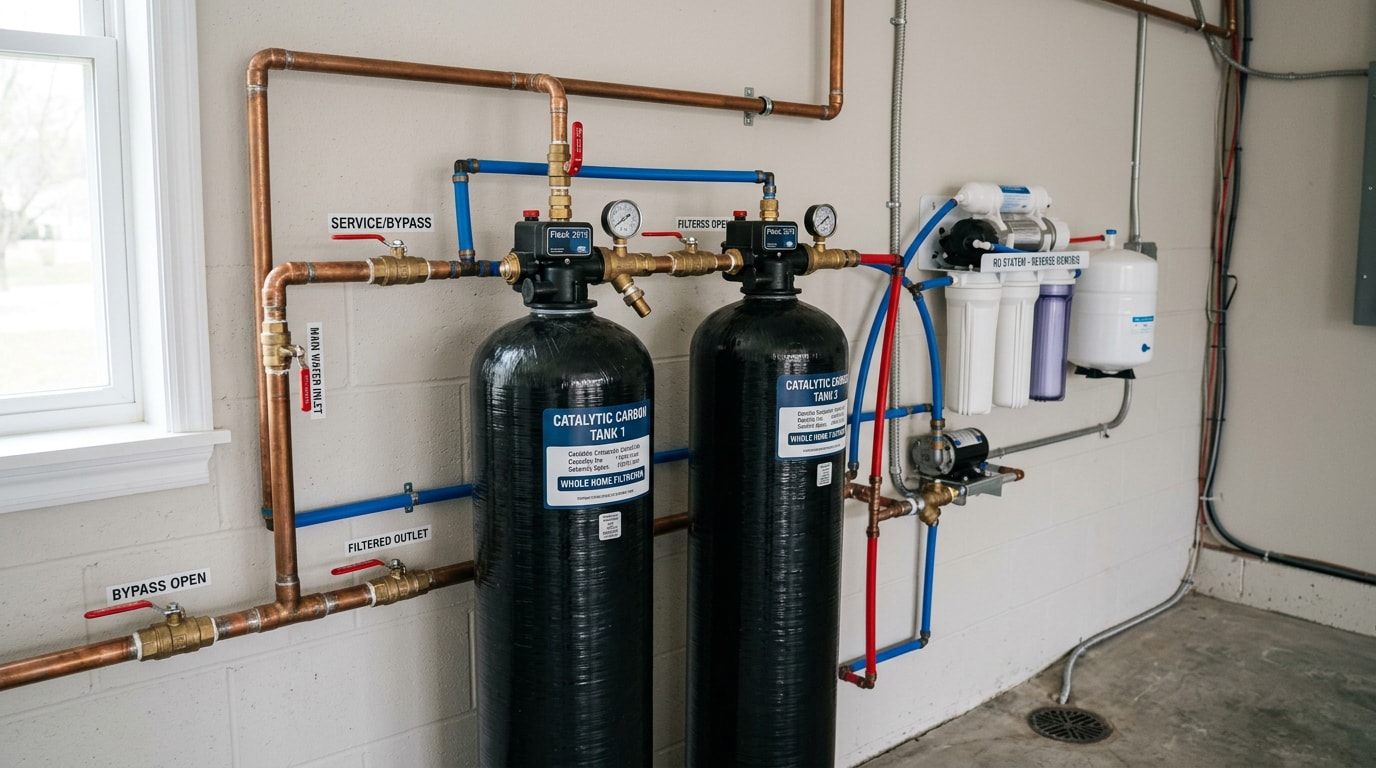
| Catalytic carbon filter | Yes | Low (passive) | Whole-house or point-of-use chloramine removal |
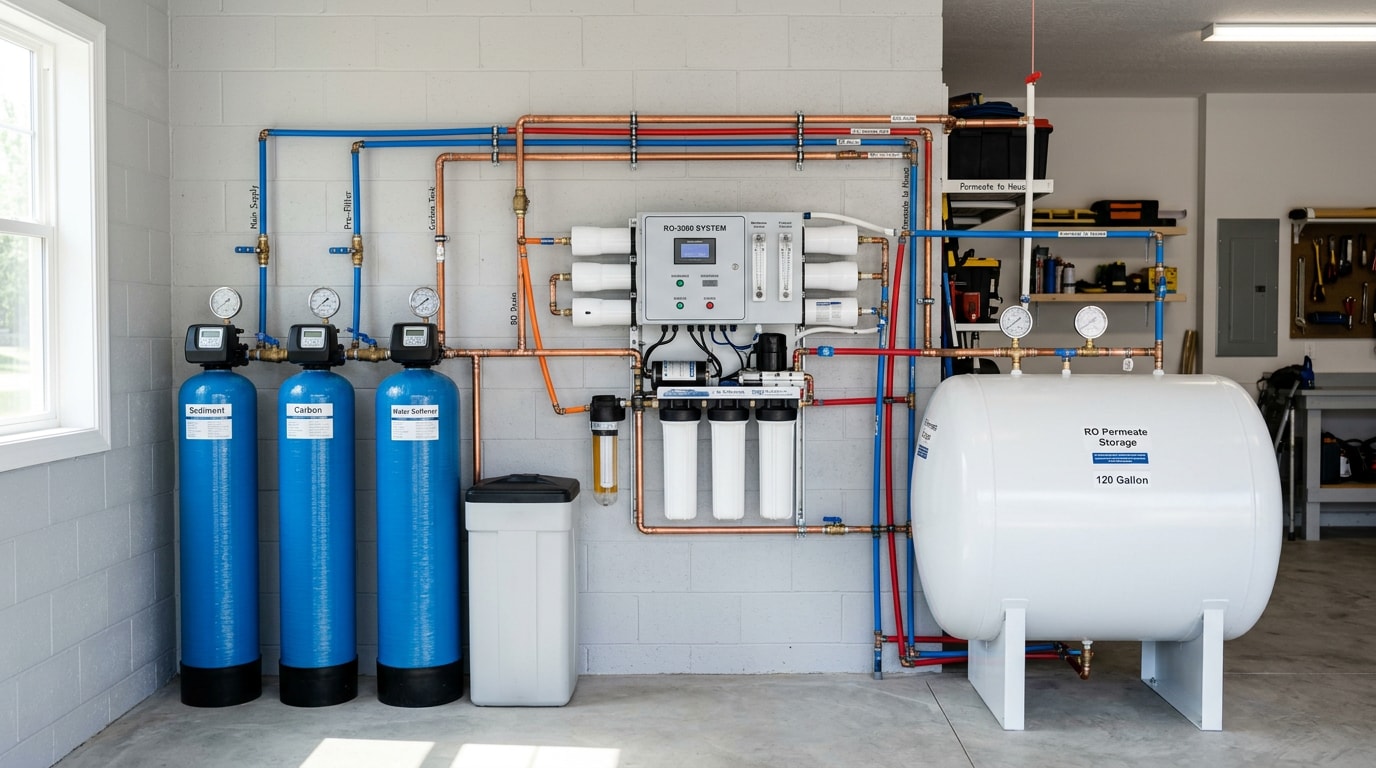
| Reverse osmosis with carbon pre-filter | Yes | Low (passive) | High-purity drinking water at one tap |
| Ascorbic acid (vitamin C) | Yes, for skin contact | Instant | Bathing/showering, not drinking water |
Two takeaways matter more than the rest of the table:
- A filter marketed only for "chlorine taste and odor" is often not rated for chloramine at all. The two claims are tested and certified separately.
- Reverse osmosis membranes don't strip chloramine on their own. They rely on a catalytic carbon stage ahead of the membrane to do that job, which also protects the membrane itself from chloramine-related wear.
If you're not sure what's actually coming out of your tap, a water quality test is the fastest way to confirm before you spend money on equipment that targets the wrong contaminant.
Santa Barbara County's Water Sources Affect Your Options
Water quality across the county isn't uniform. The mix includes municipal surface supplies, groundwater wells, and desalinated water, and each carries its own mineral and disinfectant profile.
Groundwater-fed areas tend to run harder. Blended or desalinated supplies often read softer but can shift seasonally as agencies adjust the source mix. Because the residual disinfectant can differ from one pressure zone to the next, don't assume your water matches a neighboring zip code.
The City of Santa Barbara's Consumer Confidence Report, a Division of Drinking Water regulatory requirement, lists only detected parameters and compares measured results against maximum contaminant levels and public health goals. That report is the fastest way to confirm what disinfectant and hardness levels actually apply to your account, rather than guessing from a neighbor's experience. Homeowners on private wells face a different set of questions entirely, since well water isn't treated with chloramine at all but can carry its own sediment and mineral load worth testing for separately.
For well owners specifically, picking the right pre-filter micron rating matters as much as the disinfectant media. Our guide to micron filters for well water in Santa Barbara County walks through that decision in more detail. For municipal customers, our Santa Barbara County service area page covers which systems we work with most often across the region.
Types of Water Filtration Systems for Santa Barbara Homes
Once you know chloramine is present, the next decision is where in your home to treat it.
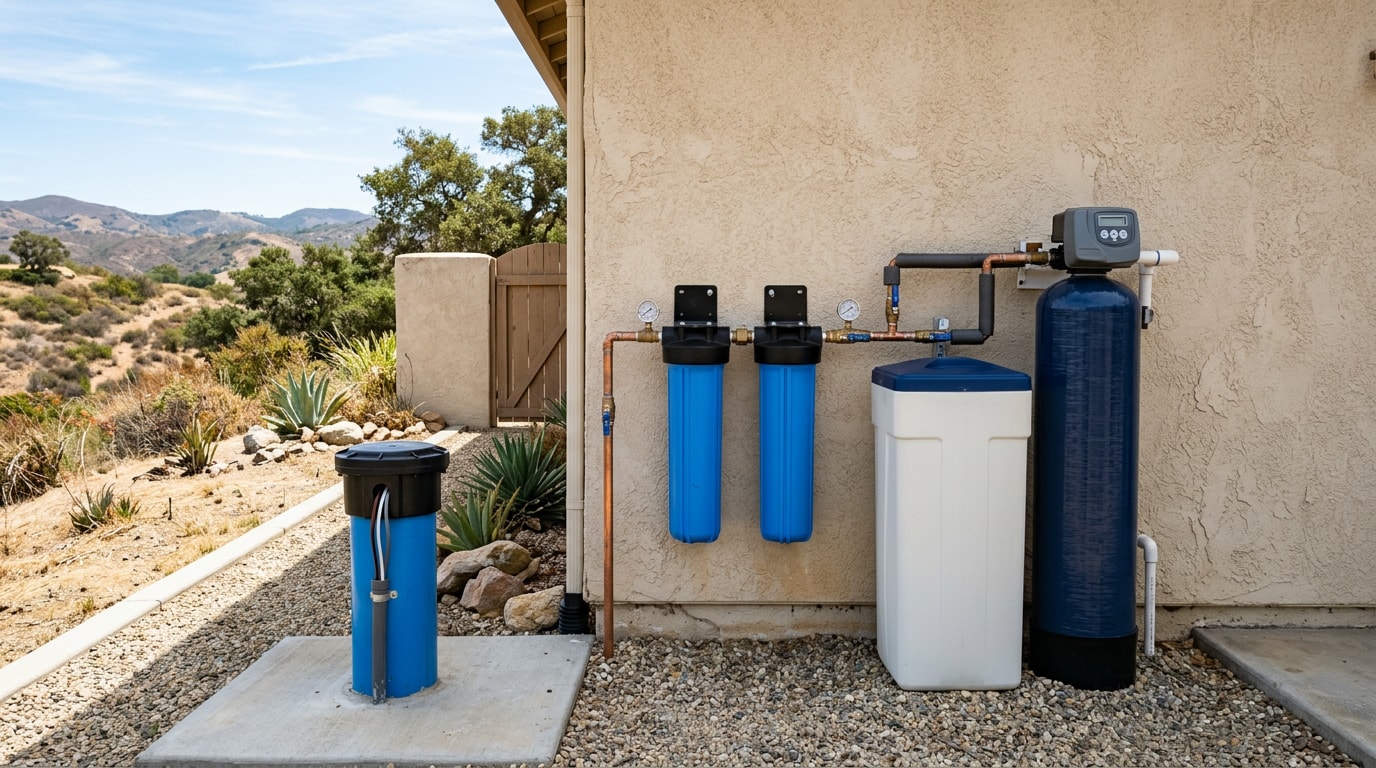
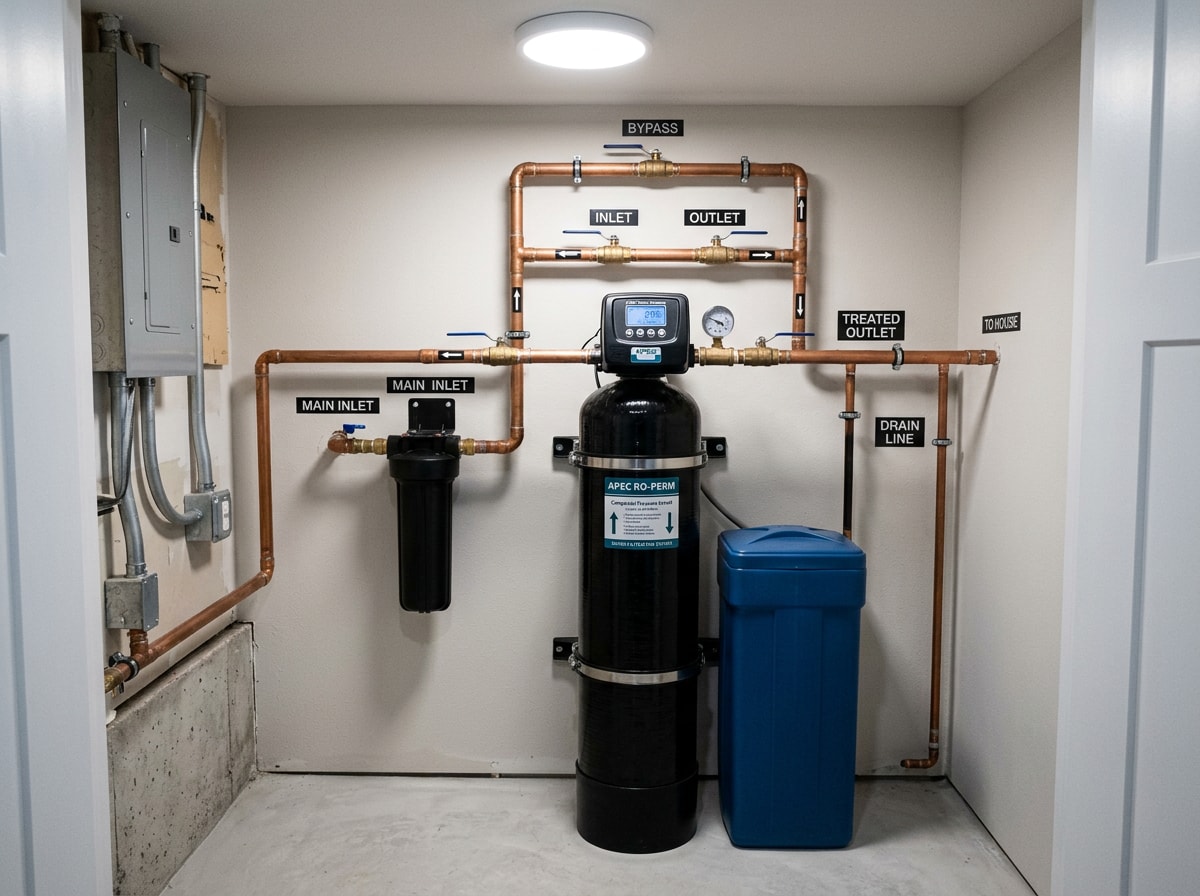
- Whole-house systems install at the main line and treat every tap, shower, and appliance at once.
- Under-sink or point-of-use systems treat water at a single faucet, usually the kitchen, for a smaller investment and a narrower fix.
Homeowners who notice the odor throughout the house, including in showers, typically lean toward a whole-house filtration system. Those who only care about drinking and cooking water sometimes start with a point-of-use filter under the kitchen sink instead, often paired with a reverse osmosis system for the highest level of purification at that one tap.
On service calls across the county, we test total chlorine and chloramine residuals at the meter before ever recommending a system. Skipping that step is the single most common reason a homeowner ends up disappointed with a filter that was never rated for what their water actually contains.
Carbon Filters: Standard vs. Catalytic
Standard activated carbon handles free chlorine and general taste-and-odor complaints well, but it isn't necessarily built to strip chloramine. Catalytic carbon is a more processed media engineered specifically for chloramine removal in treated municipal water, and that distinction matters more than most shoppers expect.
Limits apply in both directions. A basic carbon filter won't soften hard water or remove dissolved minerals, and a plain sediment filter won't touch chemical tastes or chloramine on its own. Matching the media (carbon block, catalytic carbon, or a combination) to the actual contaminant is what makes or breaks performance.
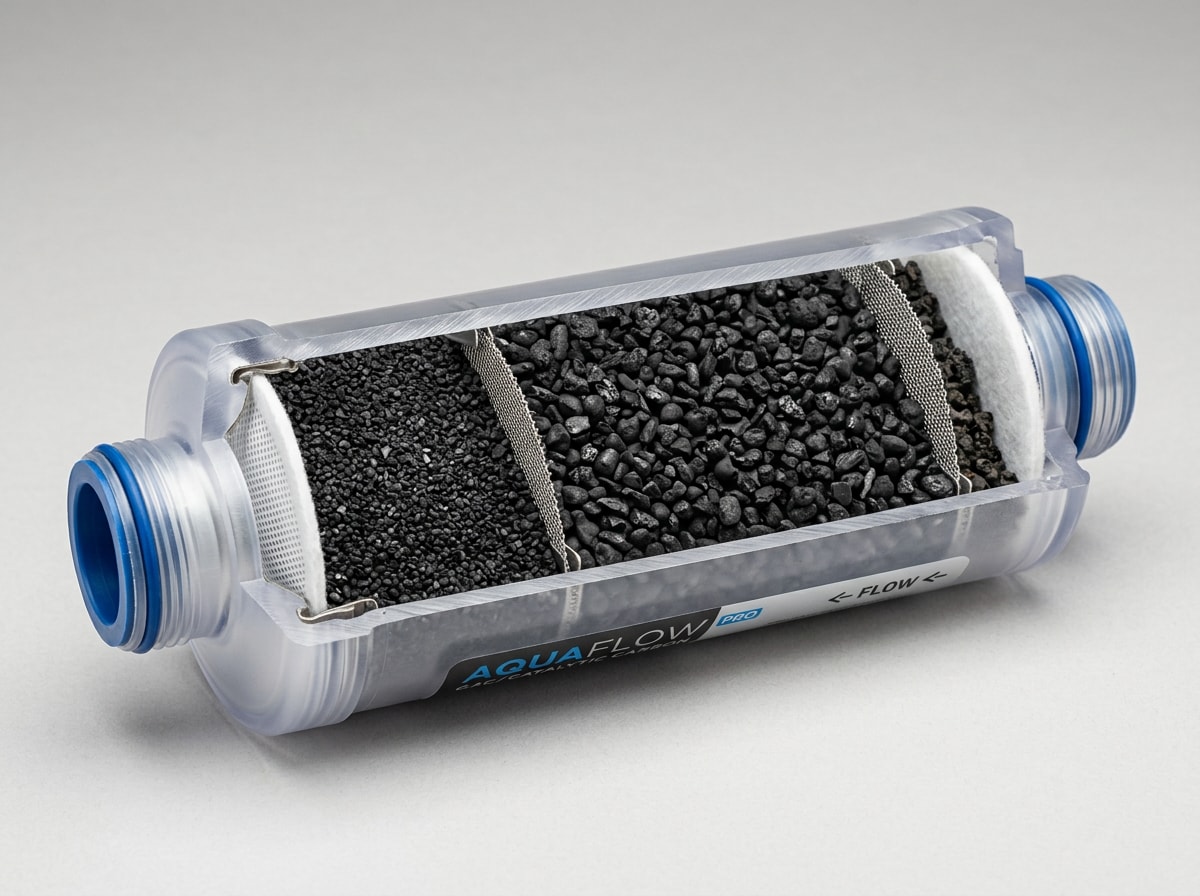
NSF/ANSI 42 certifies filters to reduce aesthetic impurities such as chlorine and taste or odor, covering both point-of-use and point-of-entry treatment systems. Look for a model that specifically lists chloramine reduction under that certification rather than chlorine alone, since certification under NSF/ANSI 42 is awarded contaminant by contaminant, not as a blanket claim.
If you already have equipment in place and aren't sure whether it's still performing, routine system maintenance and periodic retesting catch the gap before it shows up as odor again. When equipment is past its service life, a straightforward system replacement is usually simpler than troubleshooting an aging unit.
Ready to stop guessing at the right media? Get a free estimate and we'll test your water before recommending anything.
FAQ
Does boiling water remove chloramine?
No. Chloramine's chemical bond resists both evaporation and standard boiling, so extended boiling offers little practical benefit. Unlike the "let it sit" advice that works for plain chlorine, filtration is the reliable route for chloramine.
Does letting tap water sit out remove chloramine?
No. This trick works for free chlorine, which off-gasses from an open container over a day or two. Chloramine is far more stable and will largely remain in the water even after standing uncovered for an extended period.
What's the actual difference between chlorine and chloramine?
Chlorine is a single disinfectant that breaks down relatively quickly. Chloramine is chlorine combined with ammonia, which makes it more stable and longer-lasting in distribution pipes, but also harder to remove with simple household tricks.
Can a whole-house water filter remove chloramine?
Yes, but only when it's built with chloramine-rated media such as catalytic carbon. Not every whole-house filter on the market is designed for this, so confirm the media type before assuming a system will solve the problem.
Does reverse osmosis remove chloramine?
Yes, when the system includes a catalytic carbon pre-filter stage ahead of the membrane. The membrane itself doesn't reliably strip chloramine, and chloramine exposure can degrade an unprotected membrane over time.
Is chloraminated water safe to drink?
Municipal water that meets regulatory limits is considered safe to drink. Chloramine levels that meet the EPA standard are associated with minimal to no risk and should be considered safe. Removing it is typically about taste, odor, and comfort rather than a safety requirement.
Is reverse osmosis better than a carbon filter?
It depends on the goal. Carbon-based systems are usually the better fit for whole-house treatment, while reverse osmosis gives a single tap the highest level of purification by removing a broader range of dissolved contaminants beyond just chlorine and chloramine.
Visit the Pure Water Filtration homepage to see the full range of testing and treatment options we offer across Santa Barbara County.