A reverse osmosis water filter forces tap water through a semi-permeable membrane that blocks dissolved solids, heavy metals, and many chemicals while letting clean water pass through. Santa Barbara County's groundwater runs unusually hard and mineral-heavy, which is exactly the kind of water RO handles best. Here's how the system actually works, what it removes, and what it costs to have one installed correctly.
What Is Reverse Osmosis (RO)?
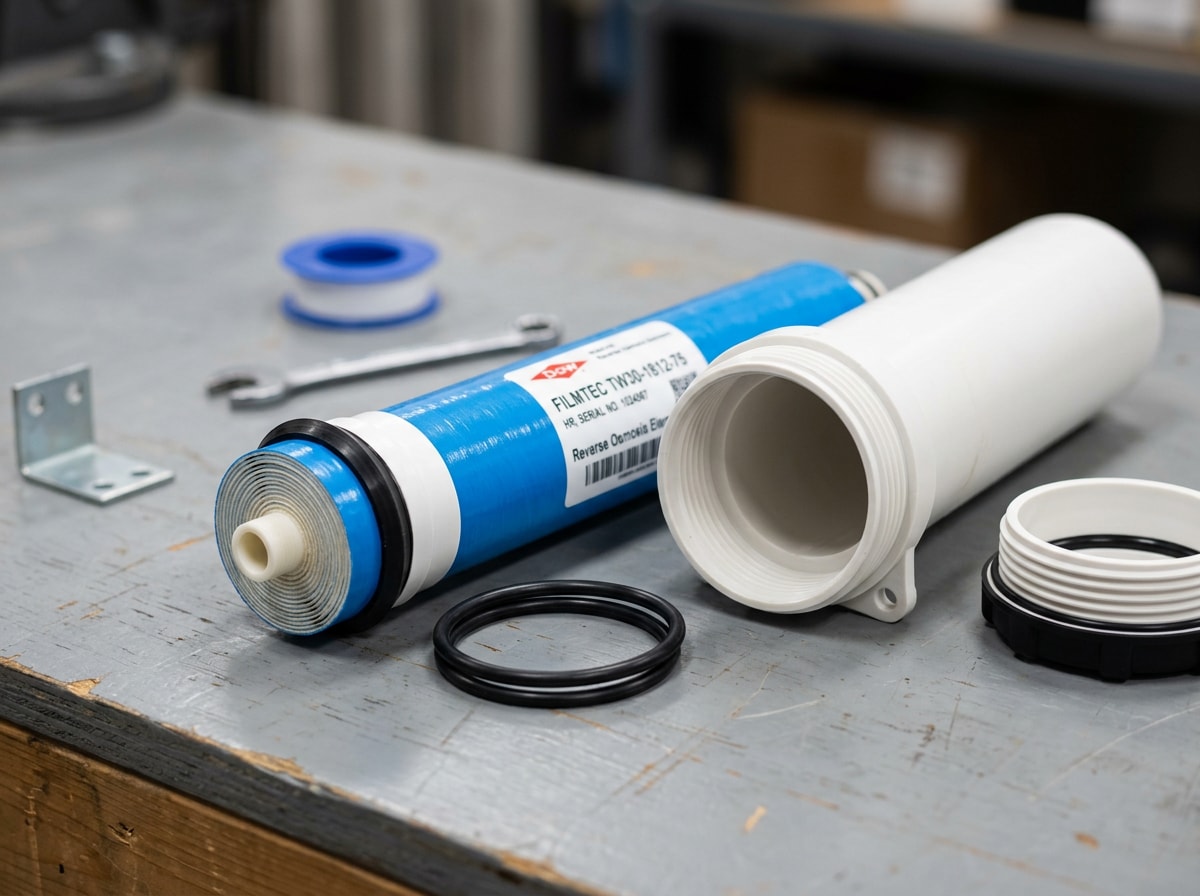
Reverse osmosis is a membrane-based filtration process, not a single filter cartridge. Water gets pushed at pressure through a membrane fine enough to separate individual molecules rather than just visible debris.
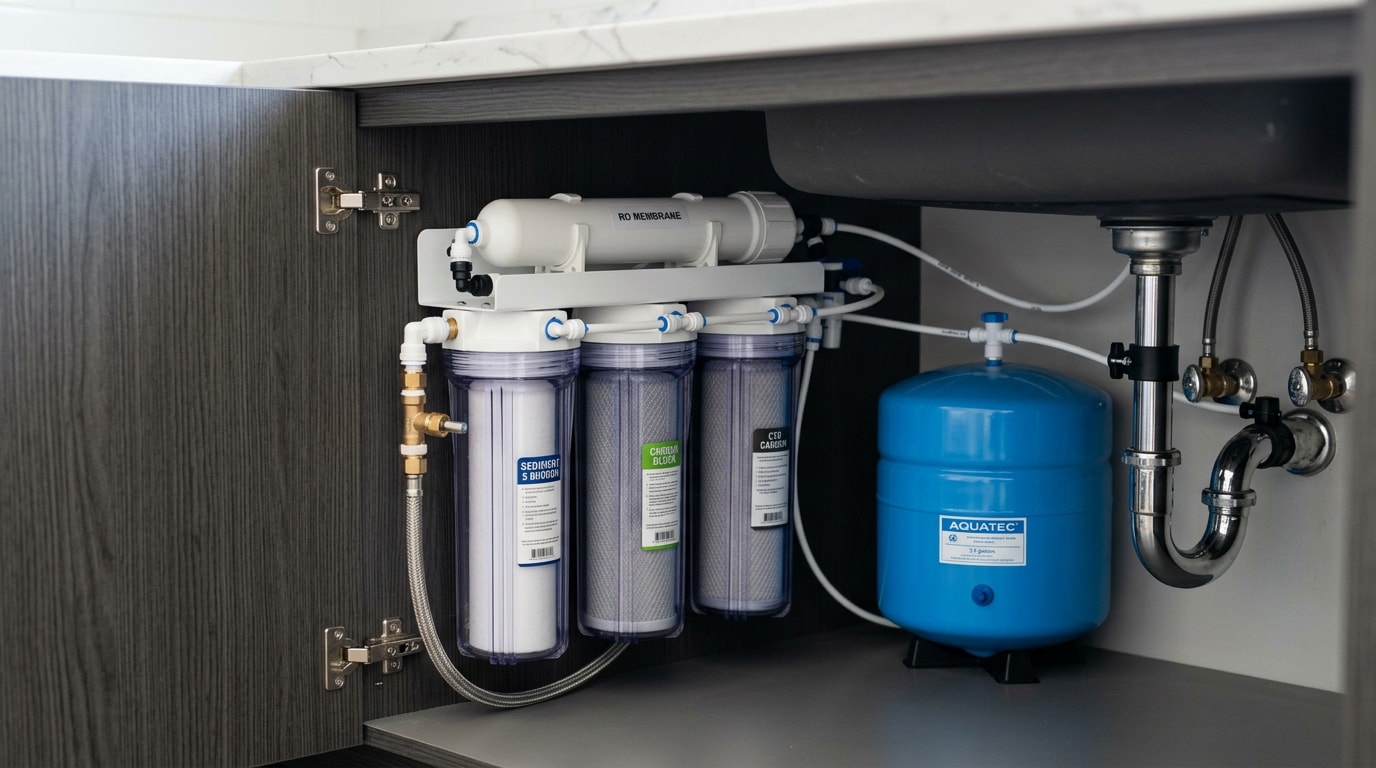
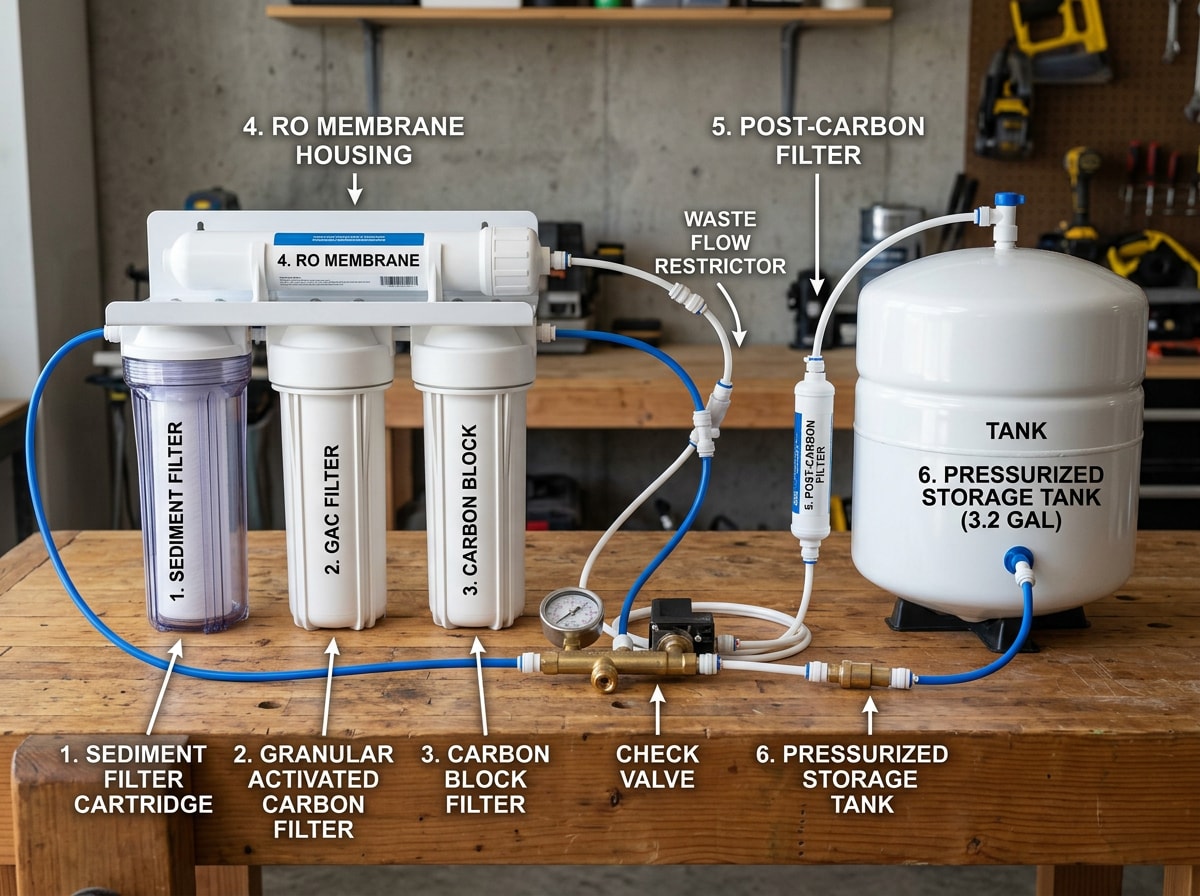
Most residential RO systems pair that membrane with several additional filtration stages, often four to seven total, to protect the membrane and polish the final water. The U.S. EPA classifies reverse osmosis alongside nanofiltration as membrane separation processes that physically remove contaminants from water by forcing water at high pressure through semi-permeable membranes that prevent the passage of various substances depending on their molecular weight .
Residential RO systems built to NSF/ANSI 58 (the industry benchmark for point-of-use units) must meet minimum requirements for materials, construction, and contaminant-reduction performance. NSF/ANSI 58 is the American National Standard for point-of-use (POU) reverse osmosis (RO) systems , and TDS (total dissolved solids) reduction is a required performance claim under the standard . That gives homeowners a way to confirm performance claims instead of taking a sales pitch at face value.
Explore our reverse osmosis systems built for Santa Barbara County's water conditions.
Reverse Osmosis vs. Carbon Filters and UV Systems
RO isn't the only filtration option, but it covers more ground than the alternatives. Here's how the three main residential technologies compare.
| Filtration Type | What It Removes | Leaves Behind |
|---|---|---|
| Carbon Filter | Chlorine taste, odor, some organics | Dissolved solids, nitrates, most heavy metals |
| UV Purification | Bacteria, viruses | Sediment, chemicals, dissolved minerals |
| Reverse Osmosis | Dissolved solids, heavy metals, nitrates, and (per the EPA) many inorganics, radionuclides, and synthetic organic chemicals | Nothing removable at this scale; trace minerals optional to add back |
RO can remove contaminants including many inorganics, dissolved solids, radionuclides, and synthetic organic chemicals , which is why it sits above carbon and UV in overall versatility. A whole-house carbon filter and an under-sink RO unit are often paired, carbon for shower and tap water comfort, RO for the water you actually drink and cook with.
How a Reverse Osmosis System Works
A typical RO system treats water in three stages, each targeting a different category of contaminant before water reaches the tap.
Pre-Filtration
Water first passes through a sediment filter that traps dirt, rust, and debris. A carbon pre-filter follows, pulling out chlorine, chloramine, and organic compounds that would otherwise damage the membrane. If your home still smells like a public pool after the tap runs, that's usually a chlorine or chloramine issue worth testing for before installation, and it's covered in more detail in our guide on removing chloramine from water.
The RO Membrane
This is the core of the system. The membrane's pores are small enough to block dissolved solids, salts, and microscopic contaminants while still letting water molecules through.
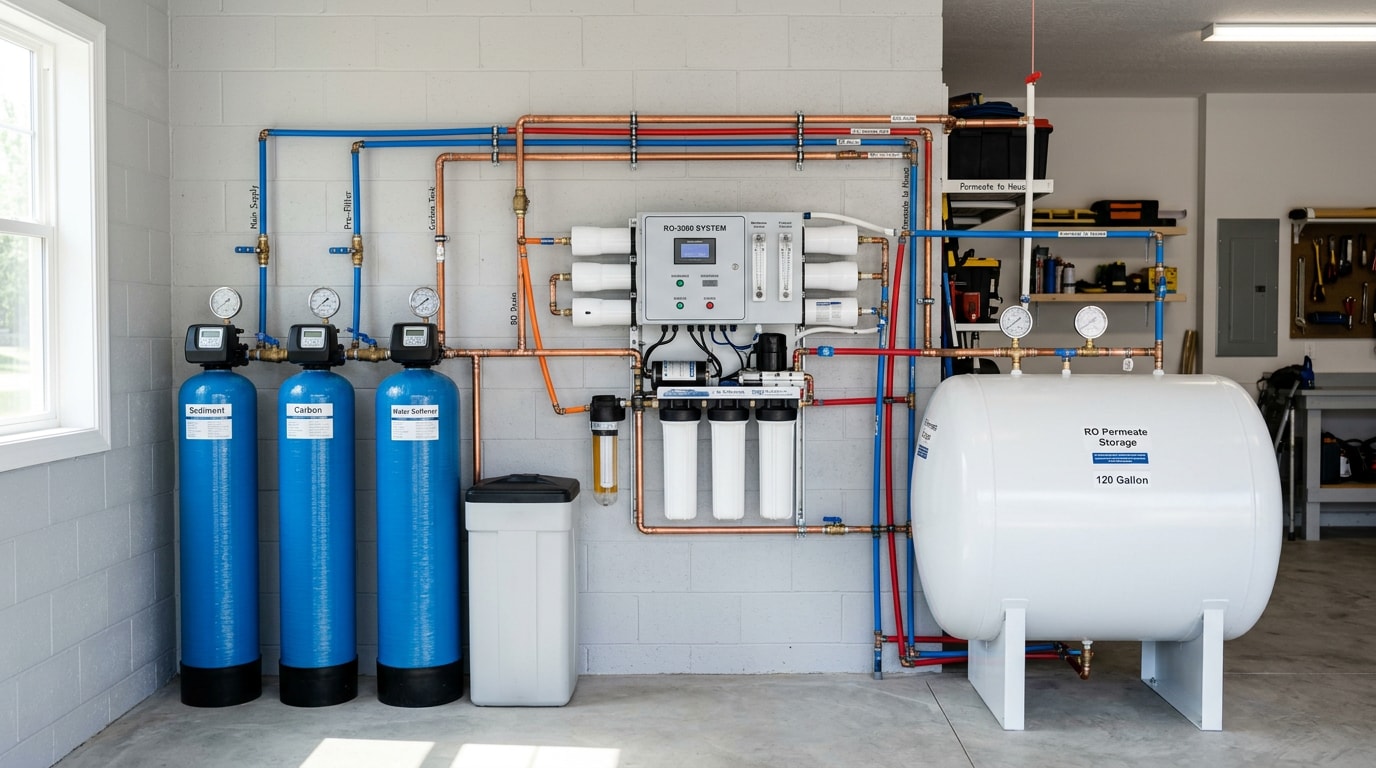
One trade-off worth knowing before you buy: RO isn't a zero-waste process. RO and NF reject part of the feed water, roughly 15 to 30 percent, that enters the process , which is sent to drain as concentrate rather than through the faucet. Whole-house RO installations manage this differently than under-sink units, so it's worth comparing options before committing to either, see our whole-house reverse osmosis installation page for how that works at scale.
Post-Filtration
After the membrane stage, water typically passes through a final carbon polish. This step clears out any remaining taste or odor compounds the earlier stages missed.
Why Santa Barbara County Homeowners Choose RO
Santa Barbara County's water supply is a mixed bag depending on your source. The City of Santa Barbara's own water quality reporting shows just how wide that range is: groundwater hardness runs 19 to 30 grains per gallon, surface water runs 18 to 28 grains per gallon, and desalinated water runs only 2 to 5 grains per gallon . That's a significant swing, and it's one reason a water test matters more here than in a county with a single, consistent source.
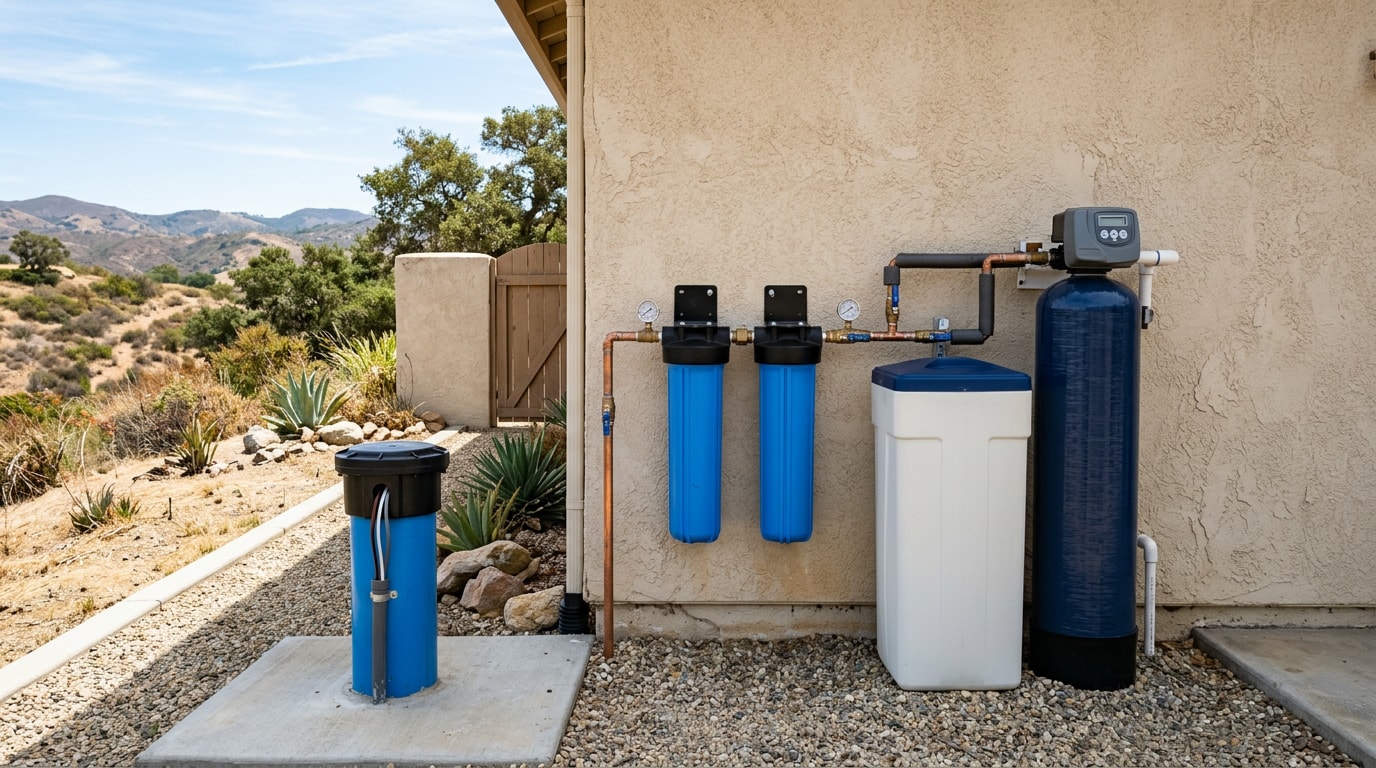
RO handles the dissolved mineral load that comes with hard groundwater, but it isn't designed to replace a whole-house softener for bulk water use. If scale buildup on fixtures and appliances is your bigger concern, pairing RO with a water softening system addresses both problems instead of asking one system to do a job it wasn't built for.
Homeowners on private wells face a different set of variables entirely, iron, manganese, and bacteria levels that municipal customers don't deal with. We'd recommend starting with a hardness test and a look at well water treatment options before assuming RO alone solves everything on a well system.
Reverse Osmosis vs. Pitcher and Faucet-Mount Filters
Off-the-shelf pitcher filters reduce chlorine taste and odor but leave dissolved solids and heavy metals largely untouched. An under-sink RO system delivers filtered water on demand from its own dedicated faucet instead of requiring manual refills. For households that go through a lot of drinking and cooking water, that convenience difference adds up fast, and the contaminant reduction gap is even bigger.
The Benefits of a Professional Installation
A professionally installed system does more than improve taste. Reducing dissolved minerals and sediment can indirectly support appliance longevity, since less scale builds up inside water heaters, coffee makers, and ice machines over time.
On contaminants specifically, the EPA has flagged membrane treatment as one of the few residential technologies that performs well against emerging concerns. High-pressure membranes, such as nanofiltration or reverse osmosis, have been extremely effective at removing PFAS, and reverse osmosis membranes are tighter than nanofiltration membranes . That matters if PFAS is on your radar; most pitcher filters aren't built to touch it.
Many households also find that RO-filtered water costs less over time than bottled water while cutting down on plastic waste. Explore our full range of water purification services to compare what fits your home.
Reverse Osmosis System Cost in Santa Barbara County
| System Type | Typical Installed Cost | Best For |
|---|---|---|
| Under-sink RO | $300–$800 | Drinking and cooking water at one or two fixtures |
| Whole-house RO | $1,500–$5,000 | Treating all water entering the home |
Exact pricing depends on water quality, existing plumbing, and the number of fixtures served. Annual maintenance, filter swaps and a membrane check, keeps the system performing at its rated level; our water treatment system maintenance plans cover that on a set schedule so it's one less thing to track yourself.
Homeowners throughout the Santa Barbara County area can get a water test and a site-specific quote before deciding between under-sink and whole-house setups.
In the years we've installed RO systems across the county's harder groundwater zones, storage tanks on under-sink units in those areas tend to need attention sooner than the same units installed on desalinated or surface-water service, simply because there's more dissolved mineral load for the membrane to work through.
FAQ
What is reverse osmosis (RO)?
Reverse osmosis is a filtration process that forces water through a semi-permeable membrane to remove dissolved solids, heavy metals, and many chemicals. Most residential systems combine the membrane with sediment and carbon pre- and post-filters.
Is reverse osmosis water as good as bottled water?
RO systems are built to reduce total dissolved solids, including salt and sodium, putting RO water on par with, and in many cases ahead of, bottled water, minus the packaging waste and per-bottle cost.
How much does a reverse osmosis system cost in Santa Barbara County?
Under-sink systems typically run $300–$800 installed. Whole-house setups range from $1,500–$5,000 depending on capacity and the number of fixtures served.
How often should I service a reverse osmosis system?
At least once a year. That covers filter replacement and a membrane inspection to keep contaminant-reduction performance at its rated level.
Can reverse osmosis remove hard water minerals?
Yes, RO is effective at removing the calcium and magnesium minerals responsible for hard water. Because it also removes some beneficial minerals, some households add an optional remineralization stage afterward.
Will a reverse osmosis system affect my water pressure?
No. The dedicated RO faucet has its own flow rate, separate from the rest of the home's plumbing. Flow at that faucet is usually a bit slower than a standard tap since filtered water collects in a small storage tank between uses.
Do I still need a water softener if I already have reverse osmosis?
Often, yes, if your main concern is scale on pipes, water heaters, and fixtures. RO is sized for drinking and cooking water at one or two taps, not for softening every gallon running through the house. A whole-house softener and an under-sink RO unit solve two different problems and work well together.
Ready to find out what's actually in your water? Get a free estimate and we'll help you figure out whether RO, softening, or both make sense for your home.