Water filter services in Ventura County, CA exist because the tap water here gives homeowners two problems at once: heavy mineral hardness and a noticeable chlorine taste. This guide breaks down what's actually driving those issues, which systems solve which problem, and what installation, cost, and upkeep look like in 2026.
Visit Pure Water Filtration to see our services and request a free estimate.
Is Ventura County Water Hard?
Yes, and the degree varies more by neighborhood than most homeowners expect. Published municipal water quality reports across the county put hardness anywhere from roughly 15 grains per gallon (gpg) in areas fed mostly by imported, state-supplied water up to 30+ gpg in communities that rely heavily on local groundwater, including parts of Ventura and Ojai. The U.S. Geological Survey classifies anything above 10.5 gpg as "very hard," which means most of the county falls into that top category regardless of which end of the range a given address lands on.
| Water Source Type | Typical Hardness | Classification |
|---|---|---|
| Imported / State Water Project supply | ~5–15 gpg | Hard |
| Blended surface + groundwater (most cities) | ~15–25 gpg | Very hard |
| Groundwater-heavy areas (Ojai, parts of Ventura) | ~25–37 gpg | Very hard |
Hardness this high shows up as white scale on fixtures and shower glass, soap that won't lather, dishwasher spots, and appliances that wear out faster than they should. Municipal water across the county is also treated with chlorine or chloramine to keep it safe, which is why so many households also notice a chemical taste or smell at the tap. Because hardness and chlorine levels shift by address, an in-home water test gives a far more accurate number than a county-wide average. Our hardness testing service measures both before we recommend anything.
Types of Water Filtration Systems Available in Ventura County
Most homes here need some mix of sediment filtration, carbon filtration, and softening to handle both hardness and aesthetic issues, often built around a dedicated water softening system.
Whole-House Carbon & Sediment Filtration
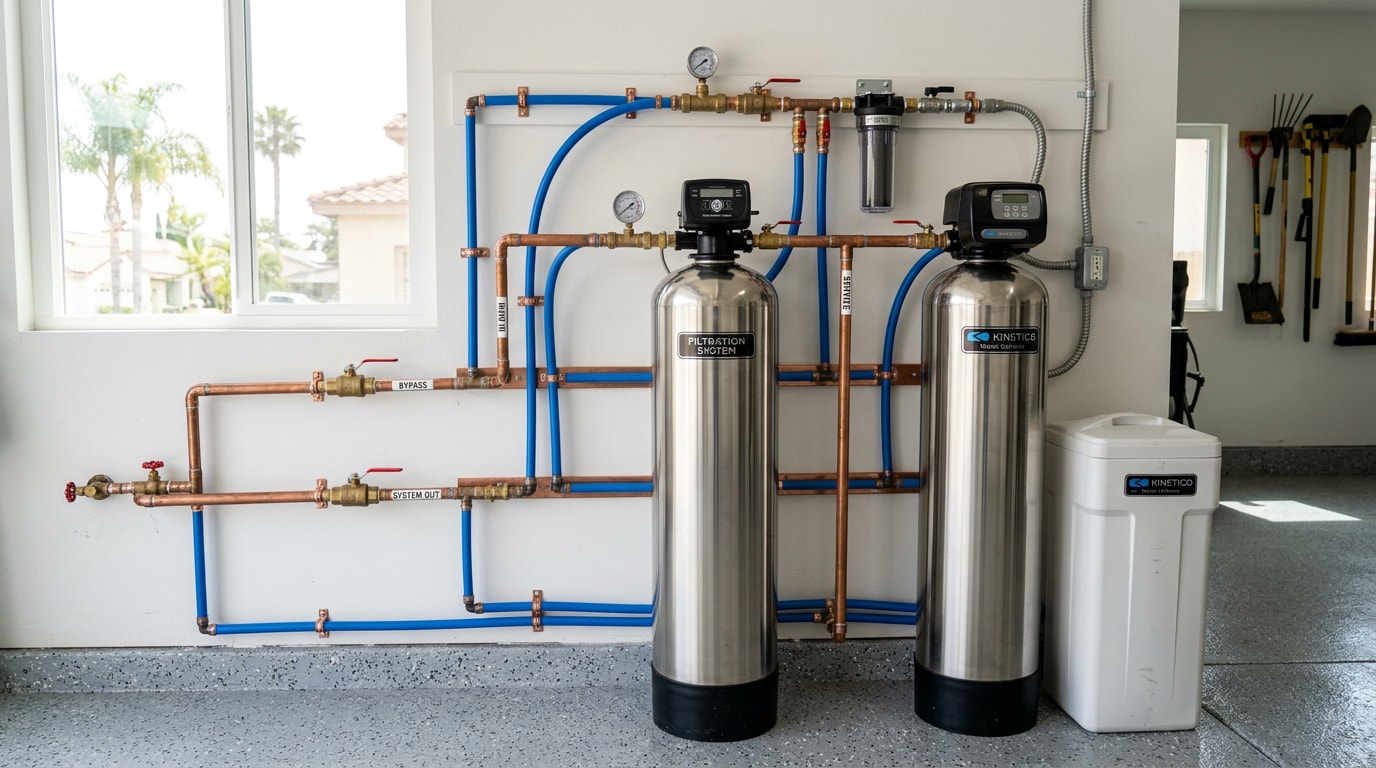
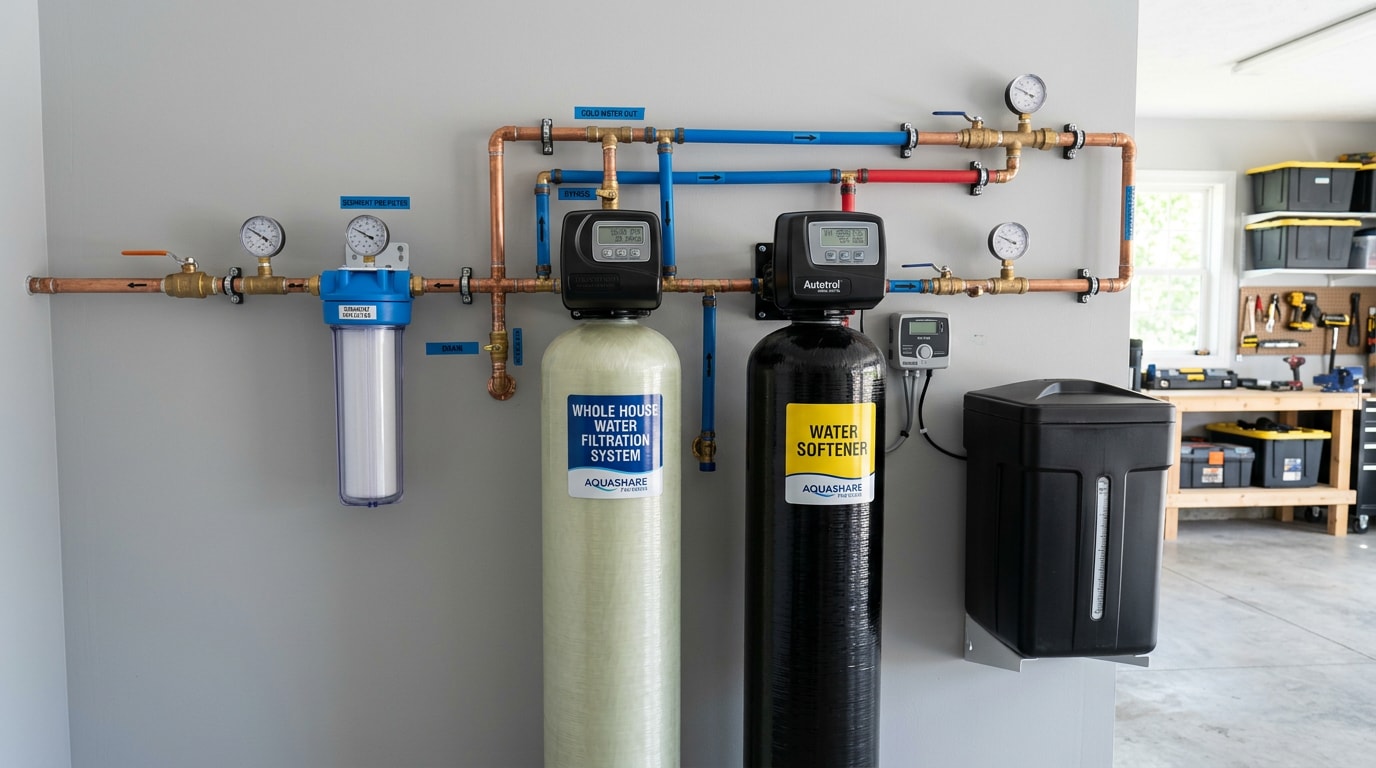
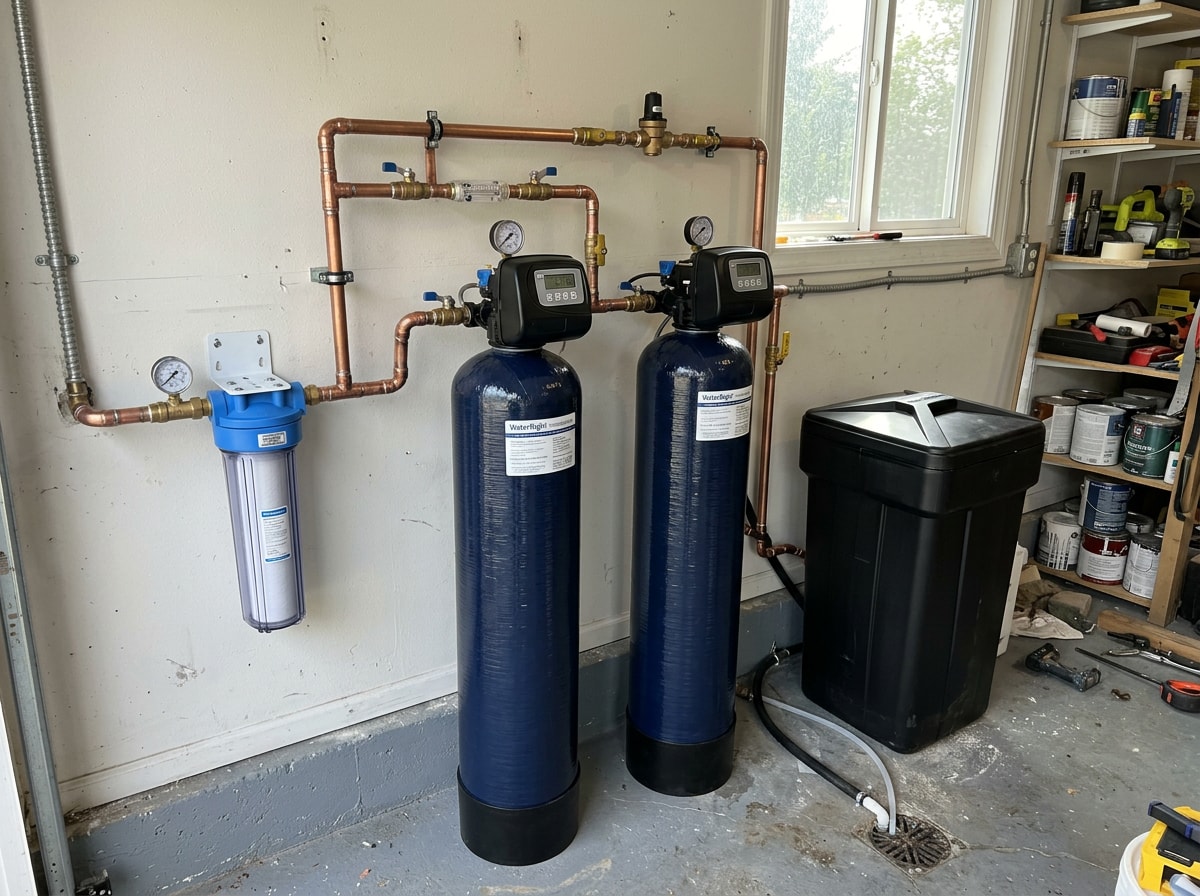
A whole-house carbon filter installed at the point of entry removes residual chlorine and chloramine taste after water enters the home, treating every fixture instead of one sink. Sediment filtration usually comes first in the lineup, catching grit before it reaches the carbon media. A combined sediment, carbon, and softener setup is the most common configuration we install across the county for chlorine removal and point-of-entry filtration. Browse our whole-house filtration systems for the models we carry.
Reverse Osmosis (RO) Systems
A reverse osmosis system, typically installed under the sink, pushes water through a semi-permeable membrane to produce exceptionally clean drinking water at a single tap. Some water gets flushed down the drain for every gallon produced, so RO works best for drinking and cooking water rather than whole-house treatment. For households that want purified water at every fixture instead of just the kitchen sink, we also install larger-capacity systems. See our reverse osmosis systems page for details on both configurations.
Salt-Based vs. Salt-Free Water Softeners
Choosing between a salt-based softener and a salt-free conditioner matters more here than in milder climates, since local hardness pushes many systems to their limits.
- Salt-based softeners use ion exchange to physically remove calcium and magnesium, fully eliminating the minerals behind scale buildup.
- Salt-free conditioners alter mineral structure so scale doesn't stick to surfaces, but they don't remove hardness minerals outright. At 20+ gpg, protection may be less complete than homeowners expect.
| Factor | Salt-Based Softener | Salt-Free Conditioner |
|---|---|---|
| Sodium added to water | Yes, modest increase | No |
| Water use per regeneration | ~25–65 gallons | None |
| Upfront cost | Moderate | Moderate to higher |
| Long-term cost | Ongoing salt purchases | Lower ongoing cost |
| Scale/appliance protection | Removes hardness minerals entirely | Reduces scale, doesn't remove minerals |
| Maintenance | Periodic salt refills | Minimal |
Research compiled by a Nebraska Extension publication notes that ion exchange softening adds sodium at a predictable, small rate per grain of hardness removed, which is useful context for anyone on a sodium-restricted diet weighing the two options. For sodium-sensitive households, pairing a salt-based softener with a salt-free water treatment system at the drinking water tap is a common compromise.
In the installs our technicians complete each month across Camarillo, Oxnard, and Simi Valley, the single most common mistake we find during replacement visits isn't a failed pre-filter — it's a softener sized to a national average instead of the property's actual grains-per-gallon reading.
Our Water Filter Services in Ventura County, CA
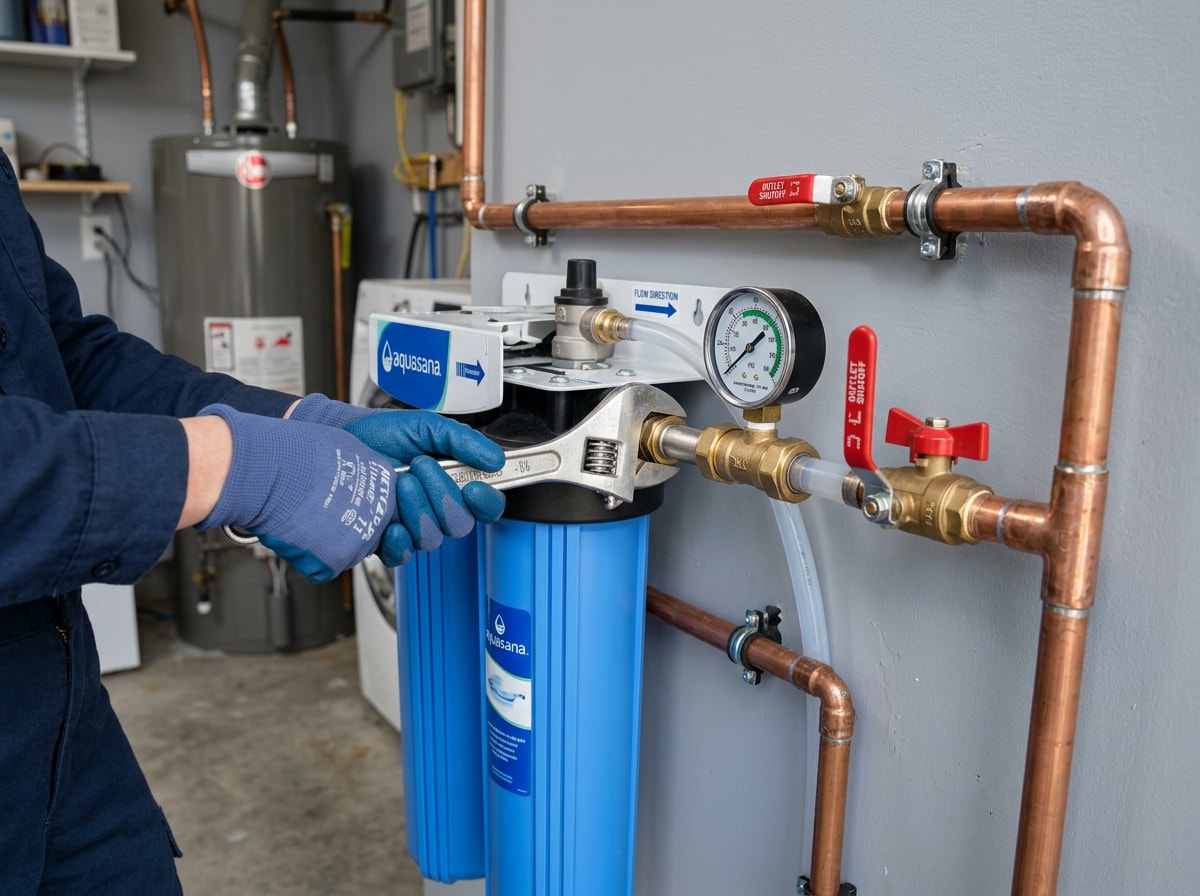
From first install through years of upkeep, full-service water filter services in Ventura County, CA should cover the entire filtration lifecycle, not just the sale.
Water Filtration System Installation
A licensed plumber brings proper sizing for a home's water demand and installation that meets manufacturer specifications, something a DIY install can't guarantee. A whole-house system install typically includes tying into the main line, pressure testing, and confirming performance before the job is signed off. Working with a licensed installer also protects any manufacturer warranty, which often requires professional installation to stay valid. We serve homes throughout Ventura County, as well as neighboring Los Angeles County and Santa Barbara County.
Water Filtration System Replacement
Systems nearing the end of their service life often show declining output quality, rising water bills, or parts that are no longer available for the brand. A replacement visit starts with testing current water quality, then sizing an upgraded system to the household's actual usage and hardness level. Learn more about our water treatment system replacement process.
Water Filtration System Repair & Maintenance
If a system stops producing the water quality it used to, that's usually a sign it needs service, not necessarily replacement. Complete repair and maintenance covers diagnosing the issue, replacing worn components, and restoring performance to spec. Routine filter changes and a basic maintenance plan are the core recurring services that keep a purification system working for years, not months.
Well Water & Commercial Properties
Ojai and other groundwater-dependent parts of the county often rely on private wells, which need their own testing and treatment approach beyond municipal-grade filtration. Our well water treatment and well water analysis services address iron, bacteria, and hardness levels specific to private sources. Businesses with higher water demand should see our commercial water treatment systems page.
What's Included: Contaminants Removed & Warranty Coverage
A professionally installed system should do more than soften water. It should remove contaminants and come with real support after the install.
A properly installed, certified system can reduce hardness minerals, chlorine, lead, and PFAS, so water used for drinking, cooking, and bathing is cleaner at every tap. The EPA finalized its first national PFAS drinking water regulation in 2024, which has pushed more homeowners to ask about PFAS reduction specifically. Look for systems certified to NSF/ANSI standards for contaminant reduction rather than relying on marketing claims alone, since independent certification verifies real-world performance against specific contaminants. Our contaminant detection testing confirms what's actually in your water before a system is chosen.
Many providers, including ours, offer a lifetime service plan covering annual water testing, routine maintenance, and unlimited service calls, with homeowners typically only paying for replacement filters as needed. A warranty covering both installation labor and full parts for several years is a reasonable benchmark when comparing providers; anything notably shorter is worth questioning. Before signing anything, ask exactly what's covered and how service calls get scheduled.
Water Filtration Cost in Ventura County
| System Type | Typical Installed Cost |
|---|---|
| Basic whole-house carbon filter | $500–$1,200 |
| Salt-based water softener | $1,200–$2,500 |
| Salt-free water conditioner | $1,500–$3,000 |
| Combined softener + carbon + sediment system | $2,000–$3,500+ |
| Under-sink reverse osmosis | $300–$1,200 (or financed from roughly $26/month) |
Actual pricing depends on household size, current hardness, and how the plumbing is configured. Request a free estimate for pricing specific to your address, or browse recent completed projects to see examples of real installs across the county.
If you're comparing filtration approaches used in nearby markets, our water treatment technologies guide for Los Angeles County covers several of the same system types in more technical depth.
About This Guide
This guide was reviewed by the Pure Water Filtration team, California-licensed water treatment technicians who install, repair, and service filtration and softening systems throughout Ventura, Los Angeles, Santa Barbara, Orange, Kern, and Inland Empire counties. Reach our team directly through {{SITE_URL}}/contact with questions about a specific address or system.
FAQ
Is Ventura County water hard?
Yes. Hardness typically ranges from about 15 grains per gallon in areas on imported supply to over 30 grains per gallon in groundwater-heavy neighborhoods. Both ends of that range fall into the USGS "very hard" category.
What is a whole-home water purification system?
A whole-home water purification system is equipment installed at the house's main water line, so every fixture, including the kitchen, bathroom, laundry, and outdoor spigots, receives treated water. This differs from a single under-sink or countertop filter, which only treats water at one location.
Why should I hire a professional to install my water filtration system?
Professional installation protects both water quality and your investment in the equipment. Look for a contractor that's licensed, bonded, and insured, since that status signals accountability if something goes wrong. A professional also handles ongoing support, filter changes, salt deliveries, and system check-ups, through one point of contact.
How much does a water filtration system cost in Ventura County?
A whole-house system typically runs $500 to $3,500 or more, fully installed. Basic carbon filtration sits at the lower end, while combined softener and filtration systems trend higher depending on household size and local hardness.
What's the difference between a water softener and a water filter?
A softener uses ion exchange to remove calcium and magnesium, the minerals behind hard water and scale. A filter uses media like carbon, sediment, or KDF to remove chlorine, chloramine, sediment, taste, and odor, but it doesn't address hardness. Most Ventura County homes benefit from both, which is why combined multi-stage systems are more common locally than either piece installed alone.
Do you offer free water testing in Ventura County?
Yes. Free in-home water testing should happen before any system gets recommended. It confirms actual hardness, chlorine levels, and other contaminants at a specific address rather than guessing from county averages. Our water quality testing service covers this at no cost, or you can schedule a visit directly.
Are PFAS or other contaminants a concern in Ventura County tap water?
Municipal water is tested regularly and must meet federal limits, but trace contaminants including PFAS have been found in parts of Southern California's water supply. A certified carbon or reverse osmosis system can reduce these contaminants at the tap; testing first confirms whether treatment is actually needed at your address.