If you're typing "water softener near me Kern County, CA" into Google, you've probably already found the white crust on your faucets or felt how stiff a load of towels comes out of the dryer. Kern County sits on some of the hardest groundwater in California, and the right softener depends on your neighborhood, your water source, and how many people are using it daily. This guide walks through real local water data, system types, sizing, installation, and the questions Kern County homeowners ask most before they buy.
Why Kern County Water Needs Treatment
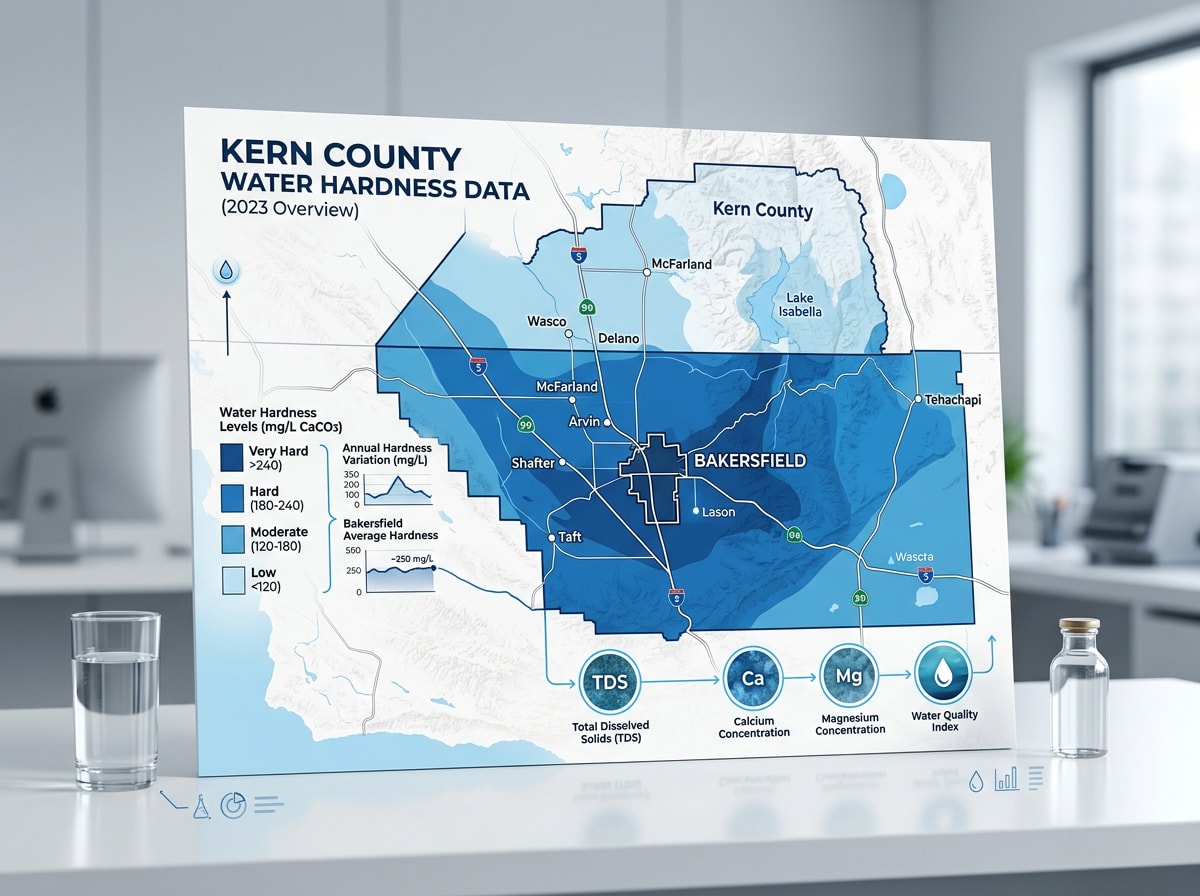
Bakersfield's municipal supply blends Kern River surface water with groundwater pumped from dozens of local wells drilled into mineral-rich San Joaquin Valley sediment. To meet Bakersfield customers' needs, the system uses a combination of local groundwater produced by 68 active wells along with surface supply. That blend is exactly why hardness readings bounce around so much from one part of the county to the next.
Individual wells tell very different stories than the system-wide average. In the most recent Consumer Confidence Report, groundwater hardness ranged from 52 to 380 parts per million with an average of 109 ppm, while surface water ranged from 31 to 55 ppm with an average of 46 ppm . On the utility's own scale, water is considered soft below 75 ppm, moderately hard from 75 to 150 ppm, hard from 150 to 300 ppm, and very hard at 300 ppm or higher , so a single block can swing from moderately hard to very hard depending on which well is feeding it that week.
Hardness isn't the only reason Kern County shows up so often in state water data. Of the public supply wells sampled statewide between 2007 and 2017, the most arsenic detections above the state maximum contaminant level occurred in Kern County, followed by Los Angeles and San Bernardino counties . A separate USGS groundwater study of the Kern County subbasin found that nitrate, the fumigants 1,2,3-TCP and DBCP, and PFAS were detected at high relative concentrations in domestic groundwater resources , and the inorganic constituents detected above regulatory benchmarks were nitrate, arsenic, and uranium .
This isn't abstract. In 2021, the EPA and the California State Water Resources Control Board announced that the Arvin Community Services District had come into compliance with the federal arsenic safety standard after a multi-year mitigation project, and that district's system serves roughly 20,000 residents in an overburdened Kern County community . A standard water softener does nothing for arsenic, nitrate, or PFAS, which is one reason we always recommend a water test before assuming a softener alone solves the problem.
Quick Facts: Bakersfield & Kern County Water Data
| Measure | Reported Range |
|---|---|
| Groundwater hardness (Cal Water CCR) | 52–380 ppm (roughly 3–22 grains per gallon) |
| Surface water hardness (Cal Water CCR) | 31–55 ppm (roughly 2–3 grains per gallon) |
| Hardness classification | Soft under 75 ppm, very hard at 300+ ppm |
| Documented regional concerns | Arsenic, nitrate, PFAS detected in groundwater wells |
Hardness can shift from one block to the next, especially between well-fed and surface-blended neighborhoods. A home water test is still the most reliable way to confirm your exact numbers before buying anything, and our hardness testing gives you that number on the spot instead of a citywide average. If arsenic, nitrate, or other contaminants are a concern on your street, pair that with contaminant detection testing before choosing equipment.
Water Softener Systems in Kern County
Once you know your water's hardness level, the next decision is which type of system fits your home and budget.
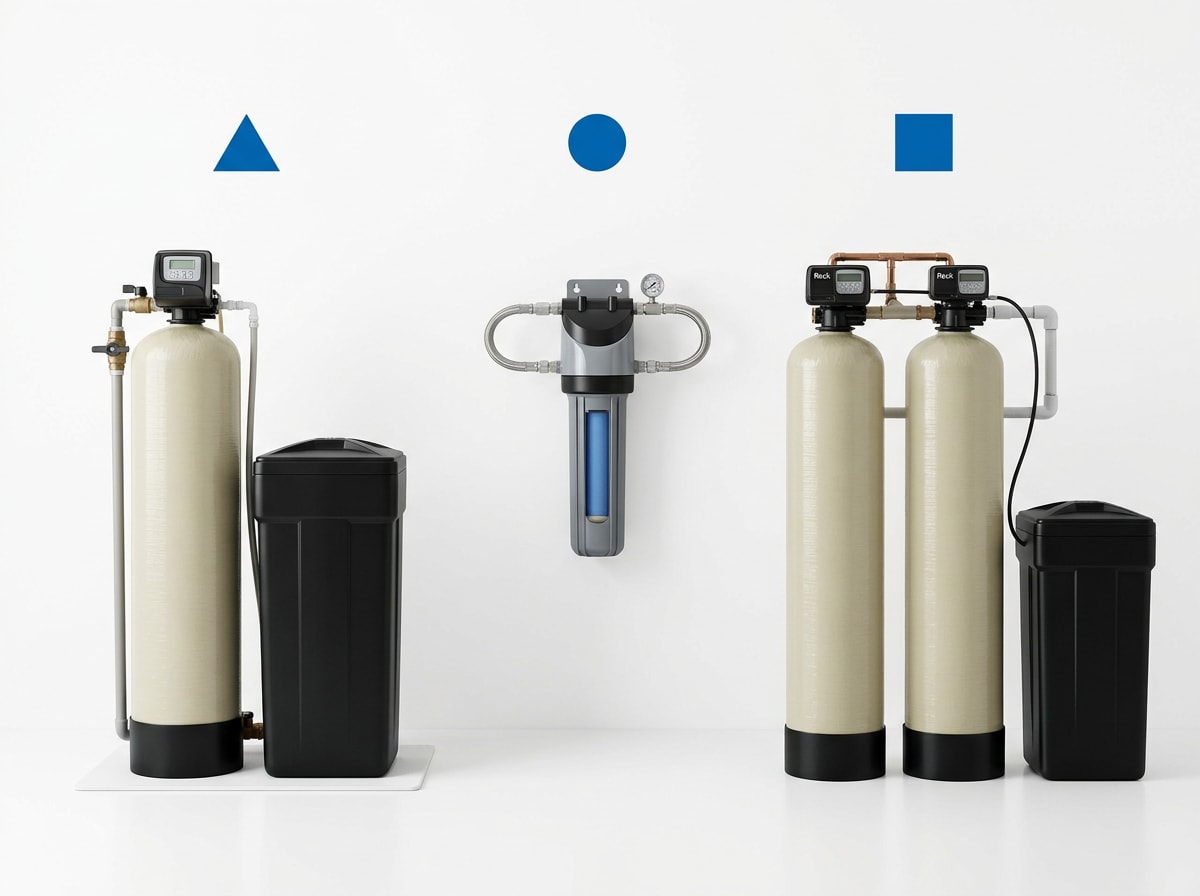
- Salt-based ion exchange — the most common choice; swaps calcium and magnesium for sodium and remains the most effective option for hard-to-very-hard groundwater.
- Salt-free conditioners — don't remove minerals but change their structure so they're less likely to stick to pipes and fixtures; a lower-maintenance option for moderately hard water.
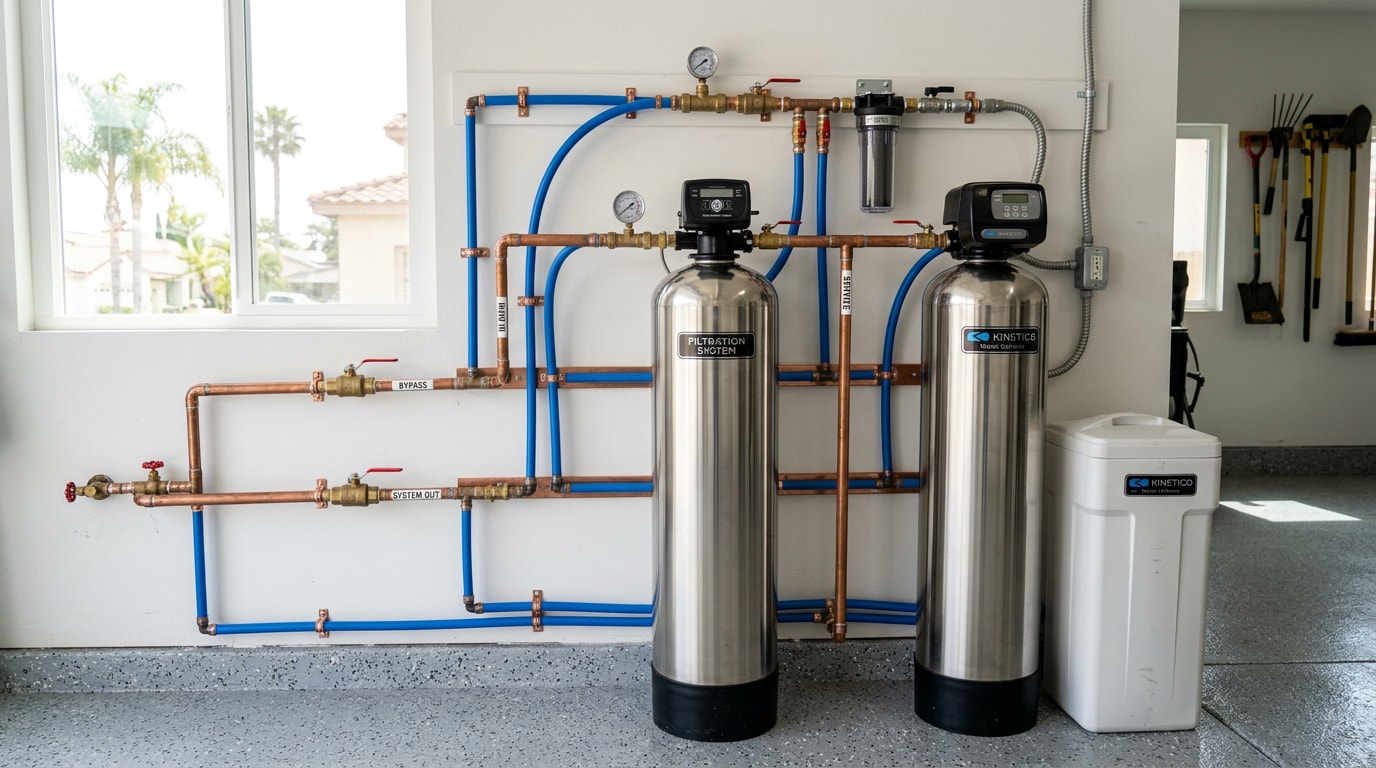
- Dual-tank systems — provide continuous soft water without a regeneration gap, useful for larger households or wells testing at the high end of the range above.
Browse our water softening systems or compare salt-free water treatment systems to see which category fits your home's water profile. Homes on private wells should also look at well water treatment, since softeners alone won't address iron, sediment, or the contaminants named above.
How to Size Your Softener for Kern County
Sizing depends on three factors: household size, your actual local hardness reading, and whether you're on a private well or city supply. A larger household or higher hardness number both push you toward a bigger grain capacity, while well water often carries more iron and sediment that affect performance.
There's no single "right" capacity that fits every Kern County home. A two-person household on moderately hard city water needs something very different than a family of five on a well testing near 300 ppm. If you're on a well, our guide on what micron filter is best for well water is worth reading alongside softener sizing, since sediment and iron filtration decisions affect how your softener performs over time.
Why Most Kern County Homeowners Pick the Wrong Softener
The most common mistakes: undersizing the unit, assuming well water and city water behave the same, skipping a water test altogether, and buying a big-box softener sized for a national average instead of a local reading.
Here's what that looks like in practice. A homeowner installs a standard 24,000-grain unit bought online, assuming it matches "average" hardness. Their well actually tests well above the city average, so the softener regenerates twice as often as expected, burns through salt faster, and wears out years ahead of schedule. We've pulled more than one undersized unit out of a Kern County garage after it was sized off a report from the wrong part of the county. A free water test up front almost always costs less than the second softener.
Benefits of a Water Softener for Kern County Homes
A properly sized softener extends the lifespan of water-using appliances like water heaters, dishwashers, and washing machines by preventing scale buildup inside pipes and heating elements. Soft water also means softer skin and hair, since mineral deposits no longer strip natural oils during washing.
- Less soap, shampoo, and detergent needed for the same results
- Fewer limescale stains on faucets, shower glass, and glassware
- Lower long-term appliance repair and replacement costs
- More consistent water pressure as pipes stay scale-free
Installation & Licensing in Kern County: What to Know
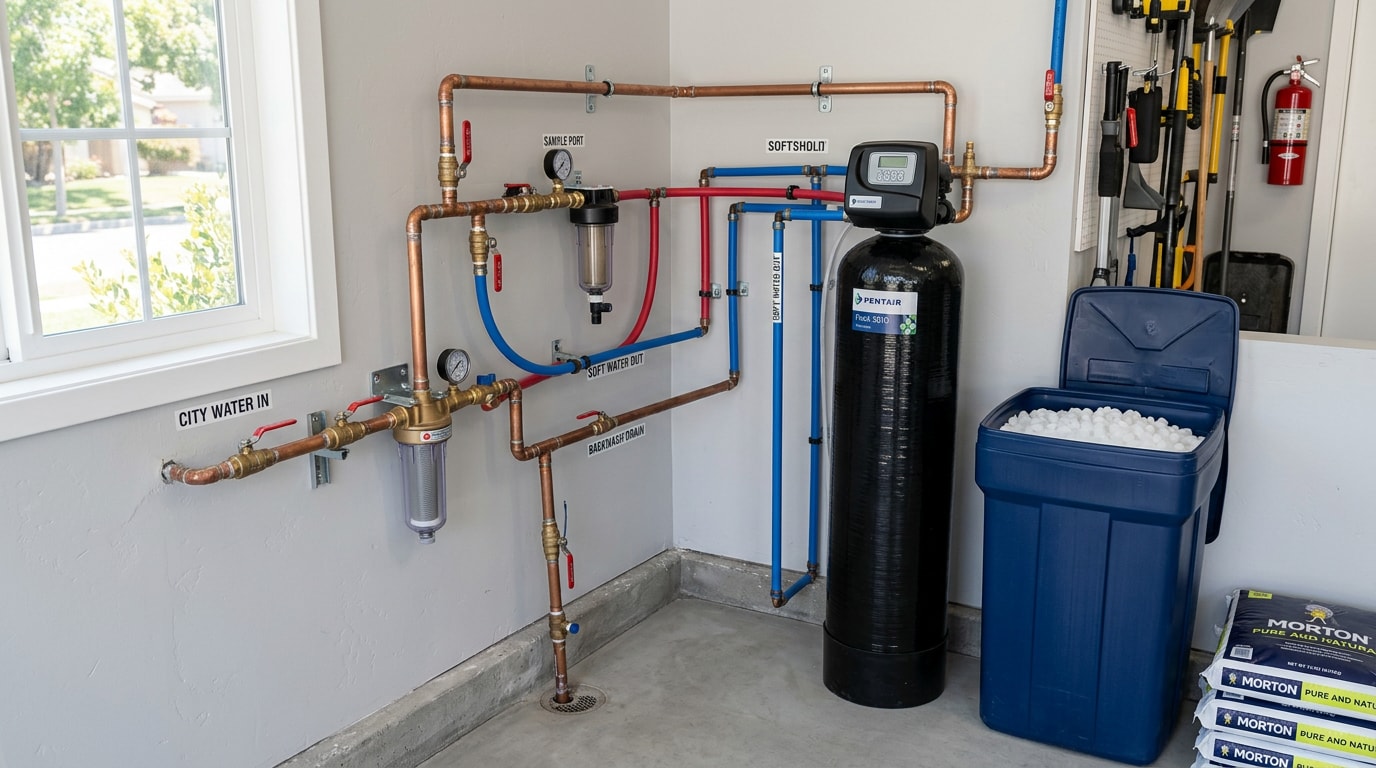
A typical softener installation involves connecting the unit to your main water line, installing a bypass valve for maintenance, and running a drain line for the regeneration cycle. Most straightforward swaps take a few hours, though homes with older plumbing or well systems can take longer.
In California, water conditioning installation falls under the Contractors State License Board's C-55 classification. A water conditioning contractor is licensed to install equipment using the pipe and fittings necessary to connect it to the water supply and bypass the parts of the system from which conditioned water should be excluded. That's the scope that matters most for backflow prevention and warranty compliance, and it's worth confirming before hiring anyone for a whole-house job.
Ready for a system installed correctly the first time? Request a free estimate and a licensed technician will walk through the setup, including whether your job needs a permit, before anything is scheduled. For aging equipment, also compare water treatment system maintenance against a full water treatment system replacement.
What Sets Us Apart
Choosing a local provider for a "water softener near me" search comes down to who actually understands Kern County's water, not a national hardness average. Pure Water Filtration starts with free in-home water testing so recommendations are based on your actual readings, not a sales script.
Because we work across Kern County every week, we've seen how differently water behaves between a Bakersfield city connection and a rural well on the outskirts of town. That local knowledge shapes which system we recommend. Browse recent completed projects or see our full water purification company services to understand the range of equipment we install and service.
Water Softener Near Me: Kern County Service Area Coverage
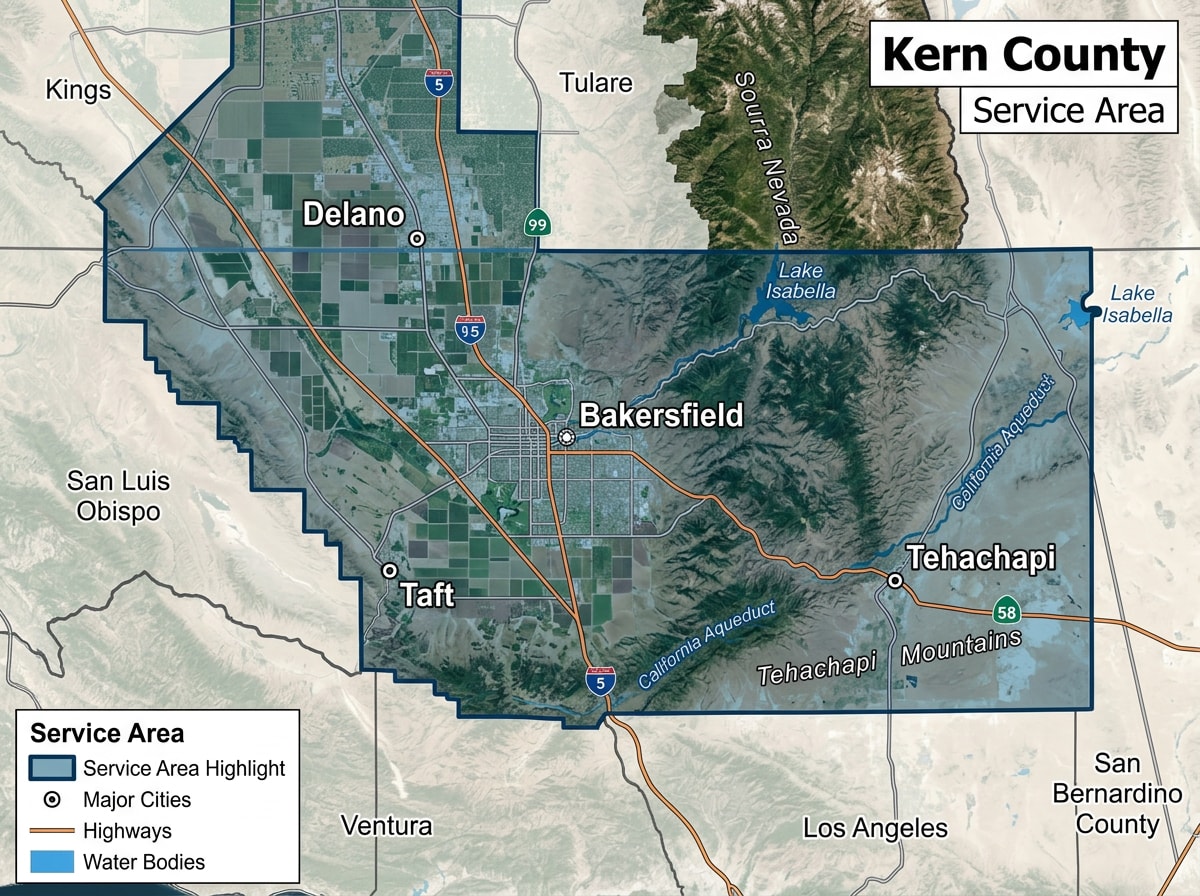
We serve homes and businesses across Kern County, from Bakersfield to Taft, Delano, Tehachapi, Wasco, and surrounding communities. If you're searching for a water softener near me and you're within the greater Kern County, CA region, there's a good chance we already service your area.
FAQ
How Much Does a Water Softener Cost in Kern County?
Costs typically range from $1,500 to $5,500 installed, depending on home size, water hardness, and system type.
| System Type | Typical Installed Cost* |
|---|---|
| Salt-free conditioner | $1,500–$2,500 |
| Salt-based ion exchange | $2,000–$4,000 |
| Dual-tank system | $3,500–$5,500 |
*General Kern County ranges; your exact price depends on grain capacity, plumbing access, and hardness level. A free water test and quote gives you a number based on your actual home instead of a generic estimate.
Does Kern County Require a Permit to Install a Water Softener?
It depends on the scope of the work. A straightforward swap of an existing unit often doesn't require one, while new plumbing or electrical work usually does. Rules vary by jurisdiction within Kern County, so confirm with your local building and safety department, especially for anything beyond a direct unit replacement.
Will a Water Softener Remove Arsenic, Nitrate, or Iron from Kern County Water?
No. Standard softeners address hardness minerals like calcium and magnesium, but they don't remove arsenic or nitrate and generally don't handle significant iron on their own. Kern County has recorded more arsenic detections above the state limit in public wells than any other California county , so if arsenic, nitrate, or iron are a concern on your street, pair a softener with separate filtration and ask about water safety assessment testing.
Is Kern County Tap Water Safe to Drink?
Most public systems in Kern County meet state and federal health standards, and utilities like Cal Water publish annual Consumer Confidence Reports confirming compliance. That said, the inorganic constituents detected above regulatory benchmarks in the Kern County groundwater subbasin include nitrate, arsenic, and uranium , which is why private well owners in particular should test rather than assume their water matches the nearest city report.
How Quickly Will I See Results After Installing a Softener?
Most homeowners notice improvements in soap lather, shower feel, and overall water texture within 24 to 48 hours of installation. Longer-term benefits, like reduced scale buildup and better water heater efficiency, show up gradually over the following weeks as mineral deposits stop accumulating.
How Long Does a Water Softener Last?
A properly sized and maintained salt-based softener typically lasts 10 to 15 years. Undersized units running in very hard Kern County water often fail years earlier, which is the main reason accurate sizing matters more here than in moderate-hardness regions.