Water treatment for hospitals in Kern County, CA has to clear a higher bar than a typical commercial building. Dialysis lines, surgical suites, and clinical labs all depend on water purity levels that general plumbing codes were never written to guarantee. Get this wrong and the risk isn't a maintenance ticket, it's a patient-safety event.
Why Water Quality Matters in Kern County Hospitals
Hospitals here serve some of the region's most vulnerable patients, and water touches nearly every corner of clinical care, from hand-washing stations to dialysis units. Facility teams have to account for immunocompromised patients, strict infection-control standards, and local source water that varies block by block.
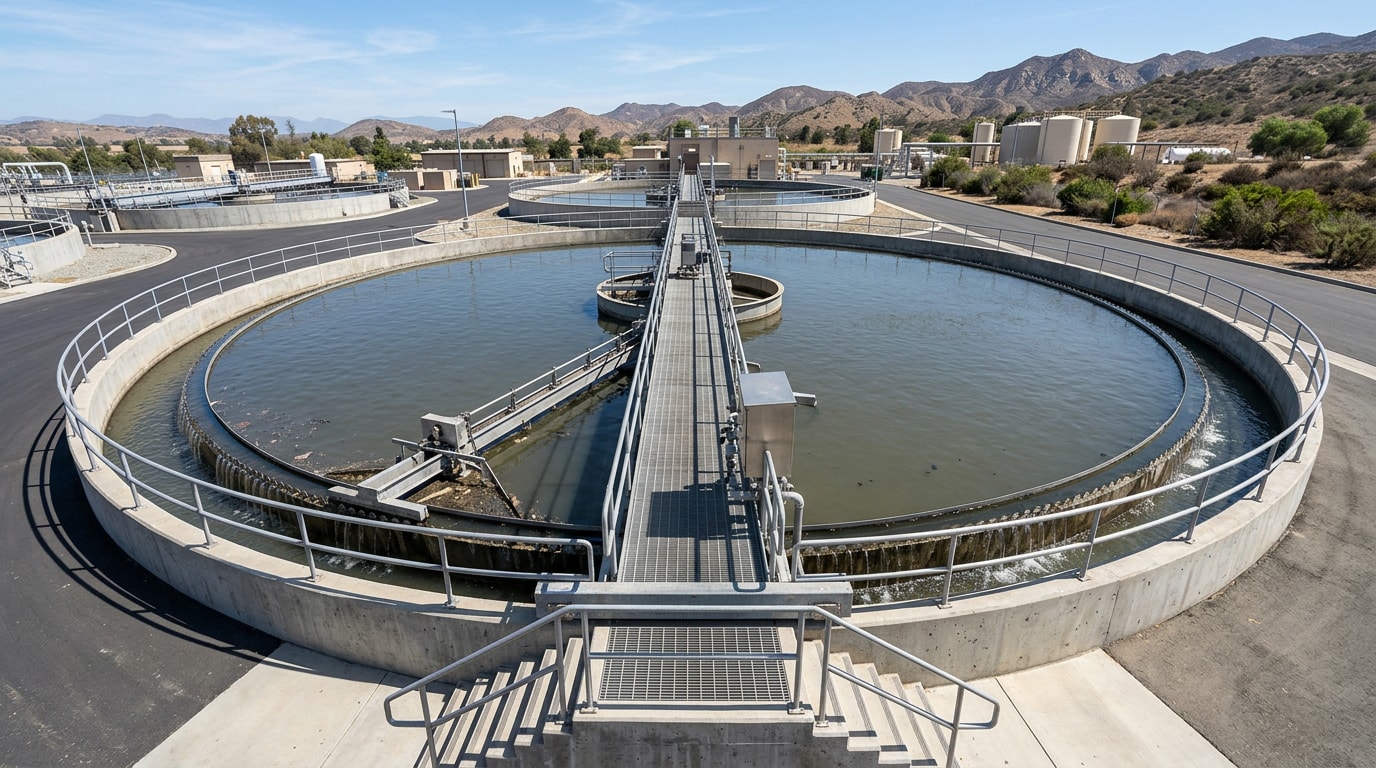
Kern County's water supply isn't uniform. Some systems draw from Kern River surface water treated at plants like the Kernville Drinking Water Treatment Plant, which removes total organic carbon using granular activated carbon before it reaches distribution. Other facilities, especially those on the valley floor or in outlying communities, rely on groundwater wells that tend to carry higher hardness, iron, and in some areas nitrate levels common to Central Valley aquifers. Each source needs a different pretreatment approach before it's safe for sensitive clinical use.
Water quality affects patient care, equipment reliability, and infection control all at once. Facility teams should map where water is used and what purity level each use demands, rather than assuming one treatment train covers every department.
Facilities exploring upgrades can start with commercial and industrial water treatment services built around hospital-grade requirements, or review industrial water treatment systems designed for continuous, high-demand use.
Hospital Water Treatment Systems Overview for Kern County, CA
Hospitals typically rely on four core equipment categories, layered together into a treatment train rather than used as standalone fixes.
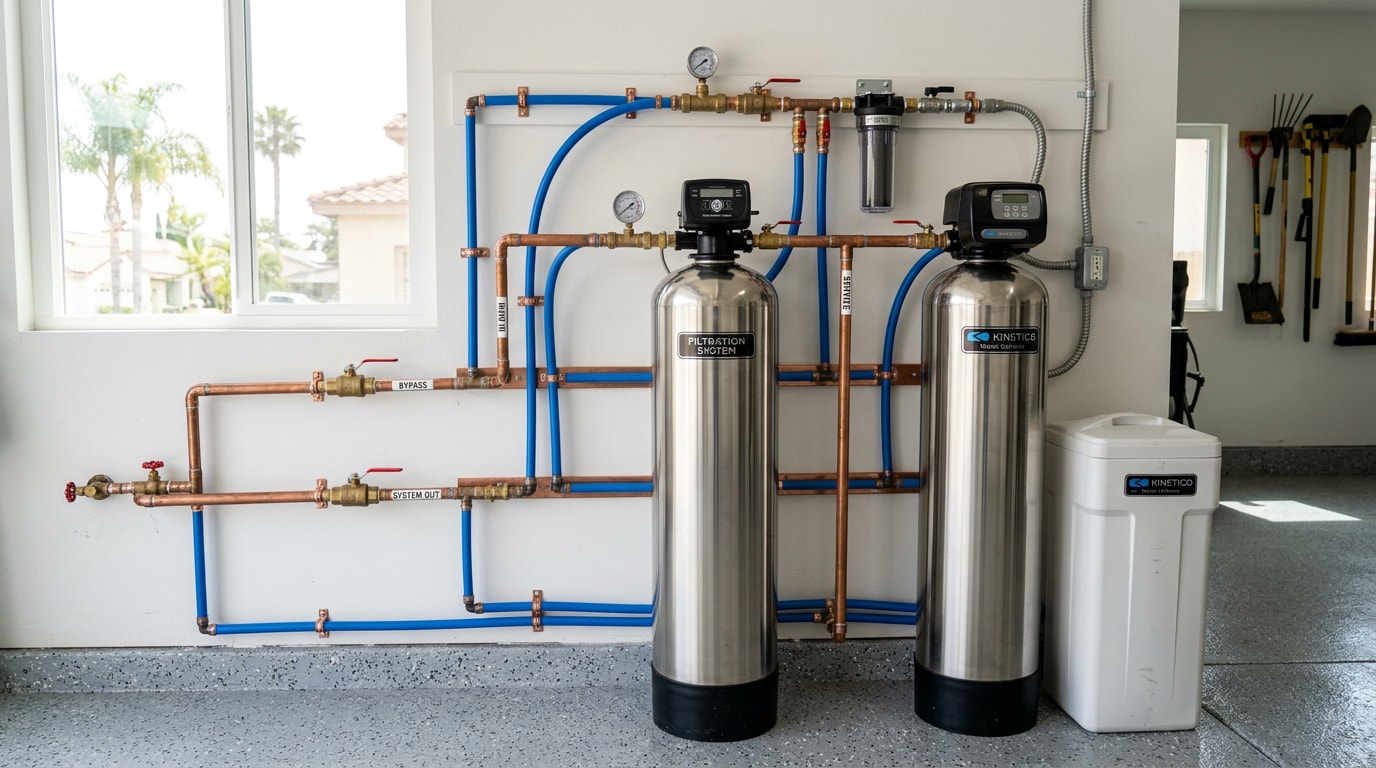
- Filtration captures suspended particles and reduces chlorine before water reaches sensitive equipment.
- Water softening prevents scale buildup in boilers, sterilizers, and plumbing fed by Kern County's harder groundwater sources.
- Ultraviolet sterilization adds a chemical-free barrier against microbial growth at point of use.
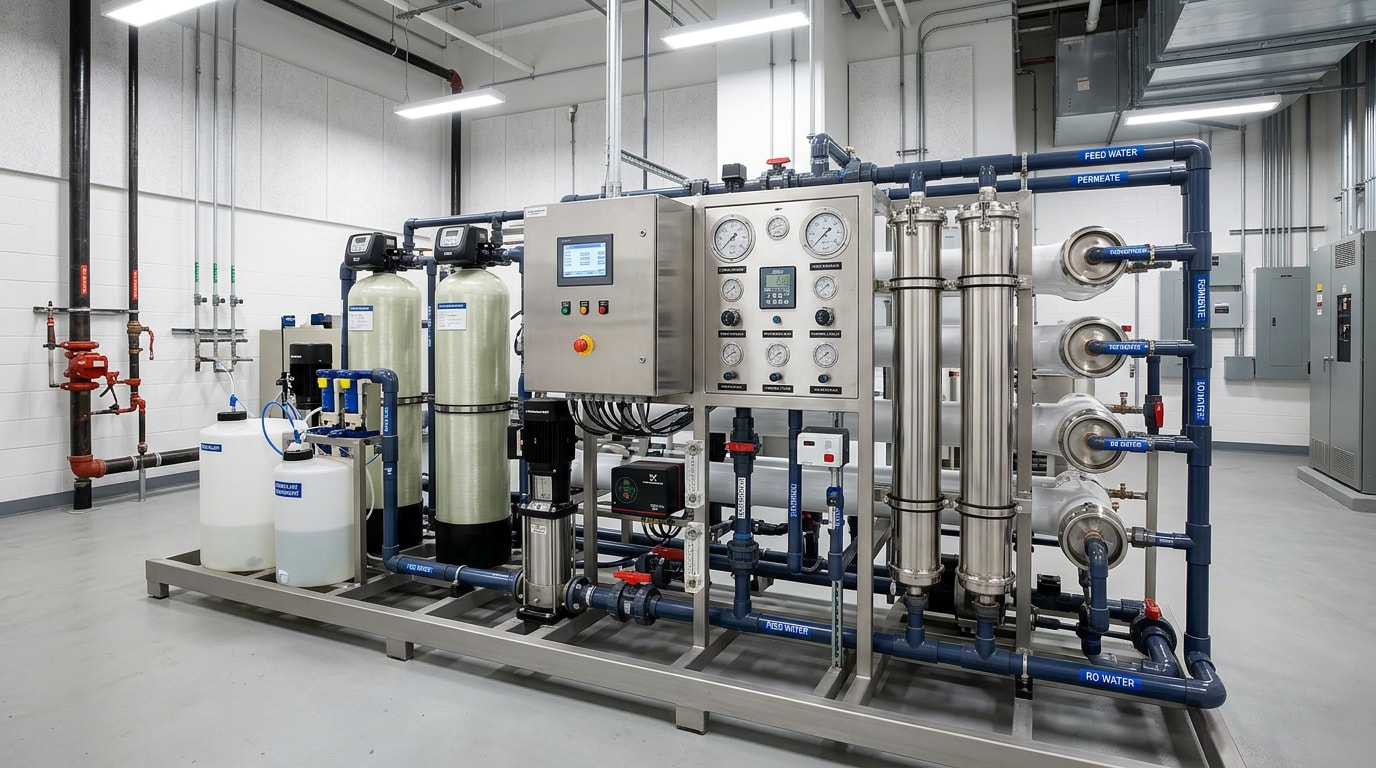
- Reverse osmosis (RO) delivers the high-purity water that dialysis and lab work require.
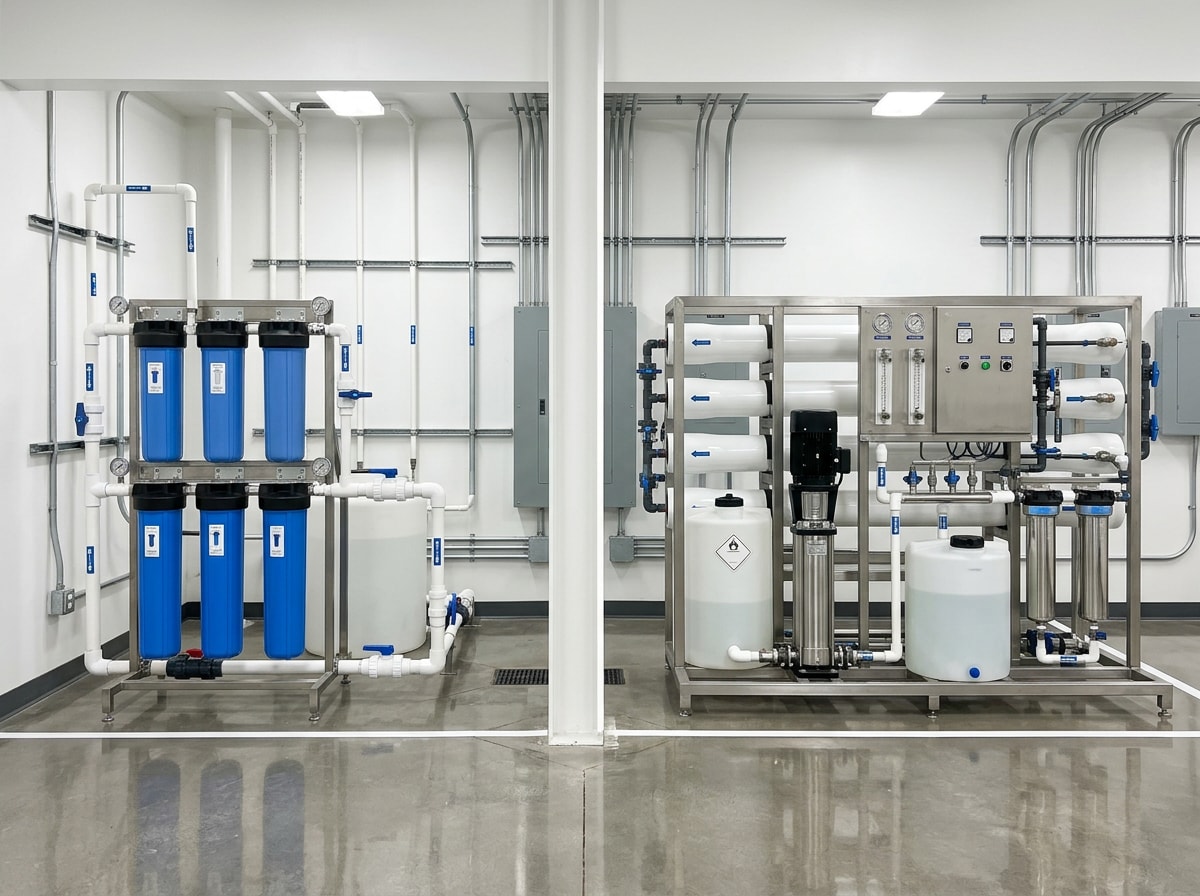
A practical treatment train often starts with filtration at the incoming water supply, then layers on softening, UV, or RO stages depending on what each department needs downstream.
| Technology | Relative Cost | Maintenance Need | Best-Fit Use |
|---|---|---|---|
| Water Softening | Low | Moderate (salt refills, resin checks) | Boilers, sterilizers, hard-water plumbing |
| Filtration | Low-Moderate | Low (filter changes) | Incoming supply, sediment/chlorine removal |
| UV Sterilization | Moderate | Low (bulb replacement) | Point-of-use disinfection, ice machines |
| Reverse Osmosis | Higher | Higher (membrane care, monitoring) | Dialysis, lab water, critical rinse |
Facilities scoping a new install often start with the reverse osmosis systems page to compare equipment options, then pair it with a water softening systems upgrade if incoming hardness is high.
What Water Does a Hospital Use?
Hospital water isn't one single stream. It's several distinct systems operating side by side, and each carries its own purity requirement based on what it touches.
Hospital Water by Department
- Building potable water supplies sinks, showers, eyewash stations, and ice machines. It must stay safe for everyday contact while limiting Legionella and other waterborne pathogen growth, a standard shaped by CMS guidance and the ASHRAE/CDC water management framework.
- Clinical laboratory water acts as a reagent, not just a utility. Lab reagent water has to stay chemically clean enough that it doesn't skew analyzer results or contaminate samples.
- Dialysis and critical rinse applications demand the tightest purity levels in the building, since dialysis water contacts a patient's bloodstream directly.
Matching each department to the right treatment stage, rather than over-treating the whole building, keeps costs reasonable without compromising safety. RO is targeted, not building-wide: it belongs wherever purity is the point (dialysis lines, critical rinse water, lab benches) rather than piped across an entire facility. Everything else typically runs on treated potable water.
Reverse Osmosis Systems and High Purity Water
RO works by forcing water through semipermeable membranes that block dissolved solids, ionic contaminants, and pollutants such as lead and residual chlorine. For clinical use, RO output must meet high-purity water targets stringent enough to protect both patients and sensitive lab equipment.
Hardware alone doesn't guarantee safety. Ongoing monitoring matters as much as the membrane itself. Facilities running dialysis water through RO systems should pair equipment with routine Legionella testing and membrane integrity checks, since a fouled membrane can let contaminants through unnoticed. The FDA's inspection technical guidance on water purification systems outlines the quality expectations that inform how RO systems are validated in medical and pharmaceutical settings.
Most facilities lean on a commercial water treatment systems page when scoping a new install, and schedule a water quality test first to confirm what the incoming supply actually looks like.
Infection Control, Legionella, and Healthcare Water Safety
This is where regulatory pressure and patient safety converge most directly for hospital decision-makers.
Infection-control technologies vary by application:
- Copper-silver ionization offers chemical-free pathogen mitigation in distribution loops.
- Monochloramine dosing provides secondary disinfection in larger distribution systems.
- Ultraviolet disinfection adds a non-chemical barrier at point of use.
Legionella control programs should align with ANSI/ASHRAE Standard 188 and CDC guidance rather than relying on ad hoc chemical dosing alone. ASHRAE's guidance for water system risk management lays out the minimum requirements for building water system design, operation, and ongoing maintenance that most hospital water management plans are built around.
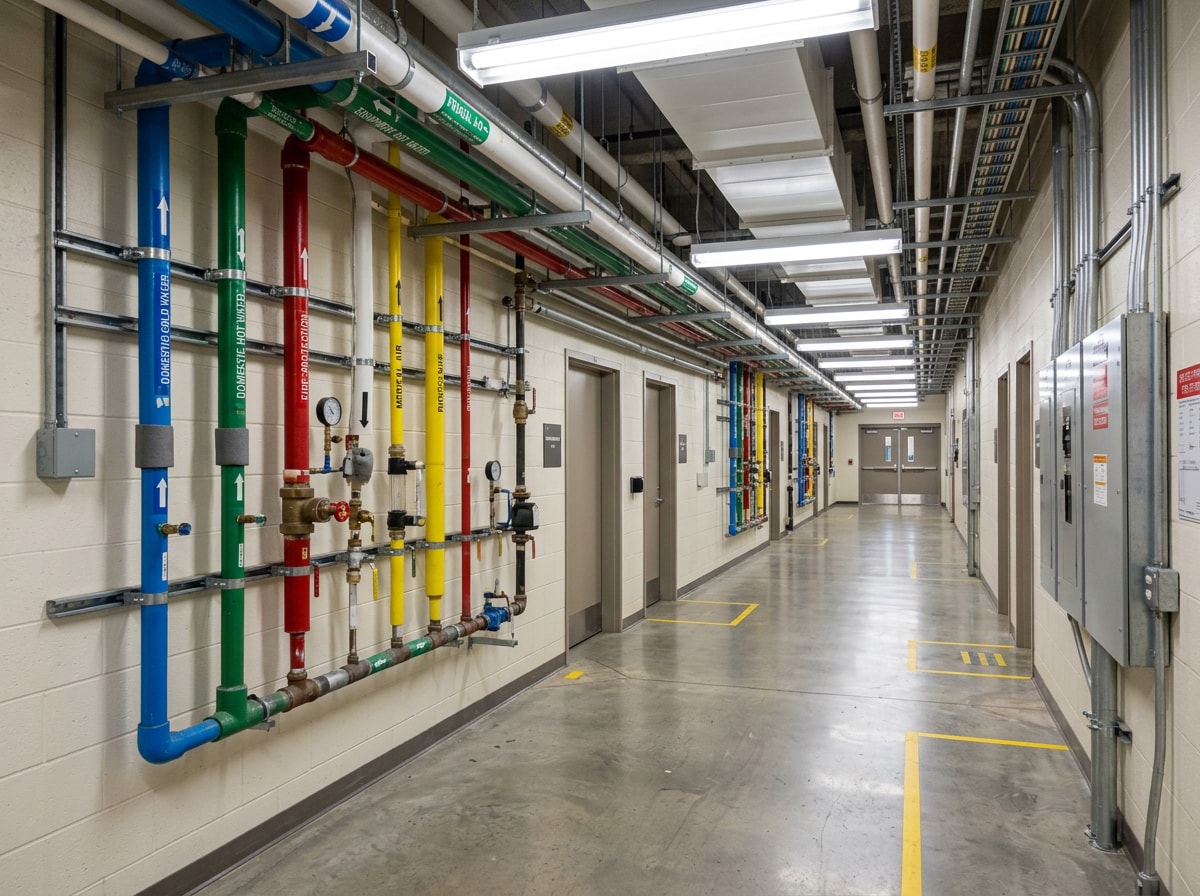
Common Water Risks Inside Hospitals
- Temperature control. Water sitting in a lukewarm range for too long creates ideal Legionella growth conditions, particularly in low-flow pipe segments and storage tanks.
- Cooling towers. Left out of a water management plan, cooling towers can become a Legionella source if operators skip routine treatment and cleaning, a gap inspectors increasingly flag during compliance reviews.
- Biofilm in distribution loops. Chemical oxidation and similar disinfection methods help control microbial growth, but the right combination depends on local water chemistry, contact time, and which organisms the system is targeting.
The CDC's water management guidance for healthcare facilities offers a practical starting framework for building a compliant plan, including a Water Infection Control Risk Assessment (WICRA) template.
Building a Reliable Hospital Water Management Program
A documented water management program turns individual equipment choices into a coordinated compliance strategy.
A WICRA identifies where patient exposure to waterborne pathogens could occur, helping facility teams prioritize preventive measures instead of reacting after a problem surfaces. Good water management doesn't stop once equipment is installed. Ongoing monitoring, testing, and maintenance are part of the program, not an afterthought.
Documented programs aren't optional extras. CMS memorandum QSO-17-30 requires Medicare-certified hospitals, critical access hospitals, and long-term care facilities to maintain a written water management plan built around ASHRAE 188 and the CDC toolkit. It's worth noting the Joint Commission standard that mirrors this requirement has since been renumbered to PE.04.01.05, replacing the older EC.02.05.02 designation, so facilities citing the old standard in their policies should update their documentation.
Kern County facilities comparing water treatment system maintenance plans should ask prospective partners how they support ongoing WICRA documentation, not just equipment installation.
Choosing a Hospital Water Treatment Partner in Kern County
Our technicians service medical offices, dialysis centers, and multi-building healthcare campuses across Bakersfield, Delano, and Ridgecrest, and the single biggest gap we see isn't equipment failure. It's facilities that bought a system years ago and never revisited the maintenance schedule as staff turned over.
A few things worth confirming before signing with any provider:
- Do they offer contaminant detection testing as part of the initial site survey, not just a sales quote?
- Can they document membrane integrity checks and Legionella sampling on a schedule, not just respond after a complaint?
- Do they know the difference between Kern River-fed supply and private well sources when sizing a whole-house or facility-wide filtration system?
A provider familiar with Kern County water conditions responds faster and tailors treatment to regional source water instead of applying a generic template. Get a free estimate to have your facility's water sources and department-level needs assessed before your next compliance review.
For hospital systems that also manage satellite clinics outside Kern County, our water treatment technologies guide for Los Angeles County covers related softening and filtration basics worth cross-checking against your own facility standards.
Facilities anywhere in the Kern County, CA service area can also browse past commercial and industrial projects or start from the homepage to see the full range of water treatment, testing, and supply services available.
FAQ
What Type of Water Treatment Do Healthcare Facilities Need?
Treatment depends on the application. General-use water typically needs filtration and disinfection, while dialysis, lab work, and sterile processing often require high-purity water built from reverse osmosis, deionization, and membrane filtration working together.
Why Do Hospitals Use Reverse Osmosis Systems?
Hospitals use reverse osmosis as one stage within a broader treatment system, not a standalone fix. It's applied specifically where purified or medical-grade water is required, such as dialysis and lab testing.
How Often Should Hospitals Test Water for Legionella?
CMS does not mandate a specific testing frequency; it requires a documented water management program built around ASHRAE 188 and the CDC toolkit. Most hospital water management teams set their own testing schedule, commonly quarterly, based on their facility's risk assessment and past results.
How Is Hospital Wastewater Different From Domestic Wastewater?
Hospital wastewater often contains higher and more varied concentrations of organic matter, pharmaceuticals, disinfectants, and microorganisms compared with typical domestic wastewater, which can require different discharge handling.
What Are Effective Methods to Prevent Biofilm and Scale Buildup in Hospital Water Systems?
Softening reduces mineral scale, while secondary disinfection and routine monitoring limit biofilm growth. Together, these methods keep pipes and equipment from developing environments where bacteria and scale accumulate unnoticed.
How Should Hospitals Approach Supplier Selection for Water Treatment Systems?
Facility teams should prioritize compliance expertise, documentation support, and fast local service response. A provider familiar with Kern County water conditions can respond faster and tailor treatment to regional source water rather than applying a one-size-fits-all system.